You're sitting on the edge of a South Dakota prairie dog town at 7 AM with 200 rounds of .223, and by noon you've burned through half of it. Your barrel's getting hot, your scope's starting to shift, and you've got six more hours of daylight. This is where gear choices separate the guys who pack up early from the ones who keep shooting until dark.
Prairie dog hunting isn't a one-shot deal like deer hunting. You're looking at hundreds of shots in a single day, targets from 100 to 400 yards, and conditions that'll test every piece of equipment you brought. The rifle that works great for three shots at a whitetail might start throwing fliers after 50 rounds of prairie dog work.
Here's what actually matters when you're planning to shoot all day in a dog town, and why the gear that looks good in the catalog might leave you frustrated in the field.
The cartridge decision: speed vs sustainability
Most hunters show up to prairie dog towns with either .223 Remington or .22-250, and there's good reason for that. These cartridges handle high-volume shooting better than the magnums, cost less to feed, and deliver the performance you need on small targets.
The .223 Remington gets overlooked because it doesn't have the flat trajectory of a .22-250, but it's actually the better choice for most prairie dog hunting. Factory 55-grain loads push 3,200 fps from a 20-inch barrel, which gives you enough velocity for explosive hits on dogs out to 300 yards. More importantly, the .223 generates less heat per shot, so your barrel stays cooler during long strings of fire.
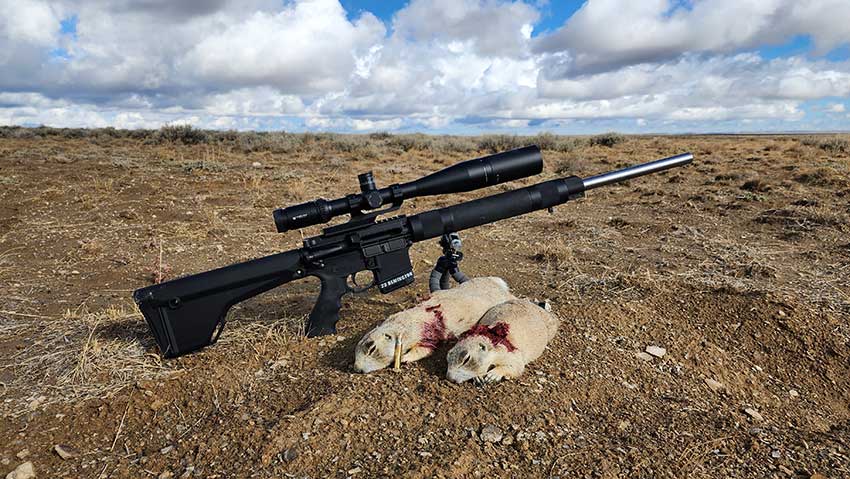
I've watched hunters with .22-250s start missing after 40 or 50 shots because their barrels got too hot. The .22-250 pushes the same bullet 400 fps faster, but that extra velocity comes with a lot more heat and barrel wear. When you're shooting 200+ rounds in a day, that heat buildup becomes a real problem.
The .224 Valkyrie looked promising on paper with its high ballistic coefficient bullets, but it never caught on with prairie dog hunters. The cartridge works fine, but factory ammo costs more than .223 and doesn't offer enough advantage to justify the price difference when you're buying ammo by the case.
For handloaders, the .223 Remington becomes even more attractive. You can load 40-grain bullets to 3,600 fps or 55-grain bullets to 3,300 fps, and the brass lasts longer than .22-250 cases. The smaller powder charges also mean your components go further.
Rifle requirements: accuracy that lasts
Prairie dog rifles need to maintain accuracy through heat cycles that would make a deer rifle useless. You're not shooting three shots and calling it good, you're shooting until the barrel gets uncomfortably hot, letting it cool, then doing it again.
Heavy barrel contours handle this better than sporter barrels. A heavy barrel on a .223 might weigh eight pounds instead of six, but it'll shoot accurately for 50+ shots where a thin barrel starts opening up groups after 15 rounds. The Ruger American Prairie and similar rifles with heavy barrels are purpose-built for this kind of shooting.
Bolt-action rifles work better than semi-autos for prairie dog hunting, despite what you might think. Yes, a semi-auto lets you fire faster follow-up shots, but prairie dogs don't require fast follow-ups. When you hit one, it's done. When you miss, the whole town disappears for five minutes anyway. The bolt-action gives you better accuracy, easier cleaning, and more reliable feeding with different bullet weights.
The action length matters more than you'd expect. Short actions cycle faster and smoother than long actions, which helps when you're working a bolt hundreds of times per day. This is another advantage for the .223 over longer cartridges that require standard-length actions.
Barrel length affects both velocity and heat dissipation. A 22-inch barrel gives you about 100 fps more velocity than a 20-inch barrel with .223 loads, but the longer barrel also heats up faster and cools slower. Most experienced prairie dog hunters settle on 20-inch barrels as the best compromise.
Optics for small targets at distance
Prairie dogs are small targets, and you need magnification to see them clearly at 200+ yards. But the scopes that work for precision shooting at the range often fail in the field conditions of a prairie dog town.
Variable power scopes in the 4-16x or 6-24x range work better than fixed power scopes because conditions change throughout the day. Early morning shots might be at 100 yards in low light, while afternoon shots stretch to 350 yards in bright sun. You need the flexibility to adjust magnification for the situation.
The problem with high-magnification scopes is heat mirage. By midday on a hot prairie, mirage makes anything over 15x magnification useless for precise shooting. Scopes with good optical quality at lower magnifications become more valuable than scopes that look great at maximum power.
Parallax adjustment is critical for prairie dog work. Most of your shots will be between 150 and 300 yards, and parallax error at those distances can cause misses on small targets. Side-focus parallax adjustment works better than objective bell adjustment because you can make corrections without taking your eye off the scope.
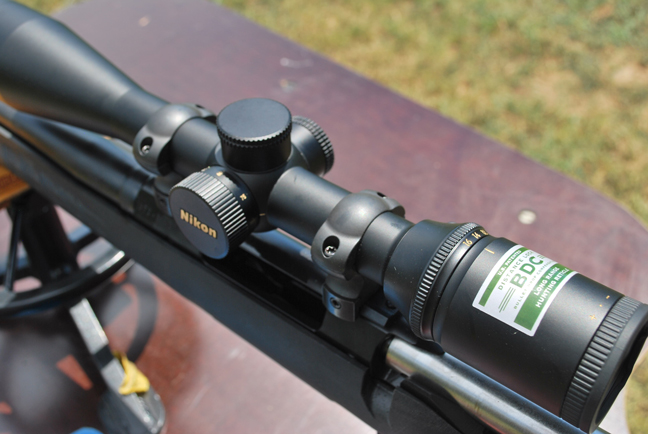
Turret reliability matters more in prairie dog hunting than most other applications. You'll be dialing elevation adjustments constantly as distances change, and turrets that don't track consistently will cost you shots. Exposed turrets with positive clicks work better than capped turrets for this kind of shooting.
Field notes: what I've learned about scope selection
After several seasons of prairie dog hunting, I've learned that optical quality at mid-range magnifications matters more than maximum magnification numbers. A scope that's sharp and clear at 12x will serve you better than one that goes to 25x but gets fuzzy above 15x.
Heat mirage becomes a factor by 10 AM on most summer days, and it only gets worse as the day progresses. I've found that anything over 15x magnification is usually unusable by noon, regardless of how good the scope is. Plan your scope selection around 8-15x magnification for most shooting.
Reticle choice affects your success rate more than you'd think. Simple duplex reticles work fine for shots under 250 yards, but holdover marks or mil-dot reticles help with longer shots when you don't have time to dial turrets. The key is keeping the reticle simple enough that you can use it quickly.
Rest and support systems
Prairie dog hunting requires a stable shooting position for hundreds of shots, and the wrong rest will leave you sore and frustrated by afternoon. Bipods work for some situations, but they're not the complete answer for prairie dog work.
A good bipod needs to be adjustable for height and cant, with legs that deploy quickly and lock securely. Harris bipods remain the standard because they're reliable and adjust easily, but newer designs with better leg locks and smoother adjustment are worth considering. The bipod needs to handle the weight of a heavy-barreled rifle without flexing.
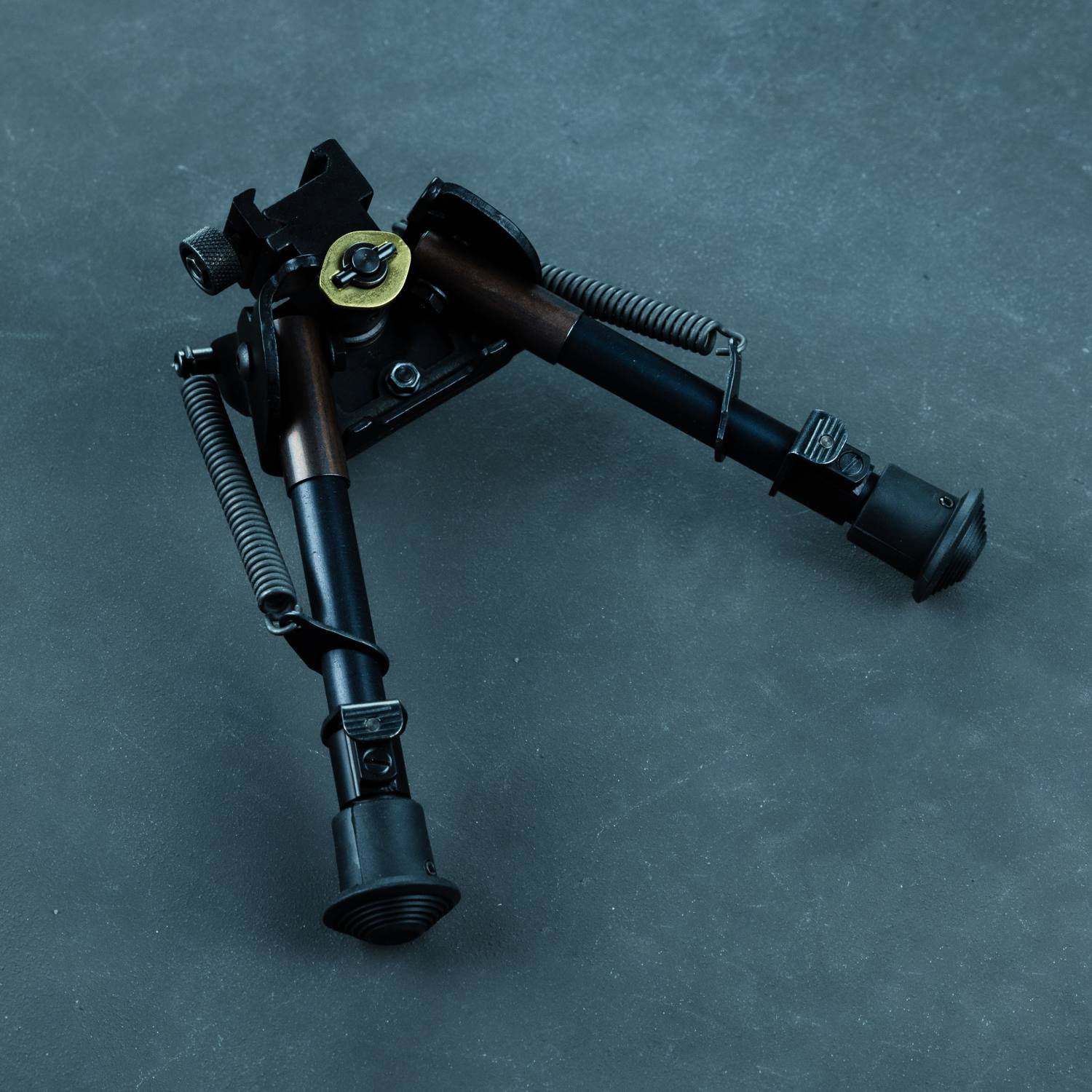
Shooting bags provide more stability than bipods for precision shots, but they're less versatile when you need to change positions quickly. A combination approach works best: bipod for general shooting and bags for the longer, more difficult shots.
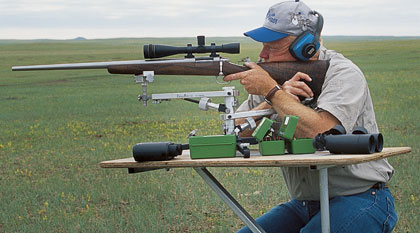
Portable shooting benches make sense if you're hunting from a vehicle or can set up in one location for extended periods. A good shooting bench eliminates most of the human error from your shooting position, but it limits your mobility around the dog town.
The shooting position itself affects accuracy more than the rest system. Prone shooting with a bipod works for most situations, but sitting or standing positions might be necessary depending on terrain and vegetation height. Practice shooting from different positions before you get to the dog town.
Ammunition considerations for volume shooting
Prairie dog hunting burns through ammunition faster than any other type of hunting, and your ammo choices affect both performance and cost. Most hunters shoot 100-300 rounds per day, which means ammunition cost becomes a real factor.
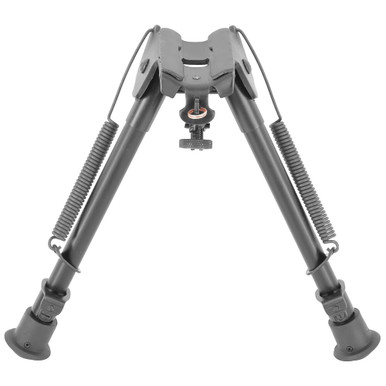
Harris bipod Deals
Prices may change. May contain affiliate links.
Factory ammunition works fine for prairie dog hunting, but handloading saves money and often improves accuracy. The difference between $1.50 per round for factory ammo and $0.60 per round for handloads adds up quickly when you're shooting 200 rounds per day.
Bullet weight affects both trajectory and terminal performance on prairie dogs. Lighter bullets (40-50 grains) shoot flatter and hit harder at longer ranges, while heavier bullets (55-60 grains) buck wind better and maintain accuracy in hot barrels. Most experienced hunters settle on 50-55 grain bullets as the best compromise.
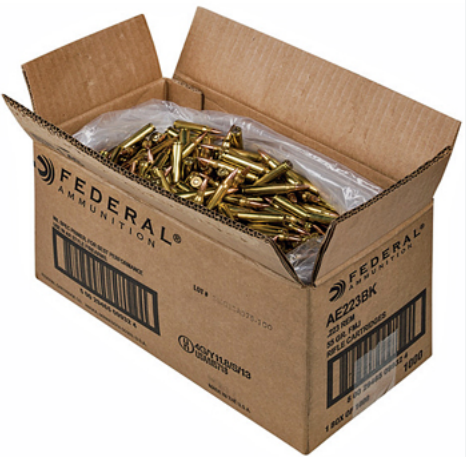
Match-grade ammunition isn't necessary for prairie dog hunting. These are small targets, but they're not precision shooting targets. Ammunition that shoots 1.5 MOA groups will kill prairie dogs just fine, and you'll save money over match ammo that shoots 0.5 MOA groups.
Bulk ammunition purchases make sense for prairie dog hunting because you'll use it. Buying ammunition by the case (500-1000 rounds) reduces the per-round cost significantly, and you'll shoot enough to justify the bulk purchase.
Common mistakes that cost shots
Overestimating your effective range. Most hunters think they can make consistent hits on prairie dogs at 400+ yards, but the reality is that 300 yards is about the limit for most shooter/rifle combinations. Wind, mirage, and the small target size make longer shots more luck than skill.
Using too much magnification. High magnification looks impressive, but it makes target acquisition slower and amplifies every movement and mirage effect. Most successful prairie dog hunters use 8-12x magnification for the majority of their shooting.
Ignoring barrel heat. A hot barrel shoots differently than a cold barrel, and most hunters don't account for this. Groups open up, point of impact shifts, and accuracy degrades as the barrel heats up. Plan cooling breaks into your shooting session.
Poor shooting position discipline. Prairie dog hunting involves a lot of shooting, and it's easy to get sloppy with shooting positions as the day progresses. Maintaining consistent cheek weld, sight picture, and trigger control becomes more important, not less important, as you get tired.
Not adjusting for conditions. Wind, light, and temperature change throughout the day, and your shooting needs to adapt. The zero that worked at 8 AM might be off by an inch at 2 PM due to temperature and mirage effects.
Rifle and cartridge comparison
Ruger American Prairie (.223 Remington) - Heavy barrel, reliable action, affordable price point. Handles high-volume shooting well and maintains accuracy through heat cycles. Good factory trigger and accepts standard AR magazines.
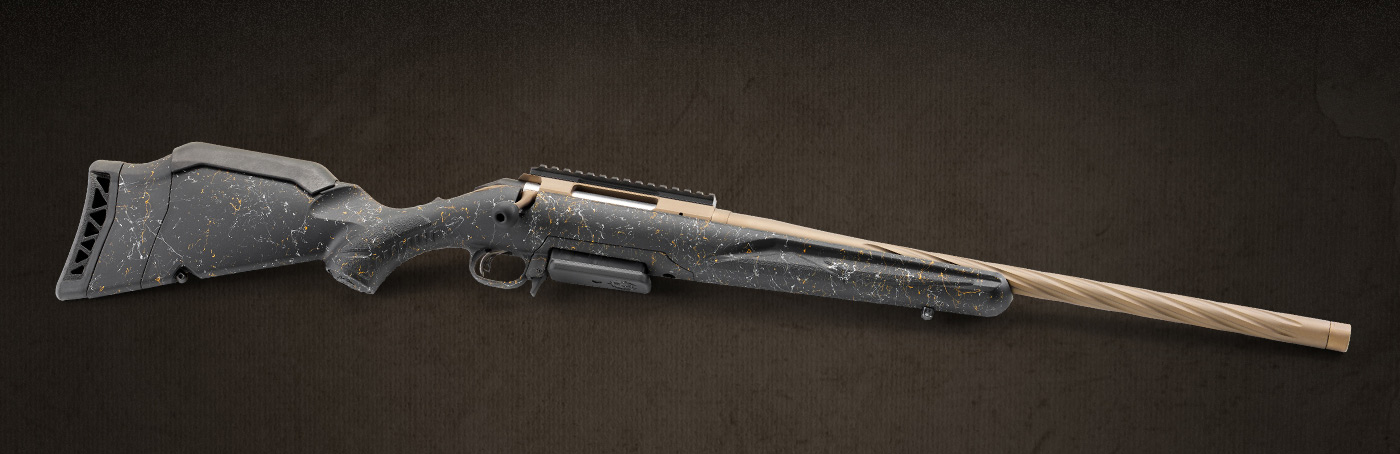
Tikka T3x Varmint (.223 Remington) - Smooth bolt action, excellent factory barrel, adjustable trigger. More expensive than the Ruger but offers better out-of-box accuracy and build quality. Single-stack magazine limits capacity.
Savage 12 FV (.22-250 Remington) - AccuTrigger system, heavy barrel, good accuracy potential. The .22-250 offers flatter trajectory but generates more heat and costs more to shoot. Better for longer shots but less suitable for high-volume shooting.
CZ 527 Varmint (.223 Remington) - Micro-Mauser action, set trigger, excellent build quality. More expensive than other options but offers superior accuracy and reliability. Limited magazine capacity but exceptional trigger quality.
Howa 1500 Varminter (.224 Valkyrie) - Heavy barrel, good accuracy, reasonable price. The .224 Valkyrie offers better long-range performance but ammunition costs more and availability is limited compared to .223.
Preparation for prairie dog season
Before you head to the dog towns, verify your zero at the distances you'll be shooting. Most prairie dog shots happen between 150 and 300 yards, so confirm your zero at 200 yards and know your holdovers for other distances.
Test your rifle's accuracy with the ammunition you plan to use, and shoot enough rounds to verify that accuracy holds up as the barrel heats up. If groups open up significantly after 20-30 shots, you need a different rifle or ammunition combination.
Practice shooting from field positions, not just from a bench. Prairie dog hunting often requires shooting from improvised positions, and you need to know how your rifle performs from prone, sitting, and standing positions with your chosen rest system.
Break in your shooting position equipment before the hunt. New bipods need to be adjusted and tested, shooting bags need to be filled to the right firmness, and any new gear needs to be proven reliable before you depend on it in the field.
Plan your ammunition needs based on realistic expectations. Most hunters shoot 100-200 rounds per day of prairie dog hunting, but some days you might shoot 300+ rounds if conditions are good and the dogs are active. Bring more ammunition than you think you'll need.
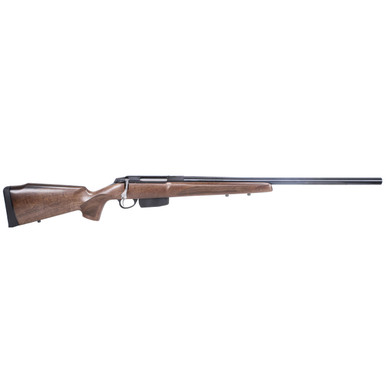
Tikka T3x Varmint .223 Remington Deals
Prices may change. May contain affiliate links.