Your brass prep is perfect, your powder charges are consistent, but your groups are still scattered. Before you blame the bullet or the barrel, check your measurements. That $15 caliper from the hardware store might be sabotaging your precision work.
Here's the thing: reloading and gunsmithing demand accuracy to the thousandth. Case length variations of 0.003" can affect pressure. Bullet seating depth differences of 0.002" change your groups. Your measuring tools need to be as precise as your shooting goals.
I've tested digital calipers from $20 Chinese imports to $200 Mitutoyos. For most home reloaders and hobby gunsmiths, you don't need the Swiss-made perfection, but you definitely need better than the flea market specials. The sweet spot sits between $50-150, where you get real accuracy without paying for features you'll never use.
What makes a caliper worth buying
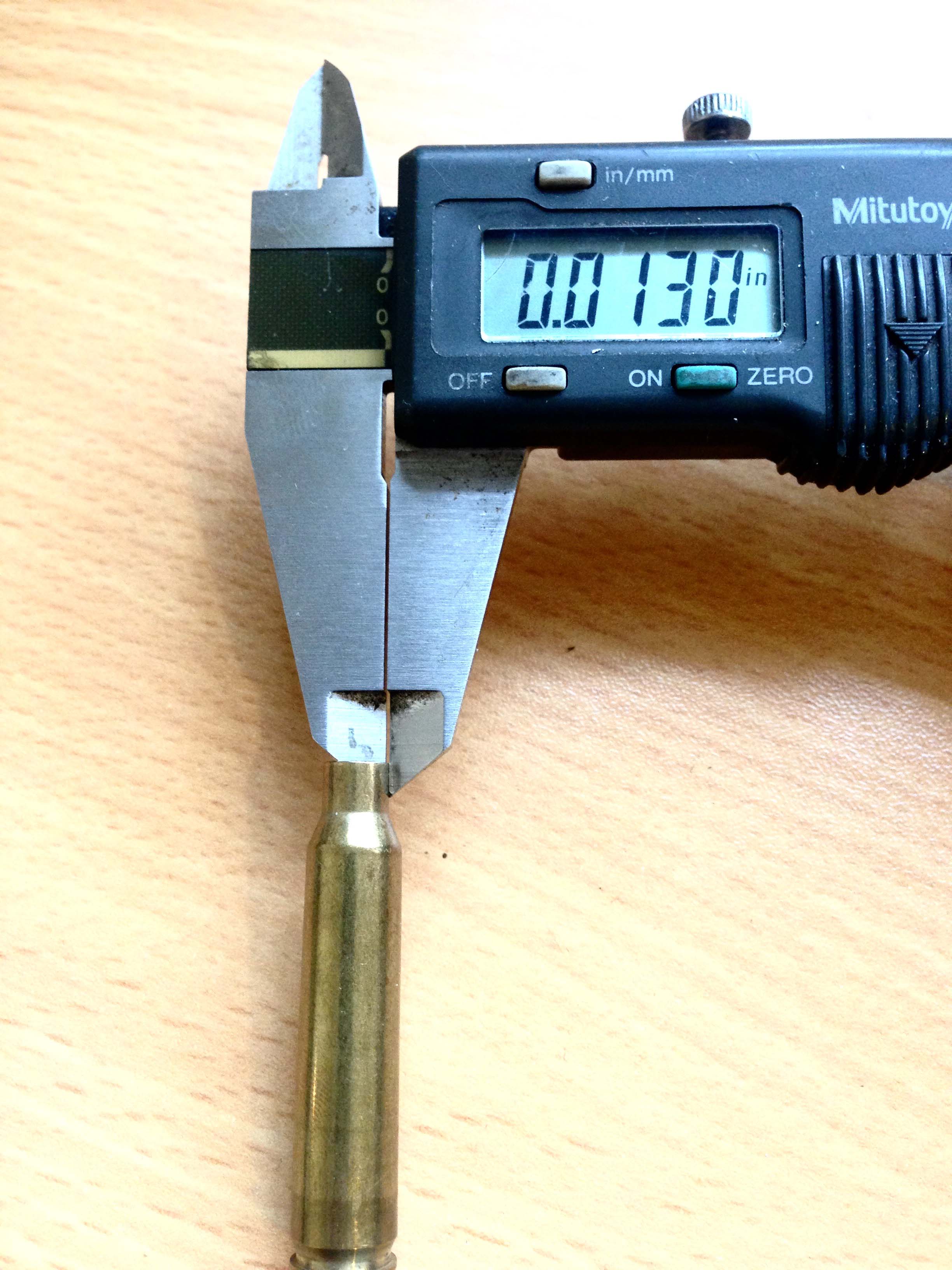
Look, all digital calipers look similar in photos. The differences show up when you're measuring 500 cases or checking headspace on a barrel extension. The cheap ones drift, the displays flicker, and the jaws flex under light pressure.
Resolution matters, but not how you think. Every digital caliper claims 0.0005" resolution. That's the smallest increment it displays, not how accurately it measures. Real accuracy depends on the quality of the linear encoder, jaw rigidity, and how well the electronics filter out interference from your phone or LED shop lights.
Repeatability is everything. Close the jaws on a 0.308" pin gauge ten times. A good caliper reads the same number every time. A mediocre one varies by 0.001-0.002". That variance compounds when you're sorting brass by length or setting bullet seating depth.
The jaw design tells you about build quality immediately. Hardened steel jaws stay parallel under pressure. Soft jaws flex, giving false readings when measuring hard materials like case necks or bullet diameters. Check for sharp, clean edges on the measuring surfaces - rounded or chipped jaws can't grab small features accurately.
Battery life separates the daily users from the weekend warriors. Cheap calipers drain batteries in weeks, even when turned off. Quality units run for months on a single battery and have reliable auto-shutoff functions.
Mitutoyo 500-196-30 Absolute Digimatic
The Mitutoyo 500-196-30 sits at the top of this price range around $130-140, and honestly, it's the last caliper most reloaders will ever need to buy. Japanese manufacturing shows in every detail - the jaws close with a solid feel, the display is crisp even in bright shop light, and the readings stay consistent whether you're measuring soft brass or hardened steel.
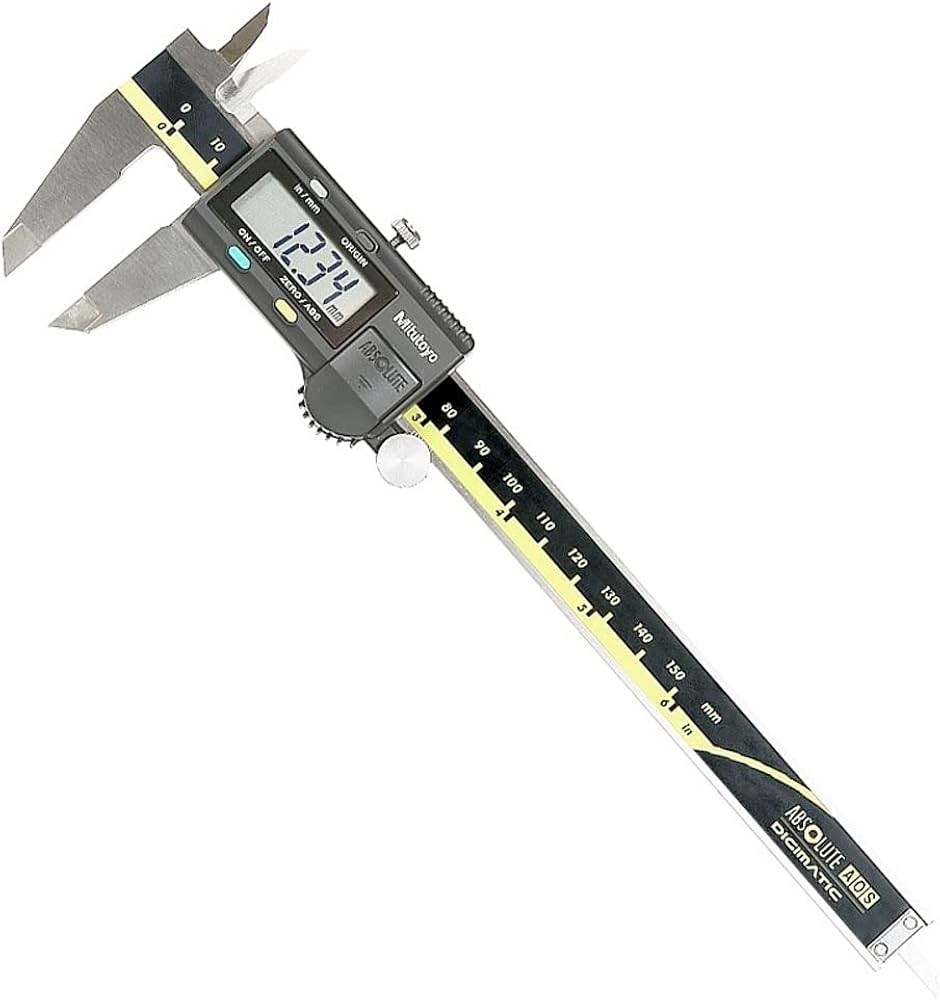
What makes it special: The Absolute encoding system remembers your zero point even after the battery dies. No more re-zeroing every time you turn it on. The linear encoder uses electromagnetic induction instead of optical sensors, so metal chips and powder residue won't interfere with readings.
The thumb wheel gives you precise control when measuring delicate items like bullet tips or thin case walls. Light pressure keeps you from deforming soft materials, while the large display digits are easy to read without squinting. Build quality feels substantial - this isn't going to flex or bind after a year of heavy use.
Where it excels: Consistent readings on everything from 0.001" shim stock to 6" barrel extensions. The stainless steel construction resists corrosion from handling chemicals or working in humid conditions. Battery life typically runs 12-18 months with regular use.
The downside: It's expensive for a single-purpose tool, and the advanced features might be overkill if you only reload occasionally. Some users find the thumb wheel too sensitive for quick measurements.
Starrett 798A-6/150
Starrett's 798A-6/150 runs about $90-100 and brings American manufacturing to the digital caliper market. The company's been making precision tools since 1880, and that experience shows in the mechanical design. The jaw alignment stays true even after years of use, and the hardened measuring surfaces resist wear from repeated contact with steel cases and bullets.
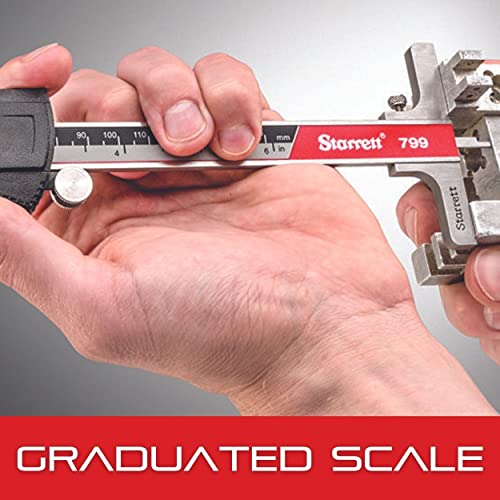
The practical difference: Starrett optimized this model for shop use rather than laboratory work. The display is larger than most competitors, with bold digits that stay readable even when your hands are dirty. The case design protects the electronics from impacts and contamination better than more delicate models.
Response time is noticeably faster than budget calipers. Move the jaws and the display updates immediately, without the lag or flickering common in cheaper units. This matters when you're sorting hundreds of cases and need quick, reliable readings.
What you'll appreciate: The zero-setting button is large and positive - you can find it without looking. The battery compartment seals properly, preventing corrosion from shop humidity. Replacement parts are available if you damage the jaws or wear out the battery contacts.
Consider this: It lacks some convenience features like data output ports or metric/imperial switching. The styling is purely functional - no fancy packaging or accessories.
iGaging IP54 Absolute Origin
The iGaging IP54 Absolute Origin typically sells for $60-70 and delivers surprising performance for the price point. The IP54 rating means it's protected against dust and water splashes - useful when working with case lube or cutting oils. The Absolute Origin system works similarly to Mitutoyo's encoding, maintaining zero reference even through power cycles.
Why it works: The linear encoder design eliminates the drift common in cheaper digital calipers. Measurements stay consistent whether you're working in a cold garage or warm reloading room. The stainless steel construction resists corrosion and provides adequate rigidity for most reloading tasks.
The jaw design handles both external and internal measurements well. The step feature works for measuring case rim thickness or bullet bearing surface length. Display quality is good - not as crisp as the premium brands, but readable in normal shop lighting.
Real-world performance: I've used one for over two years measuring everything from primer pocket depth to chamber dimensions. Repeatability stays within 0.0005" on most measurements, which is adequate for all but the most demanding applications. Battery life runs 8-12 months with regular use.
The limitations: Build quality feels lighter than the premium options. The thumb wheel isn't as smooth, and the display occasionally flickers in very bright light. Customer service is limited compared to established tool companies.
RCBS Electronic Digital Caliper
RCBS designed their digital caliper specifically for reloaders, and it shows in the details. Priced around $80-90, it includes features that matter for brass prep and bullet seating work. The jaws are optimized for measuring cartridge components, with relief cuts that help when measuring bullet ogive length or case shoulder angles.
Reloader-specific features: The display shows both decimal and fractional measurements simultaneously, useful when working with older reloading manuals that specify dimensions in fractions. The auto-shutoff timing is longer than most calipers, recognizing that reloading involves extended measurement sessions.
The case design protects against powder spills and solvent exposure. The battery compartment seals completely, and the electronics are potted to resist moisture. This matters more than you might think when working with corrosive primers or aggressive case cleaning chemicals.
Performance notes: Accuracy is solid for reloading applications, typically within 0.001" of reference standards. The jaw pressure is calibrated for measuring brass without deformation - important when checking case neck thickness or bullet seating depth. Response time is adequate, though not as fast as premium models.
Trade-offs: The specialized features add cost compared to generic calipers with similar accuracy. The display is smaller than some competitors, and the styling is purely functional.
Neiko 01407A Electronic Digital Caliper
At $35-45, the Neiko 01407A represents the budget end of usable digital calipers. It won't match the precision or longevity of premium models, but it delivers acceptable performance for occasional use or as a backup tool. The stainless steel construction feels substantial, and the basic functions work reliably.
What you get: Standard digital caliper features including zero reset, inch/metric conversion, and auto-shutoff. The display is clear and the jaws close smoothly. Build quality is adequate for light-duty use, though the electronics feel less refined than expensive models.
Accuracy is acceptable for basic reloading tasks like checking overall cartridge length or sorting cases by length. Repeatability typically stays within 0.002", which is sufficient for most handloading applications. The included case protects the caliper during storage.
Honest assessment: This works fine for checking finished ammunition or measuring components that don't require extreme precision. It's not suitable for critical dimensions like headspace measurements or precision bullet seating work. Battery life is shorter than premium models, typically 3-6 months.
Best use case: Backup caliper for the range bag, or primary tool for reloaders who measure only occasionally. It's also useful for teaching new reloaders without risking expensive equipment.
What you actually need for different tasks
Basic reloading: Case length, overall cartridge length, bullet diameter. Any caliper in this list handles these measurements adequately. The Neiko works fine if you're loading standard cartridges with published data and don't need extreme precision.
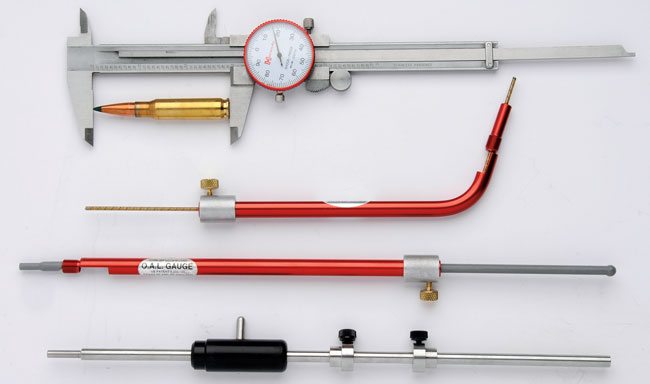
Precision rifle reloading: Bullet seating depth variations, case neck thickness, primer pocket depth. You need consistent readings to 0.0005". The iGaging IP54 or RCBS models provide adequate accuracy for this level of work.
Competition reloading: Sorting components by weight and dimension, measuring case capacity variations, checking bullet concentricity. The Mitutoyo or Starrett models deliver the repeatability needed for this precision level.
Basic gunsmithing: Checking barrel dimensions, measuring thread pitch, verifying headspace with gauges. Any quality caliper works, but the Starrett's durability makes sense for shop use.
Precision gunsmithing: Chamber dimensions, timing measurements, tolerance verification. The Mitutoyo's accuracy and features justify the cost when working on custom builds or precision repairs.
Common measurement mistakes that ruin accuracy
Jaw pressure inconsistency causes more measurement errors than caliper accuracy. Brass deforms under pressure, giving false readings. Learn to close the jaws with just enough force to contact the material - you should feel slight resistance, not compression.
Temperature effects change both your caliper and the parts you're measuring. Brass expands about 0.0001" per inch per 10°F temperature change. Let components and tools reach room temperature before critical measurements. I learned this the hard way when cases measured in a cold garage showed different lengths after warming up indoors.
Dirty jaws give inconsistent readings. Case lube, powder residue, and metal particles interfere with proper contact. Clean the measuring surfaces regularly with alcohol or acetone. Check for burrs or damage that could affect accuracy.
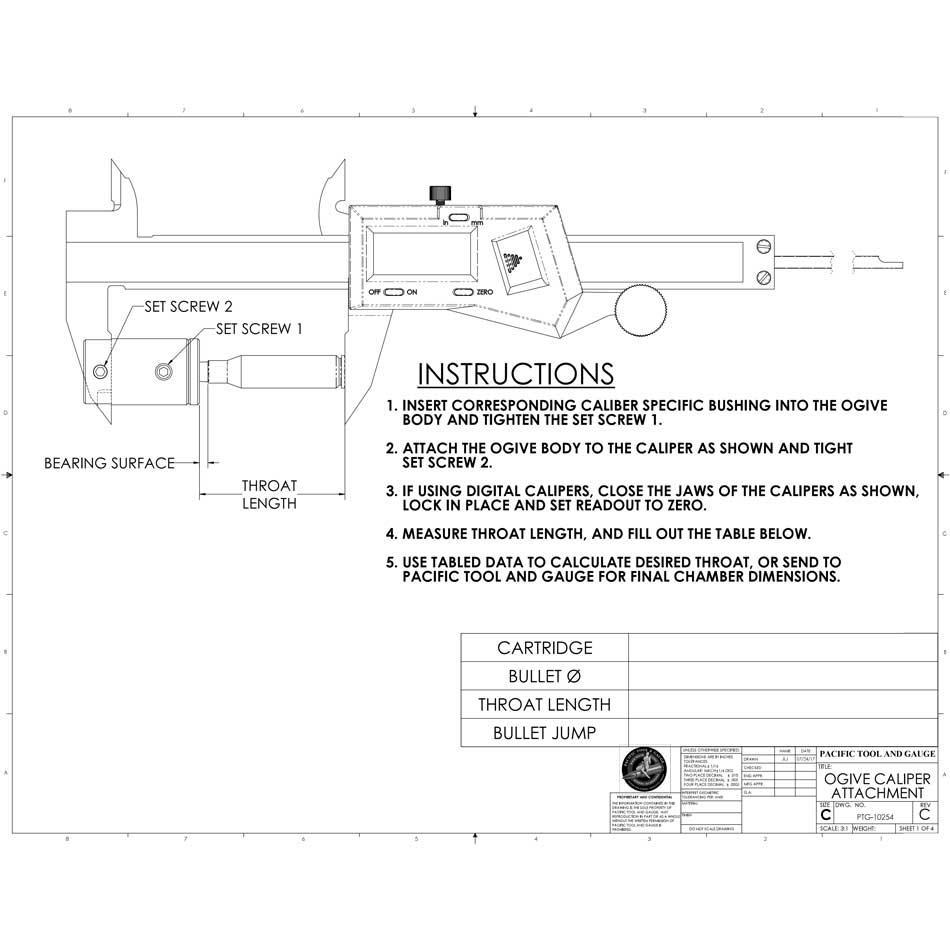
Wrong measurement points lead to false data. When measuring bullet seating depth, use the ogive length, not the tip - bullet tips vary significantly even within the same lot. For case length, measure from the base to the case mouth, not including any flare or chamfer.
Parallax errors occur when you don't read the display straight-on. The angle of view can change the apparent reading by 0.001" or more. Position yourself directly in front of the display for consistent readings.
Bench notes from actual use
After measuring thousands of cases and bullets with these calipers, some practical differences emerge that don't show up in specifications. The Mitutoyo's thumb wheel becomes second nature - you can make fine adjustments without looking, useful when measuring bullet ogive length or checking case concentricity.
The Starrett's larger display reduces eye strain during long measurement sessions. When you're sorting 200 cases by length, the bigger numbers make a real difference. The RCBS model's auto-shutoff timing works better for reloading workflows - it stays on longer during brass prep but still conserves battery power.
Battery replacement varies significantly between models. The Mitutoyo and Starrett use standard batteries available anywhere. Some budget models use oddball cells that cost more to replace than the caliper is worth. Check this before buying.
Calibration drift happens to all digital calipers over time. Test yours monthly against a known standard - a gauge pin or precision-ground rod. Most drift gradually, giving consistently wrong readings rather than random errors. This is fixable with calibration, but you need to catch it.
The IP54 rating on the iGaging model matters more than expected. Case lube and cleaning solvents can damage electronics in unsealed calipers. The protection is worth the slight cost increase if you do a lot of brass prep.
Tools and accessories that matter
Gauge pins or precision rods give you calibration standards for checking accuracy. A set of 0.100", 0.200", and 0.300" pins costs about $30 and lets you verify your caliper's performance across its range. Test monthly if you're doing precision work.
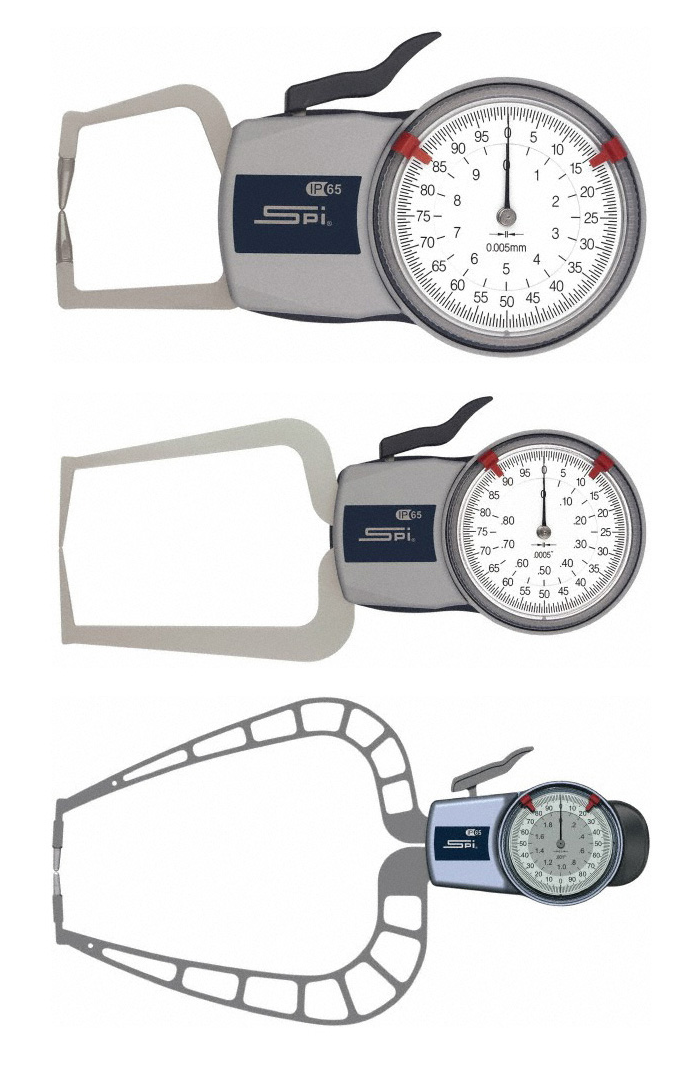
Caliper stands protect the tool and keep it accessible on your bench. The measuring surfaces stay clean and the display remains visible. Cheap plastic stands work fine - you don't need expensive machined versions.
Replacement batteries should be quality alkaline or lithium cells. Cheap batteries leak and damage electronics. Keep spares on hand - there's nothing worse than a dead caliper in the middle of a reloading session.
Cleaning supplies include alcohol, cotton swabs, and soft cloths. Avoid abrasive cleaners that can damage the measuring surfaces. A small brush helps remove powder residue from the jaw mechanisms.
When to upgrade vs when you're fine
Stick with budget options if you reload occasionally, work with standard cartridges, and don't need extreme precision. The Neiko handles basic measurements adequately and costs less than a box of premium bullets.
Move to mid-range models when you're reloading regularly, working on precision loads, or doing basic gunsmithing. The iGaging or RCBS models provide the accuracy and features needed for serious handloading without breaking the budget.
Buy premium calipers for competition reloading, precision gunsmithing, or when you're measuring critical dimensions regularly. The Mitutoyo or Starrett models justify their cost through superior accuracy, durability, and features.
Consider multiple calipers if you're doing both rough and precision work. Keep a budget model for general measurements and a precision unit for critical dimensions. This protects your expensive caliper from damage while ensuring accuracy when it matters.
What to check on your first range trip
Verify your measurements by checking loaded ammunition dimensions against your caliper readings. Overall length should match your seating die settings. Case length should be consistent within your sorting tolerances.
Test for measurement drift by re-measuring components after shooting. Temperature changes and handling can reveal calibration issues that weren't apparent in the shop. Bring gauge pins to the range for field verification.
Check for damage from transportation or use. Calipers are precision instruments that can be knocked out of calibration by drops or impacts. Verify zero and accuracy before relying on measurements for load development.
The difference between a $40 caliper and a $140 caliper isn't just accuracy - it's consistency, durability, and confidence in your measurements. When you're developing precision loads or working on critical dimensions, the tool becomes an extension of your skills. Choose based on your actual needs, not aspirations, but remember that good measuring tools are investments that improve everything else you do at the bench.