You're standing at the gun counter trying to decide which .22lr pistol to buy. Maybe it's for training, teaching someone new to shoot, or just having cheap fun at the range. Here's the problem: everyone's got an opinion, but most haven't actually put serious trigger time on these guns.
I've spent the last few years shooting everything from $150 Heritage revolvers to $800 Volquartsen builds. After burning through thousands of rounds of .22lr across a dozen different platforms, here's what actually matters when you're picking your next rimfire pistol.

The real question isn't which gun shoots the tightest groups on paper. It's which one you'll actually want to shoot every weekend without breaking the bank on ammo or maintenance.
The current .22lr landscape
The rimfire pistol market has exploded over the past few years. You've got everything from ultra-budget single actions to competition-ready semi-autos that cost more than some centerfire guns. The sweet spot for most shooters sits between $200-500, where you get reliable function without paying for features you don't need.
Here's what's driving the market: .22lr ammo is finally available again and prices have stabilized around 8-12 cents per round for decent stuff. That's still cheap enough to shoot 200-300 rounds in an afternoon without feeling guilty. Plus, more ranges are allowing rimfire in their action shooting sports, so these guns actually have practical applications beyond plinking.
The reliability gap between cheap and expensive .22lr pistols has also narrowed significantly. A $200 Ruger Wrangler will run almost as reliably as a $600 Mark IV if you feed it decent ammo. The differences show up in trigger quality, accuracy potential, and how the gun feels after 500 rounds in a session.
Semi-automatic options
Ruger Mark IV series
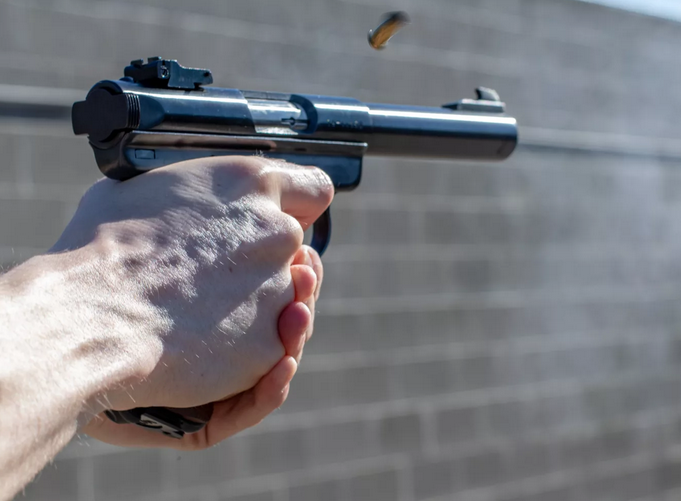
The Mark IV is the gold standard for .22lr semi-autos, and for good reason. I've put over 5,000 rounds through my 22/45 Lite without a single malfunction that wasn't ammo-related. The one-button takedown makes cleaning actually tolerable, which matters more than you think with rimfire guns.
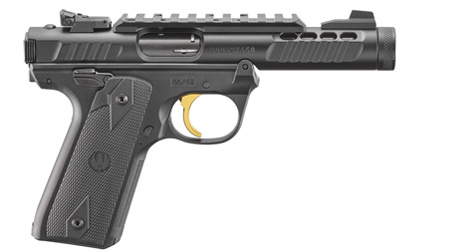
The trigger breaks clean at about 4.5 pounds out of the box. It's not a match trigger, but it's consistent and doesn't stack. Accuracy is excellent, I regularly shoot 2-inch groups at 25 yards with decent ammo. The 22/45 grip frame fits most hands better than the traditional Mark IV frame, especially if you're used to modern pistols.
Weight runs 28-35 ounces depending on barrel length and configuration. The Lite models with fluted barrels balance better but cost about $100 more. Standard models are nose-heavy, which helps with accuracy but makes them slower in rapid fire.

The Mark IV's biggest weakness is magazine capacity. Ten rounds feels limiting when you're having fun, and the magazines are expensive at $35-40 each. But they're built like tanks and feed reliably with everything from bulk pack to match ammo.
Smith & Wesson Victory
The Victory was S&W's answer to the Mark IV, and they got most of it right. The trigger is actually better than the Ruger out of the box; cleaner break with less overtravel. Takedown is tool-free like the Mark IV, though not quite as elegant.
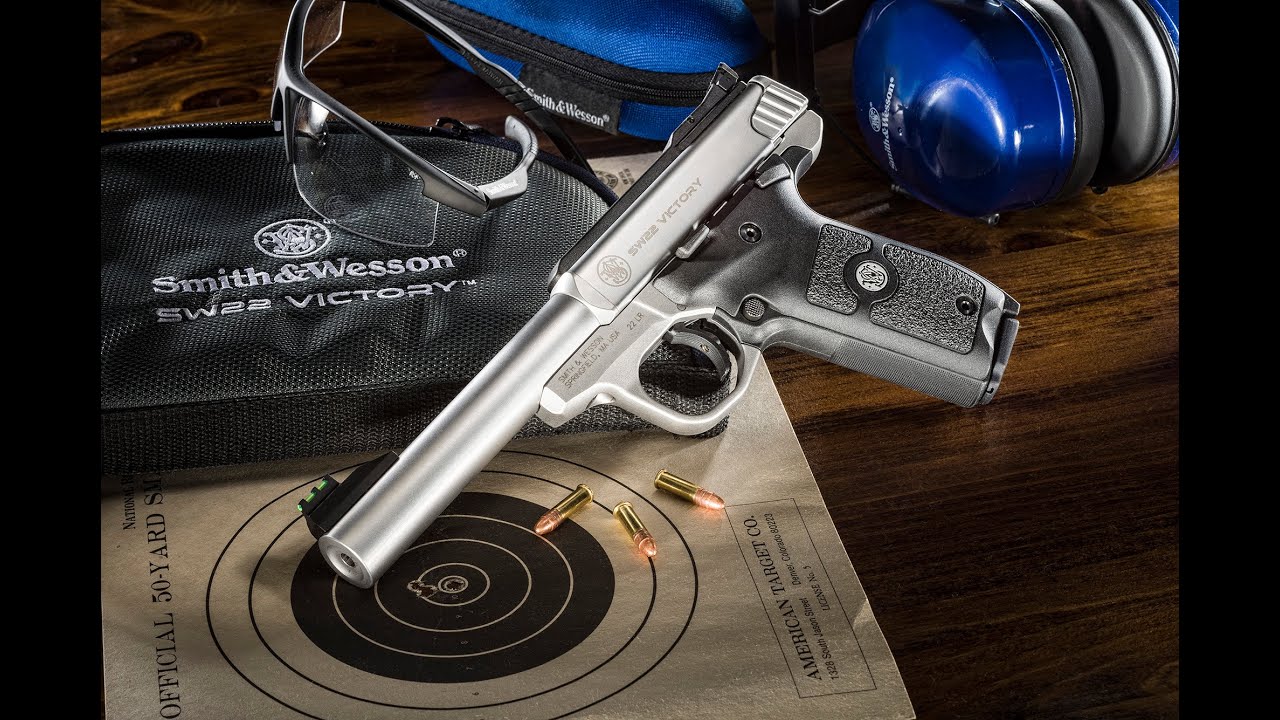
Accuracy matches the Mark IV in my testing. I've shot several sub-2-inch groups at 25 yards, and it handles cheap ammo without complaints. The fiber optic front sight is a nice touch that makes target acquisition faster than the Mark IV's blade.
Where the Victory falls short is aftermarket support. Ruger has decades of upgrades available; the Victory has basic stuff like triggers and barrels, but nothing like the ecosystem around the Mark series. Weight is similar to the Mark IV at around 30 ounces.
The Victory's magazines hold 10 rounds and cost about $30. They're reliable but feel cheaper than Ruger's. If you're buying one gun to shoot occasionally, the Victory makes sense. If you're planning to modify or shoot competitively, stick with the Mark IV.
Browning Buck Mark
The Buck Mark has been around forever, and it shows in both good and bad ways. The grip angle feels more natural than either the Mark IV or Victory, and the trigger is excellent; crisp 3-pound break with minimal overtravel. It's the most comfortable .22 pistol I've shot for extended sessions.
Accuracy is on par with the Mark IV, maybe slightly better with match ammo. The standard barrel is heavier than the Ruger, which helps with precision shooting but makes it feel sluggish in rapid fire. Weight runs 32-38 ounces depending on configuration.
The Buck Mark's problem is takedown. You need tools, and it's not intuitive. After a few thousand rounds of rimfire fouling, this becomes a real issue. The magazines are also expensive and only hold 10 rounds.
If you're primarily interested in precision shooting and don't mind the maintenance hassle, the Buck Mark is worth considering. For general use, the Mark IV's easier cleaning wins out.
Kel-Tec P17
The P17 is the wild card in this category. At around $200, it's half the price of the established players. The capacity is impressive, 16 rounds in a package that weighs just 14 ounces. It feels like a toy until you start shooting it.
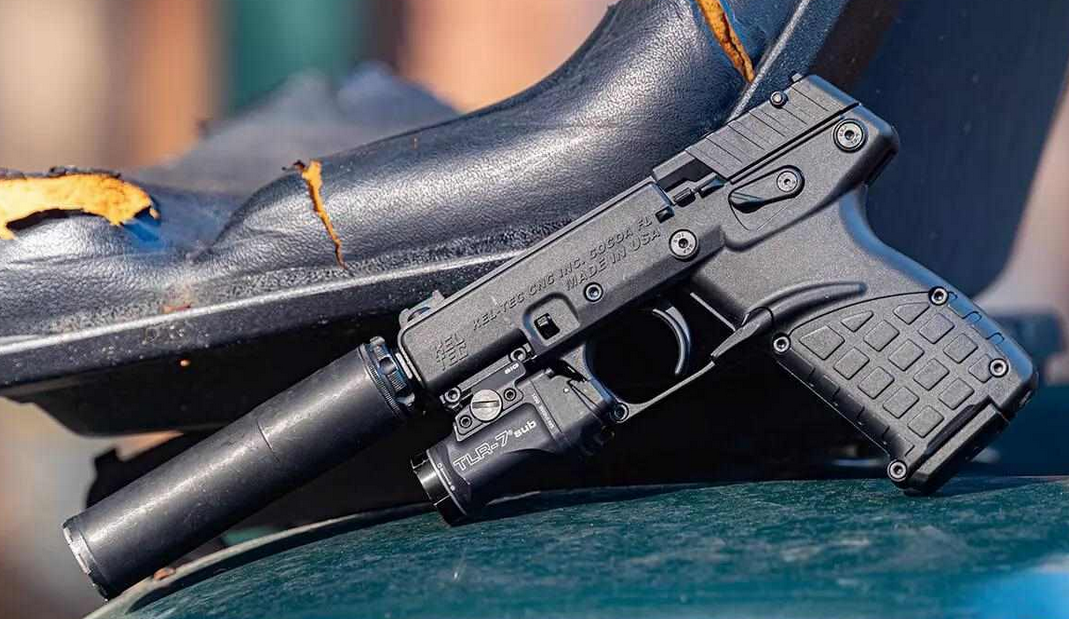
Reliability has been surprisingly good in my testing. I've had maybe three malfunctions in 1,500 rounds, all with cheap bulk ammo. The trigger is long and mushy but consistent. Accuracy is adequate for plinking, 4-inch groups at 25 yards are typical.
The P17's biggest advantage is size and weight. It actually makes sense as a trail gun or camp pistol where you want something light that holds a lot of rounds. The threaded barrel is ready for a suppressor, which is rare at this price point.
Build quality feels cheap because it is cheap. The polymer frame flexes noticeably, and the controls feel flimsy. But it works, and at $200, you can buy three P17s for the price of one Mark IV.
Revolver options
Ruger Wrangler
The Wrangler has become the default budget .22 revolver, and it's earned that spot. At $200, it's hard to beat for introducing new shooters or just having fun. The single-action mechanism is simple and reliable, and the transfer bar safety means you can load all six chambers.
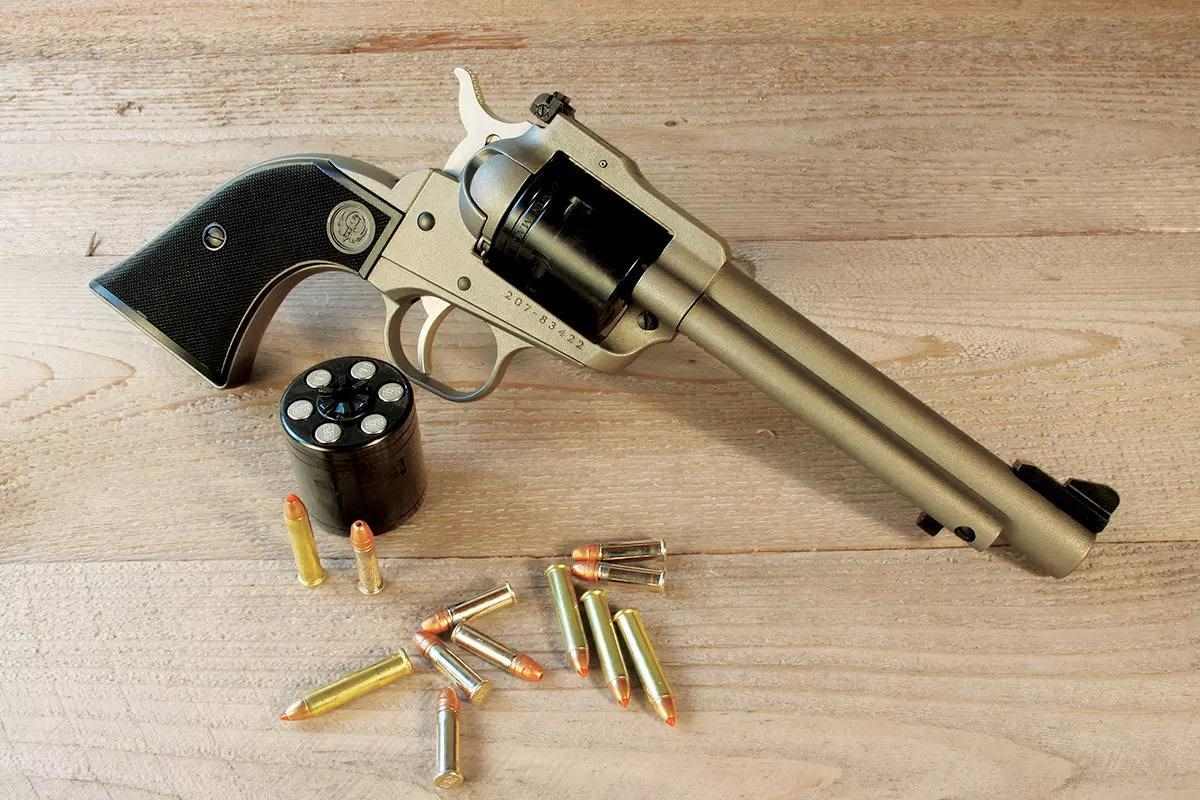
The trigger is typical single-action, long, heavy double-action pull that you'll never use, and a crisp 3-pound single-action break. Accuracy is better than you'd expect from a $200 gun. I regularly hit 6-inch steel at 50 yards, and careful shooting produces 3-inch groups at 25 yards.
Weight is 30 ounces with the 4.62-inch barrel, which feels substantial without being heavy. The grip fits most hands well, though it's a bit small for large hands. Sights are basic but functional, a fixed front blade and rear notch that work fine for casual shooting.
The Wrangler's limitations are what you'd expect at this price. The finish scratches easily, the cylinder doesn't lock up as tightly as more expensive guns, and there's some end shake. None of this affects function, but it bothers some people.
Heritage Rough Rider
The Rough Rider competes directly with the Wrangler at around $150-180. It's a single-action six-shooter that looks like a Colt SAA and functions about as well as you'd expect for the price.
Quality control is hit-or-miss. I've shot Rough Riders that functioned perfectly and others that had timing issues or rough actions. The trigger is heavier than the Wrangler and not as consistent. Accuracy is adequate, similar to the Wrangler in my testing.
The Rough Rider's advantage is availability of different barrel lengths and finishes. You can get everything from 3-inch barrels to 16-inch carbine versions. The .22 Magnum cylinder option is nice if you want more power occasionally.
Build quality feels cheaper than the Wrangler. The frame is softer metal that shows wear quickly, and the action doesn't smooth out as much with use. For $150, it's functional, but the extra $50 for a Wrangler is worth it.
Ruger SP101
The SP101 in .22lr is a different animal entirely. This is a serious double-action revolver that happens to be chambered in rimfire. The build quality matches Ruger's centerfire guns, and the price reflects that at around $600.
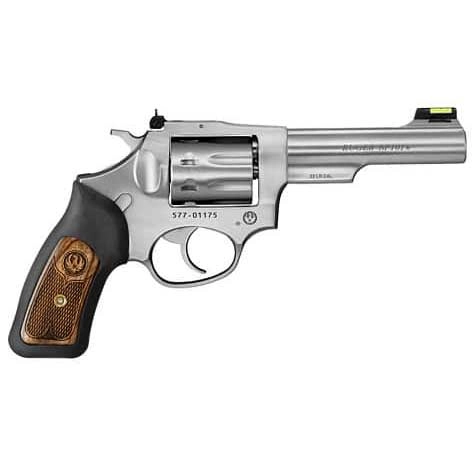
The double-action trigger is smooth and consistent at about 10 pounds. Single-action breaks cleanly at 4 pounds. This is a gun you can actually shoot double-action accurately, unlike most budget .22 revolvers. The fixed sights are well-regulated and easy to see.
Accuracy is excellent, this gun will outshoot most shooters. I've managed 1.5-inch groups at 25 yards with match ammo, and it handles cheap bulk ammo without complaints. The 8-round capacity is a nice bonus over six-shot revolvers.
Weight is 37 ounces, which is heavy for a .22 but helps with accuracy and recoil management. The grip fits well and doesn't beat up your hand during long sessions. This feels like a real gun, not a toy.
The SP101's main drawback is price. At $600, you're paying centerfire money for rimfire performance. If you want one serious .22 revolver that will last decades, it makes sense. For casual shooting, it's overkill.
Smith & Wesson 617
The 617 is S&W's premium .22 revolver, and it shows in both performance and price. Street price runs $700-800, putting it in competition with high-end semi-autos. The build quality is excellent, with a smooth action and precise lockup.
The trigger is where the 617 shines. The double-action pull is smooth and consistent at about 9 pounds, with no stacking or gritty spots. Single-action breaks at 3.5 pounds with minimal overtravel. This is a trigger you can shoot accurately in both modes.
Accuracy matches the SP101, sub-2-inch groups at 25 yards are achievable with good ammo. The adjustable sights are precise and easy to see. The 10-round capacity in the full-size frame is generous for a revolver.
Weight runs 42-45 ounces depending on barrel length. This is a heavy gun that soaks up recoil completely but gets tiring in extended shooting sessions. The grips are comfortable and don't transmit much vibration.
The 617's weakness is value. At $750, you're paying a lot for incremental improvements over the SP101. The trigger is better, but not $150 better. If you're serious about revolver shooting and money isn't tight, it's worth considering.
Range notes
After putting thousands of rounds through these guns, a few patterns emerge. The semi-autos are generally more accurate and faster to reload, but they're pickier about ammo and require more maintenance. Revolvers are more forgiving of cheap ammo but slower to reload and limited in capacity.
For pure accuracy, the Buck Mark and Mark IV tie for first place, with the SP101 close behind. The Victory and Wrangler are both capable of good accuracy but require more attention to ammo selection. The P17 and Rough Rider are adequate for casual shooting but won't win any precision contests.
Reliability favors the revolvers, especially with bulk ammo. I've never had a Wrangler or SP101 fail to fire a decent cartridge. The semi-autos are more sensitive, the Mark IV and Victory will eat anything, but the P17 occasionally chokes on cheap hollow points.
Trigger quality varies widely. The Buck Mark has the best trigger overall, followed by the SP101 and 617. The Mark IV and Victory are adequate, while the P17 and budget revolvers have triggers that work but don't inspire confidence.
Common mistakes and troubleshooting
Buying based on price alone. The cheapest gun isn't always the best value. A $200 Wrangler that works perfectly is better than a $150 Rough Rider that has timing issues.
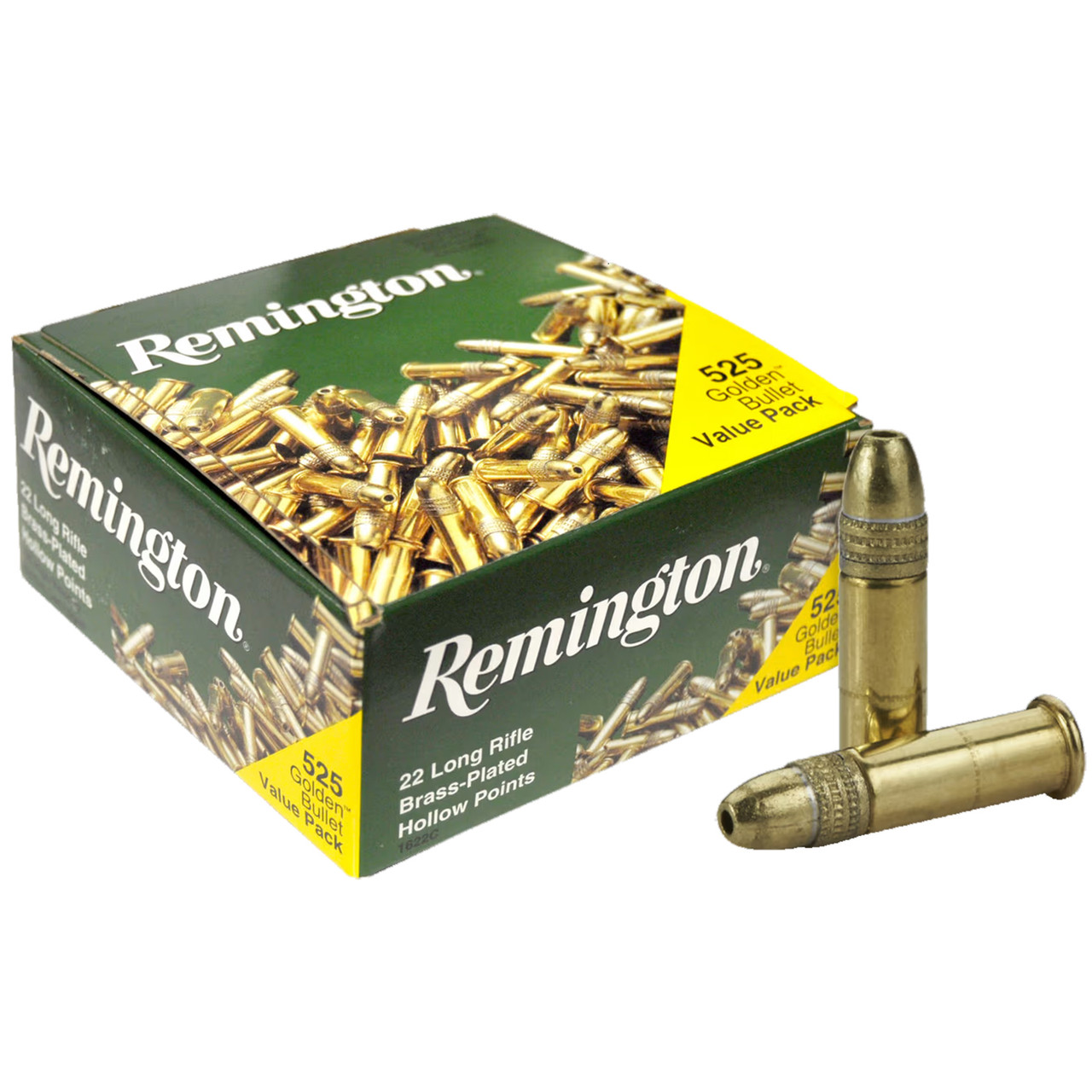
Ignoring ammo sensitivity. Not all .22lr ammo is created equal. High-velocity hollow points can cause feeding issues in semi-autos, while subsonic rounds might not cycle the action reliably. Buy a few different brands and see what your gun prefers.
Neglecting cleaning. Rimfire ammo is dirty, and .22lr guns need regular cleaning to function properly. The waxy buildup from cheap ammo can cause malfunctions in semi-autos and timing issues in revolvers.
Expecting centerfire accuracy. Even the best .22lr pistols won't match the precision of a good centerfire gun. Rimfire ammo has inherent accuracy limitations that no amount of money can overcome.
Over-modifying budget guns. It's tempting to upgrade a cheap gun with expensive parts, but you'll often spend more than buying a better gun initially. Stick to basic improvements like better grips or sights.
Size and weight comparison
The semi-autos cluster around 28-35 ounces, with the P17 being the outlier at just 14 ounces. Barrel lengths typically run 4-6 inches, making them similar in size to compact centerfire pistols. The Mark IV and Victory are the most compact, while the Buck Mark tends to be slightly larger.
Revolvers vary more widely. The Wrangler and Rough Rider are traditional single-action sizes, around 30 ounces with 4-6 inch barrels. The SP101 and 617 are heavier at 37-45 ounces but more compact overall due to their double-action frames.
For carry or hiking, the P17 wins on weight, but the Wrangler offers better reliability in a still-reasonable package. For range use, the extra weight of the full-size guns helps with accuracy and reduces felt recoil.
Felt recoil and handling
Recoil with .22lr is minimal in any gun, but there are differences. The heavier revolvers absorb what little recoil there is completely, making them pleasant for long shooting sessions. The lighter semi-autos have slightly more muzzle flip but recover quickly.
The P17 has the most noticeable recoil due to its light weight, but it's still mild by any standard. The polymer frame transmits more vibration than metal guns, which some shooters find unpleasant after 100+ rounds.
Grip angle affects handling more than recoil. The Buck Mark and 22/45 series feel most natural to shooters used to modern pistols. Traditional revolvers have steeper grip angles that take some adjustment but work well once you adapt.
Availability and current market
Most of these guns are readily available, though specific models and configurations can be hard to find. The Mark IV series has the best availability across different barrel lengths and finishes. The Victory and Buck Mark are common but with fewer options.
Budget revolvers like the Wrangler and Rough Rider are usually in stock somewhere, though popular configurations sell out quickly. The SP101 and 617 are available but often require special orders for specific barrel lengths.
Pricing has stabilized over the past year. Budget guns run $150-250, mid-range options are $300-500, and premium models cost $600-800. These prices represent good value compared to centerfire pistols with similar features.
Ammo availability is excellent compared to a few years ago. Bulk ammo runs 8-12 cents per round, while premium match ammo costs 15-25 cents. This makes .22lr pistol shooting affordable enough for regular practice.
Comparison
What I'd actually buy
If I could only own one .22lr pistol, it would be a Ruger Mark IV 22/45. The reliability, accuracy, and ease of maintenance make it the most versatile choice. The aftermarket support means you can upgrade it as your needs change.
For a budget option, the Wrangler offers the best combination of reliability and accuracy under $250. It's not fancy, but it works every time and shoots better than its price suggests.
If you want something different, the P17 is worth considering for its capacity and light weight. It's not as refined as the established players, but it offers unique advantages at a very reasonable price.
For serious precision shooting, the Buck Mark edges out the competition with its superior trigger and accuracy potential. The maintenance hassle is worth it if you're chasing the smallest groups possible.
The bottom line: any of these guns will serve you well if you match it to your intended use. A Wrangler is perfect for casual plinking, while a Mark IV makes sense for regular range sessions. The key is being honest about how much you'll actually shoot it and what features matter to you.
Don't overthink it. Pick one that feels right in your hands, buy a few boxes of different ammo to test, and start shooting. The best .22lr pistol is the one you'll actually use regularly.