You're staring at two Walthers in the case; a PPQ M2 and the newer PDP Compact. The shop guy's telling you they're basically the same gun with minor updates. He's wrong. After putting serious trigger time on both, I can tell you the PDP isn't just a refreshed PPQ. It's Walther admitting what shooters complained about for years and actually fixing it.
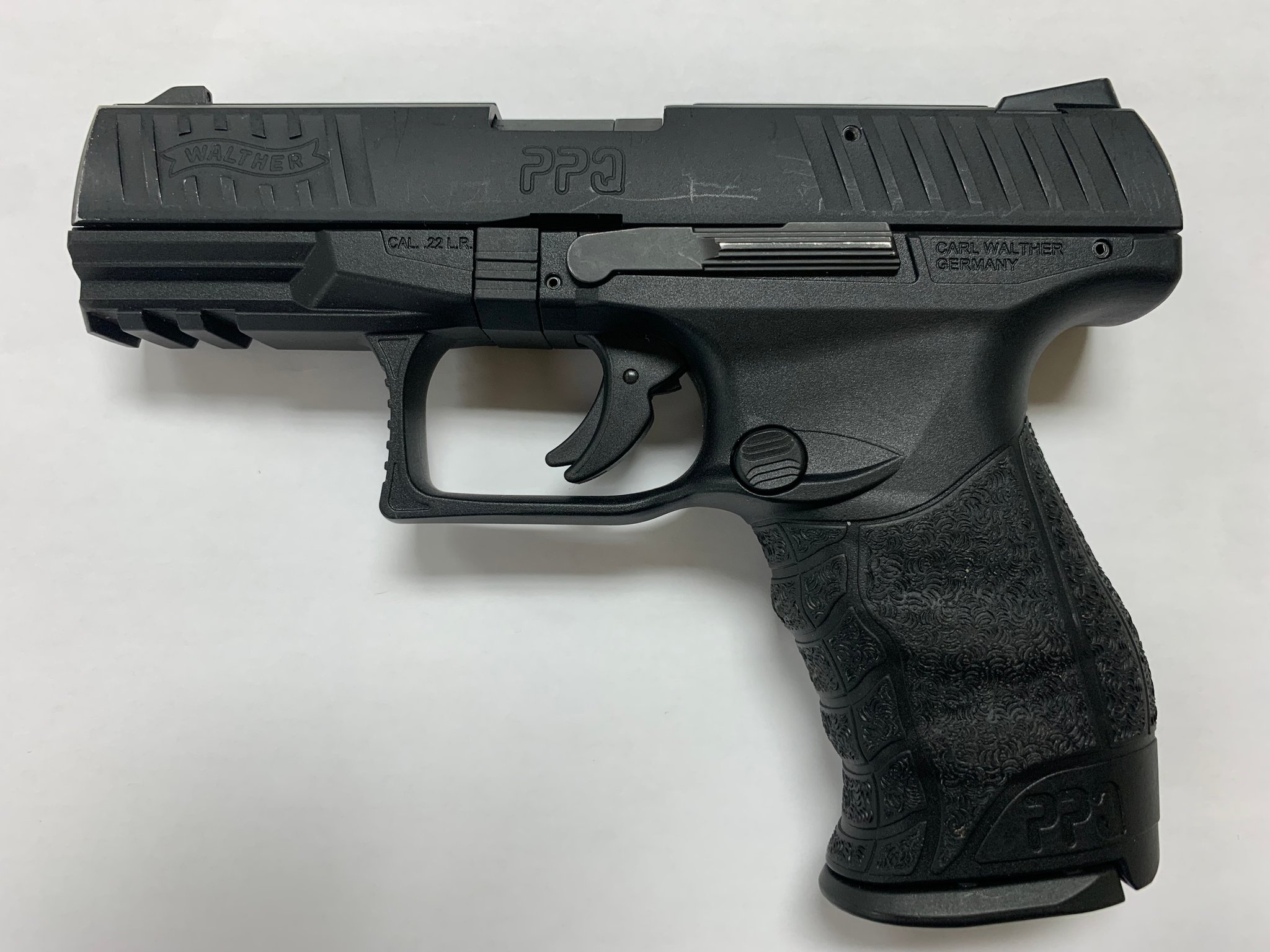
The PPQ was always that gun with incredible ergonomics and a trigger that made Glock owners jealous, but it had problems. The slide release was tiny and hard to hit under stress. The magazine release sat in no-man's land for most hand sizes. The grip texture looked aggressive but felt like sandpaper that had been worn smooth. Pennsylvania State Police just adopted the PDP for duty use, and German special forces picked it over everything else they tested. That doesn't happen by accident.
Walther PPQ M2 Deals
Prices may change. May contain affiliate links.
Here's what actually changed and whether it matters for how you'll shoot and carry the gun.
The grip that actually grips
The PPQ's grip always looked the part. Those angular cuts and aggressive texturing photographed well, but after a few hundred rounds, your hands would tell a different story. The texture was all show; it looked mean but didn't bite when your palms got sweaty or you were shooting with gloves.
Walther completely reworked the grip texture on the PDP. Instead of those shallow decorative cuts, you get deeper, more angular texturing that actually digs in. The first time I picked up a PDP after shooting PPQs for years, the difference was obvious. This grip doesn't let go, even when your hands are wet or you're wearing mechanics gloves.
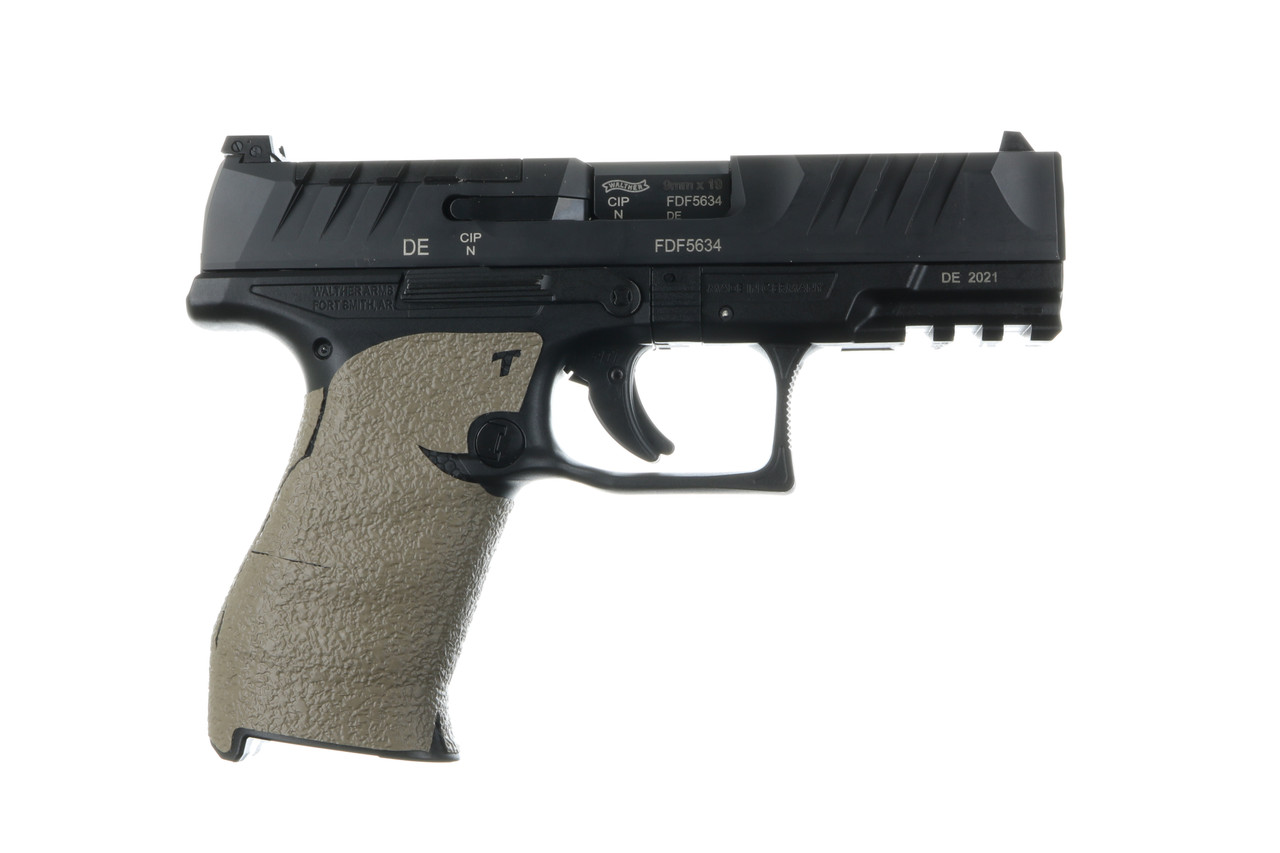
The frame geometry changed too, though subtly. Walther moved the trigger guard undercut forward and deepened it. Your strong hand sits higher on the frame, which drops the bore axis slightly and gives you better recoil control. It's not a dramatic change; maybe 2-3mm; but you'll feel it in the way the gun tracks through recoil.

Walther PDP Compact Deals
Prices may change. May contain affiliate links.
They also fixed the finger grooves issue. The PPQ had these subtle ridges that either lined up perfectly with your fingers or felt completely wrong. No middle ground. The PDP smoothed those out into a more universal grip profile that works for a wider range of hand sizes.
Controls that actually work under pressure
This is where the PPQ really showed its age. That slide release was tiny; fine for range work when you could take your time, but useless when you needed to get the gun back into action quickly. I've watched plenty of shooters struggle with it during USPSA matches, especially when their hands were sweaty or they were wearing gloves.
The PDP's slide release is nearly twice the size and sits proud of the frame. You can hit it with your thumb without shifting your grip or hunting for it. More importantly, it's positioned where your thumb naturally wants to go when you're running the gun hard.
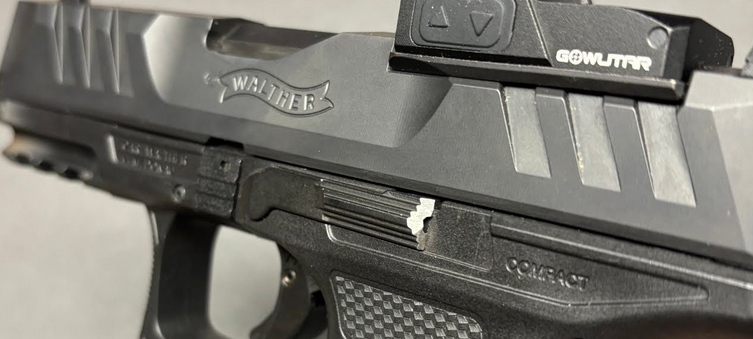
The magazine release got similar treatment. On the PPQ, it was positioned for average-sized hands and nobody else. Too far forward for small hands, too far back for large ones. The PDP's mag release is larger and repositioned slightly rearward. Most shooters can hit it without adjusting their grip, and it has enough surface area that you're not hunting for the sweet spot.
Walther also added ambidextrous slide stops, which the PPQ never had. If you're a lefty or train support-hand shooting, this matters. The controls actually mirror each other instead of forcing you to reach across the gun.
The trigger everyone talks about
Both guns have excellent triggers, but they're different animals. The PPQ's Dynamic Performance Trigger has a longer, rolling break that some shooters love and others find mushy. It's smooth and consistent, but there's no distinct wall; just increasing resistance until it breaks.
The PDP's Performance Duty Trigger is shorter and crisper. There's a definite wall, then a clean break with minimal overtravel. Reset is shorter and more tactile. If you're coming from striker-fired guns like Glocks or M&Ps, the PDP trigger will feel more familiar while still being significantly better than either.
I've shot both triggers extensively, and honestly, it comes down to preference. The PPQ trigger is smoother for slow, precision shooting. The PDP trigger is better for fast, accurate shooting where you need to know exactly when the gun's going to fire. For defensive use or competition, I'd take the PDP trigger every time.
The trigger safety is different too. The PPQ uses a traditional blade-in-trigger design. The PDP moved to a cross-bolt safety that sits behind the trigger. It's less intrusive and doesn't affect trigger feel, but some shooters don't like the look.
Range notes: 1,000 rounds through each
I ran both guns through the same drill sequence over several range sessions. Five hundred rounds of ball ammo, three hundred rounds of defensive hollow points, and two hundred rounds of competition loads. Same distances, same targets, same conditions.
The PDP was noticeably faster on Bill drills and transitions. That improved grip texture and better slide release made a difference when I was running the gun hard. My splits were consistently 0.1-0.2 seconds faster with the PDP, which adds up over a stage.
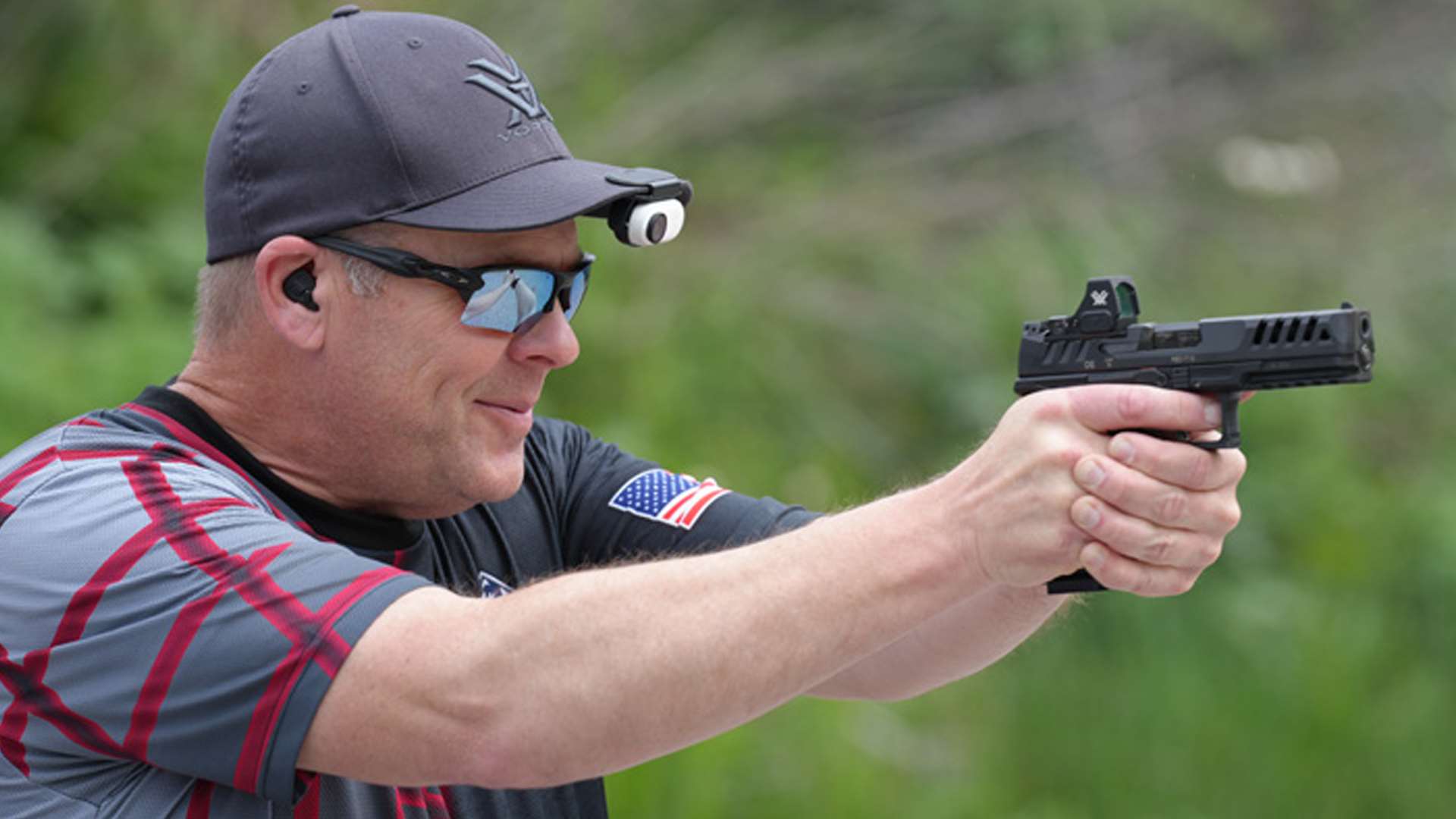
Accuracy was essentially identical at 25 yards from a rest. Both guns will shoot better than most people can hold them. The PDP felt more stable in my hands during rapid fire, probably due to that slightly lower bore axis and improved grip texture.
Reliability was perfect with both guns. No malfunctions, no issues with any ammunition tested. Both guns ate everything I fed them, from cheap steel-case practice ammo to premium defensive loads.
The PDP's sights are a clear upgrade. The PPQ came with basic three-dot sights that worked but weren't inspiring. The PDP ships with a blacked-out rear and bright front dot that's much faster to pick up. The rear sight is also cut for optics mounting, which the original PPQ wasn't.
What you'll actually carry
Size-wise, the PDP Compact sits right between a Glock 19 and Glock 17. It's about the same length and height as the G19 but slightly thicker through the slide. The PPQ M2 was similar dimensions but felt bulkier due to the grip design.
The PDP disappears better in a holster despite being essentially the same size. The grip texture doesn't grab clothing like the PPQ's did, and the slightly refined frame shape prints less against your body. I've carried both guns appendix and strong-side hip; the PDP is noticeably more comfortable for extended periods.
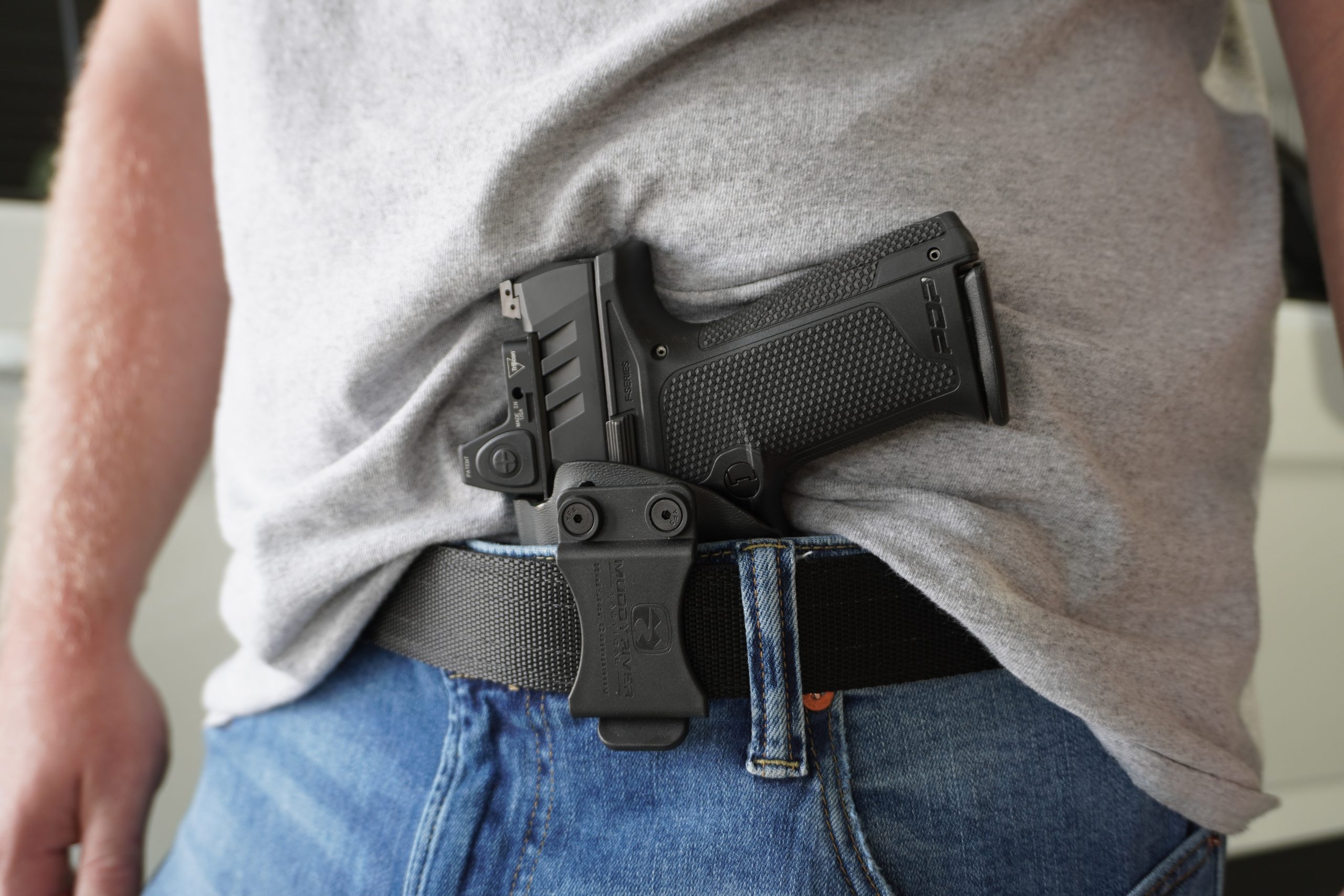
Magazine capacity is identical; 15+1 for the compact versions. But the PDP's magazines have better baseplates that are easier to grab if you need to strip a mag, and the witness holes are actually useful for counting rounds.
The weight difference is minimal; maybe an ounce; but the PDP feels more balanced. The weight distribution is better, probably due to the frame changes and slightly different slide profile.
Common issues and what to watch for
Both guns are generally reliable, but there are a few things to know:
Magazine sensitivity: Early PDP magazines had issues with certain hollow point profiles hanging up on the feed lips. This was mostly fixed by mid-2022, but if you're buying used, check the magazine date codes. Newer magazines work fine with everything.
Trigger pin walk: Some PPQ triggers would have the trigger pin work loose after several thousand rounds. It's not dangerous, but the trigger would feel different until you pushed the pin back into place. The PDP uses a different pin design that seems to have solved this.
Holster compatibility: PPQ holsters won't fit the PDP properly. The trigger guard shape is different enough that retention and trigger coverage can be affected. Don't assume they're interchangeable.
Optics mounting: The PDP comes optics-ready, but the mounting system uses proprietary plates. Make sure you get the right plate for your optic. The system is solid once properly installed, but it's not as universal as some others.
Break-in period: Both guns benefit from a few hundred rounds to smooth out. The PDP's trigger, in particular, gets noticeably better after 300-400 rounds as the surfaces wear in.
PDP vs PPQ vs the competition
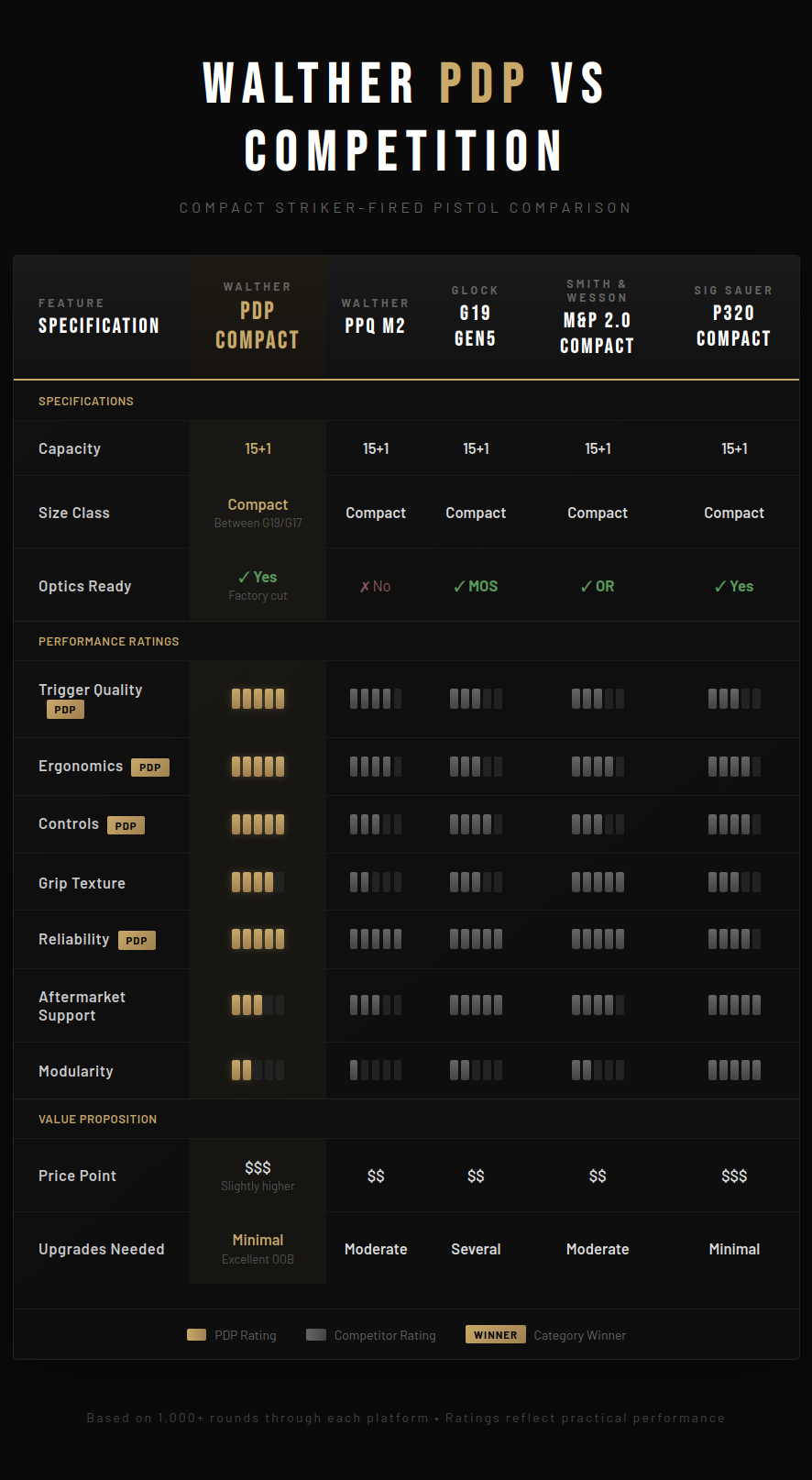
Against the PPQ, the PDP wins on controls, grip texture, and trigger. The PPQ still has that smoother trigger pull that some precision shooters prefer, but for practical use, the PDP is the better gun.
Against a Glock 19, the PDP has better ergonomics and a much better trigger out of the box. The Glock has more holster options and aftermarket support, but the PDP doesn't need as much modification to be excellent.
Against an M&P 2.0 Compact, it's close. The M&P has more aggressive grip texture and similar ergonomics. The PDP has a better trigger and controls. Both are reliable and accurate. I'd give the edge to the PDP for the trigger alone.
Against a P320 Compact, the PDP is more reliable and has better quality control. The P320 has more modularity if you want to swap frames and slides, but the PDP is a better gun as it comes from the factory.
The PDP costs more than most of these competitors, but not by much. Street prices are usually within $50-75 of a Glock or M&P, and you're getting a gun that needs fewer upgrades to be excellent.
Upgrades worth making
The PDP is pretty complete out of the box, but there are a few upgrades that make sense:
Sights: The factory sights are good, but night sights or fiber optics are worth the upgrade if you're carrying the gun. Trijicon HD-XRs or Ameriglo Bold sights are both excellent choices.
Trigger: The factory trigger is already very good, but Apex makes a trigger kit that reduces pull weight and shortens reset even further. Only worth it if you're competing or really want the absolute best trigger.
Magazine extensions: The factory 15-round magazines are fine, but +2 extensions from Taran Tactical or similar give you 17+1 capacity without much increase in size.
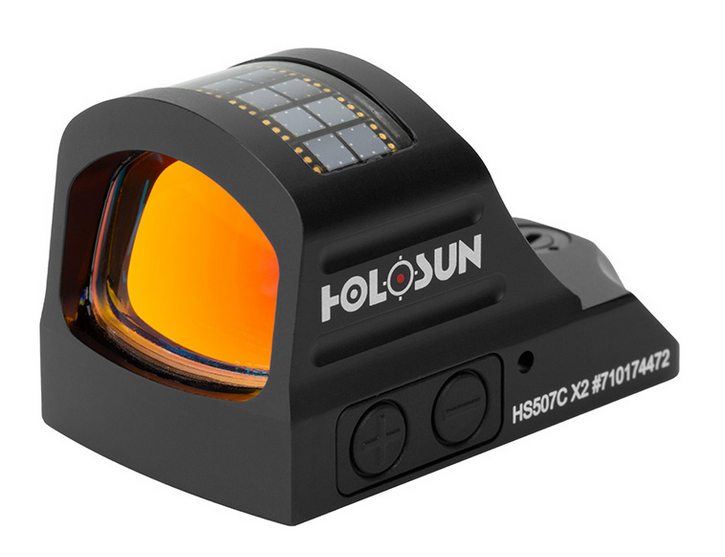
Optics: If you're not running an optic, you're missing out. The mounting system is solid, and a good red dot makes the gun much faster and more accurate. Trijicon RMR or Holosun 507C are both excellent choices.

Smith & Wesson M&P 2.0 Compact Deals
Prices may change. May contain affiliate links.
Holsters: Get a good holster from a reputable maker. Safariland, T.Rex Arms, or similar. The gun is only as good as the holster that carries it.
The bottom line
The PDP fixes every real complaint people had about the PPQ while keeping what made it great. Better controls, better grip, better trigger, and better sights. It's not revolutionary, but it's evolutionary in all the right ways.
If you already own a PPQ and it works for you, there's no urgent need to upgrade. But if you're choosing between them, get the PDP. It's the gun the PPQ should have been from the beginning.
The PDP Compact sits in that sweet spot of being large enough to shoot well but small enough to carry comfortably. It's not the smallest carry gun or the largest duty gun, but it does both jobs well enough that you could own just one pistol and be well-served.
Pennsylvania State Police and German special forces didn't pick this gun because of marketing. They picked it because it works better than the alternatives when people's lives depend on it. That's a pretty good endorsement for the rest of us.

Sig Sauer P320 Compact Deals
Prices may change. May contain affiliate links.