You found a Colt Python at a gun show with a $3,200 price tag, and you're wondering if the seller is dreaming or if you're looking at the deal of the decade. The Python's reputation precedes it, but so does the hype. Here's what actually makes these revolvers command premium prices and whether that specific gun is worth your money.
The Python isn't just another .357 Magnum revolver with good marketing. I've handled many of them over the years, from mint unfired specimens to well-used police trade-ins, and the difference between a genuine Python and its competitors becomes obvious the moment you work the action. What you're paying for isn't just the snake engraving and royal blue finish; though those matter for collectibility, you're buying precision manufacturing that Colt hasn't matched since.

Colt Python .357 Magnum Deals
Prices may change. May contain affiliate links.
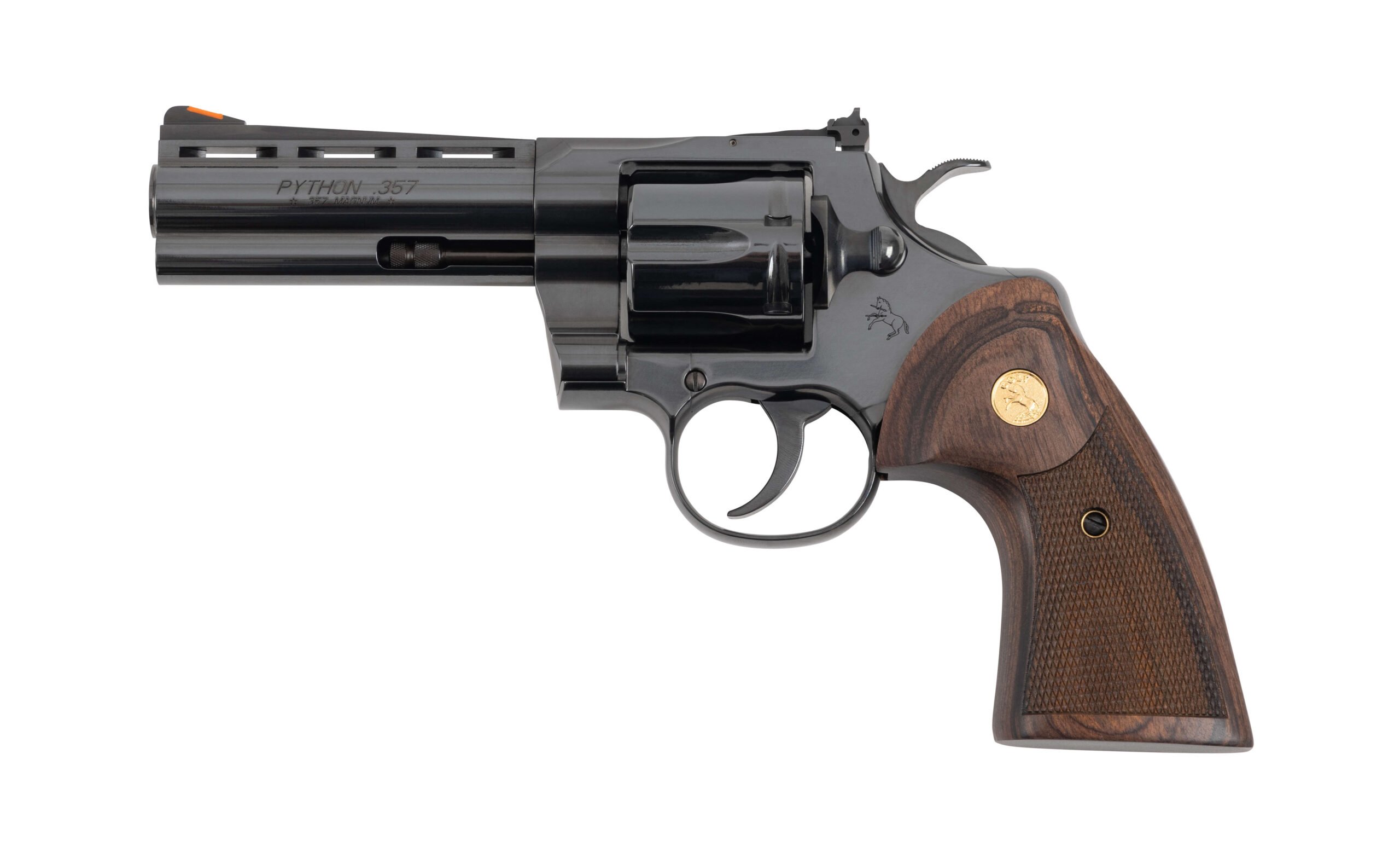
The market has gotten complicated since Colt reintroduced the Python in 2020. Original production guns (1955-2005) and the new models share a name, but collectors treat them as completely different animals. Understanding this distinction will save you from overpaying for the wrong gun or missing out on the right one.
What made the original Python special
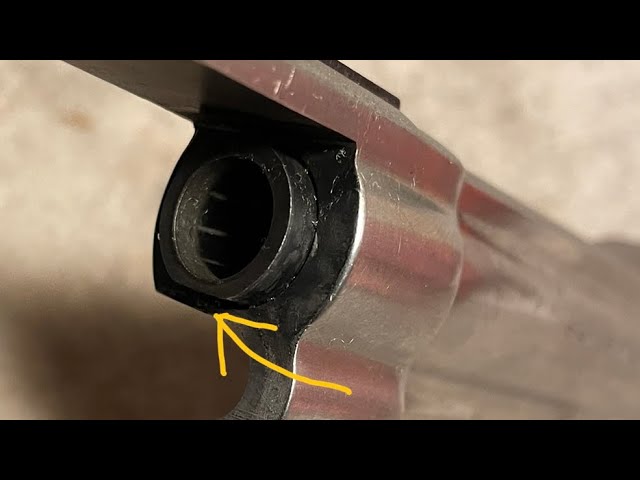
The Python earned its reputation through manufacturing processes that were expensive even in the 1950s. Every Python action was hand-fitted and timed by skilled craftsmen at Colt's Hartford facility. The cylinder-to-barrel gap was held to tighter tolerances than standard Colt revolvers. The forcing cone was cut to precise angles that enhanced accuracy with both .38 Special and .357 Magnum loads.
Look at the trigger mechanism. Python triggers were individually adjusted for consistent pull weight and minimal creep. The double-action pull typically measured 8-10 pounds with a smooth, controlled break. Single-action pulls ran 3-4 pounds with virtually no overtravel. This wasn't accident; each gun received individual attention during assembly.
The barrel-to-frame fit shows similar precision. Python barrels were threaded and torqued to specific values, then the forcing cone was reamed to exact dimensions after installation. This process ensured optimal bullet alignment from cylinder to barrel. Many Pythons will shoot 2-inch groups at 25 yards with quality ammunition, performance that impressed even in an era when revolvers dominated competitive shooting.
The royal blue finish required multiple polishing and bluing cycles. Colt's process involved hand-polishing the metal to remove all tool marks, applying the blue, polishing again, and rebluing until the surface achieved that deep, mirror-like finish Python collectors recognize. This finish work alone added significant cost to each gun.
Original production vs. the 2020 reintroduction
Here's where collectors draw hard lines. Original Pythons (1955-2005) command premium prices because they represent Colt's traditional manufacturing methods. The 2020 reintroduction uses modern CNC machining and updated production techniques. Both are quality revolvers, but they're different products serving different markets.
Original Pythons show subtle manufacturing details that the new guns don't replicate. The grip frame contours, the exact profile of the trigger guard, the way the barrel threads engage the frame; these details matter to collectors who've handled original guns. The new Python's action feels different too. It's smooth and reliable, but it lacks the specific character of the hand-fitted originals.
Serial numbers tell the story. Original production ran from approximately 1 to 148,000, with various letter prefixes added over the years. The new guns start their own serial sequence. If you're looking at a Python with a serial number above 148,000 without clear new-production markings, be suspicious.
The new Python's improvements include a recessed target crown, updated metallurgy, and modern quality control. These guns shoot well and will likely prove more durable than originals. But collectors aren't paying for improvements; they're paying for historical significance and the mystique of Colt's golden era.
Condition grading that affects value
Python condition grading follows standard NRA guidelines, but collectors apply stricter standards because these guns command premium prices. A Python marked "excellent" should show minimal handling marks and retain 95% or more of its original finish. The forcing cone should be sharp with no erosion. The cylinder should lock up tight with minimal end shake.
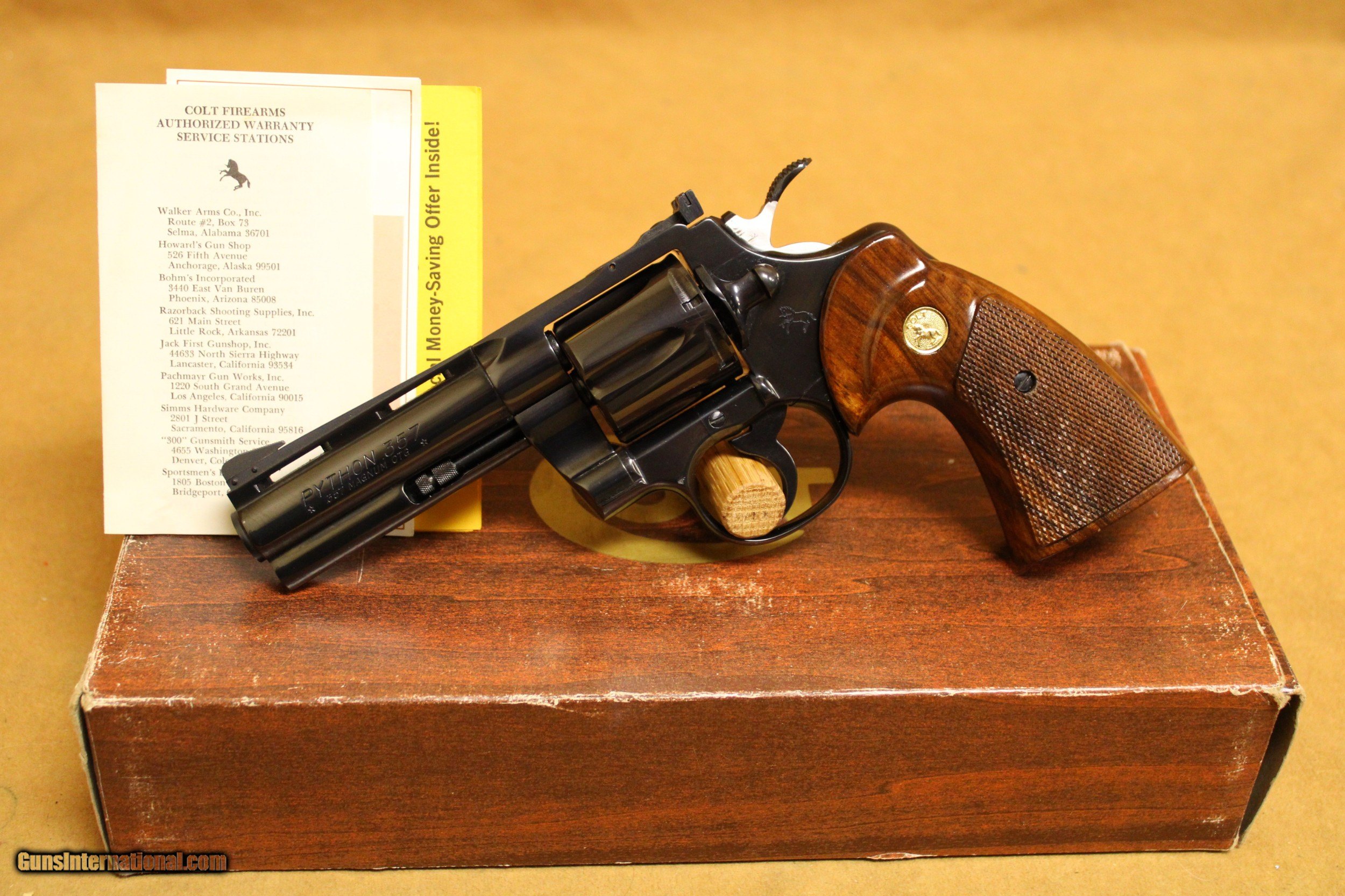
Unfired Pythons represent the top tier. These guns show no evidence of use beyond factory test firing. The forcing cone remains sharp and unmarked. The cylinder face shows no flame cutting. The grip frame retains its original factory texture without wear marks from holsters or handling. Unfired Pythons in original boxes with papers command the highest prices.
Excellent condition allows for minor handling marks but requires the gun to function perfectly. The finish should show no wear through to base metal. The action should time correctly with proper cylinder lockup. The bore should be bright with sharp rifling. These guns typically show light holster wear or storage marks but nothing that affects function or appearance from normal viewing distance.
Very good condition Pythons show honest wear but remain mechanically sound. The finish may show wear through to base metal on high-contact areas like the muzzle or cylinder. The action should still time correctly, though some end shake is acceptable. The bore should remain serviceable with good rifling definition. These represent the entry point for shooters who want Python performance without collector premiums.
Good condition guns show significant wear but remain functional. The finish may be worn or refinished. The timing should be correct, though some mechanical issues are acceptable if they don't affect safety. These guns often represent the best value for shooters who plan to use the revolver regularly.
Barrel length and finish variations
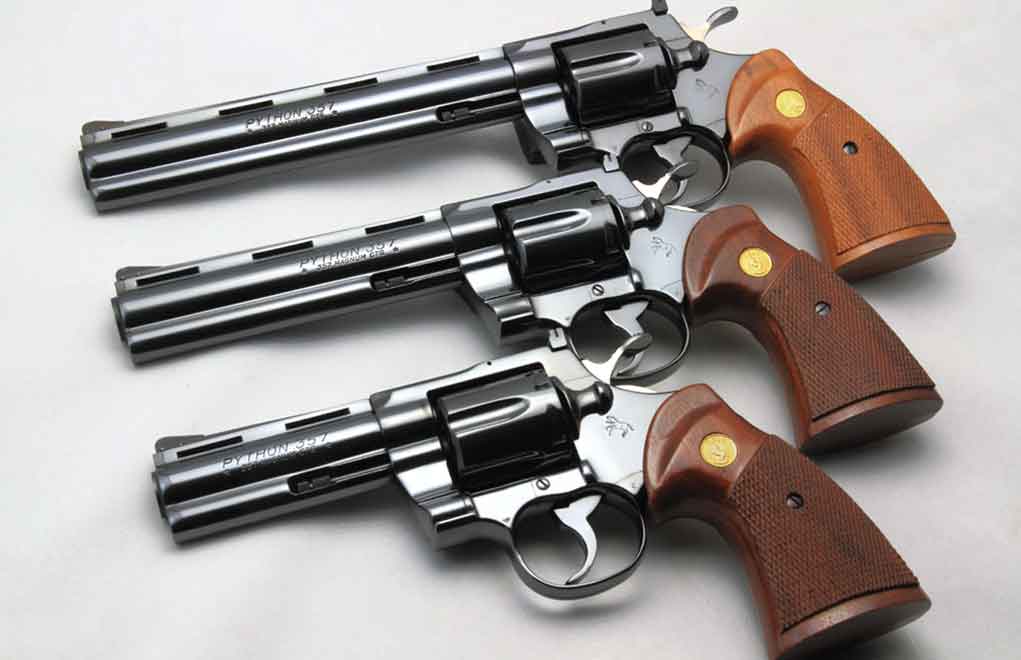
Python barrel lengths directly affect collectibility and value. The 6-inch barrel represents the classic Python configuration and typically commands the highest prices in equivalent condition. The 4-inch barrel offers better balance for practical use and remains popular with collectors. The 2.5-inch barrel was produced in smaller numbers and appeals to collectors seeking unusual variants.
The 8-inch barrel Python occupies a special place in the lineup. These guns were designed for silhouette shooting and hunting applications. They're less common than standard lengths and appeal to collectors seeking the full Python experience. The extra barrel length showcases the royal blue finish and provides the sight radius that made Pythons popular with competitive shooters.
Finish variations beyond royal blue include nickel and stainless steel. Nickel Pythons were available throughout most of the production run and show the same attention to fit and finish as blued guns. The nickel finish highlights the Python's lines and provides corrosion resistance. Stainless steel Pythons appeared later in production and represent a small percentage of total output.
Special editions and commemoratives exist but require careful authentication. Colt produced various limited editions with special markings, finishes, or packaging. These guns often command premiums, but reproduced markings and fake documentation appear regularly. Research specific commemorative details before paying premium prices.
What to look for during inspection
Start with the action. A properly functioning Python should have a smooth, consistent double-action pull with the hammer falling on each chamber without hesitation. The cylinder should advance fully and lock up tight. Single-action mode should show minimal trigger movement before the hammer drops. Any binding, skipping, or irregular timing indicates potential problems.
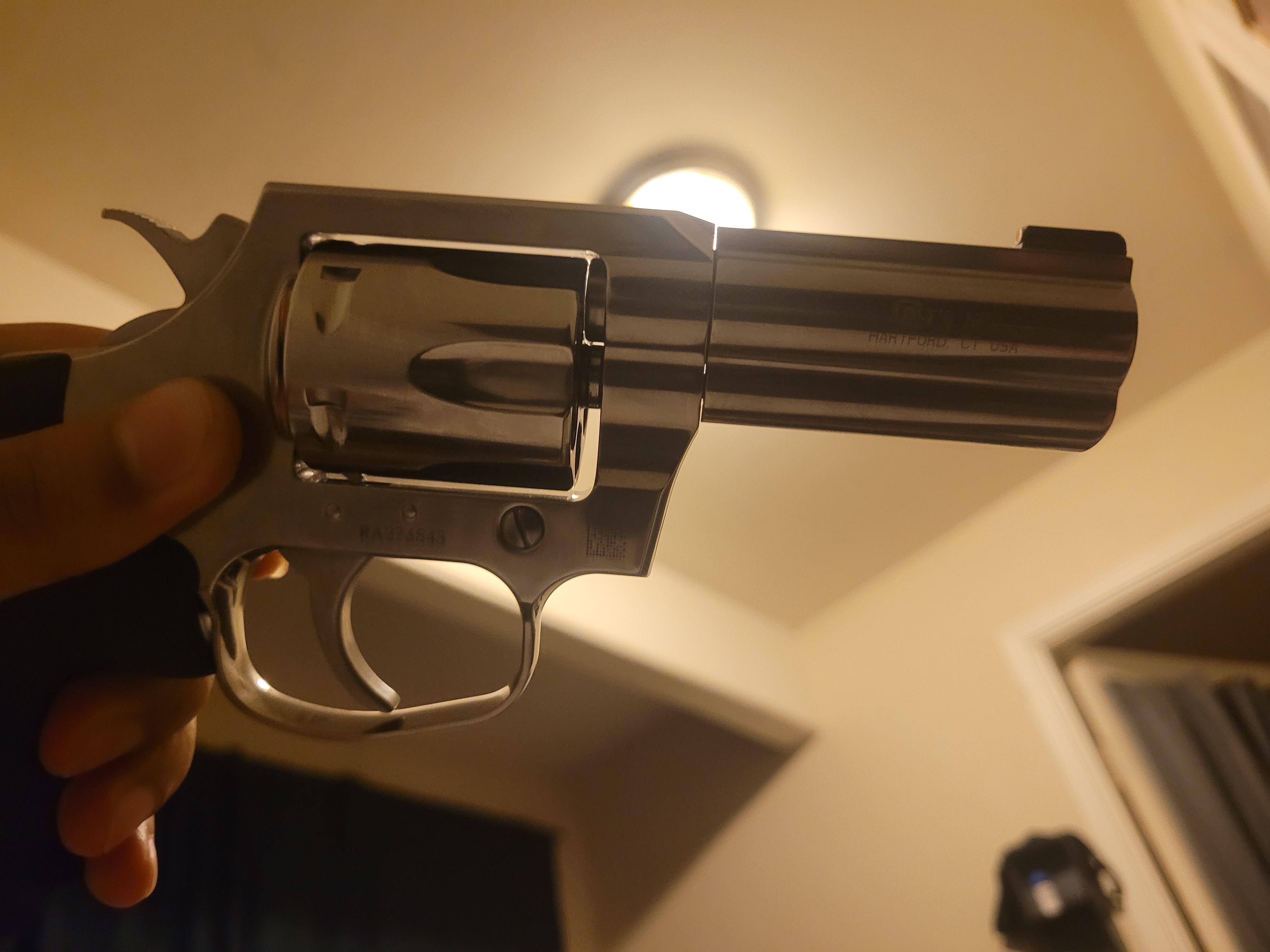
Check the cylinder gap with a feeler gauge if possible. Original Pythons typically show gaps between 0.003 and 0.006 inches. Excessive gap indicates wear or poor timing. Insufficient gap can cause binding and extraction problems. The gap should be consistent around the cylinder's circumference.
Examine the forcing cone carefully. This area takes the brunt of firing stress and shows wear first. The cone should be sharp and evenly cut. Erosion, cracking, or peening indicates heavy use or poor maintenance. Minor flame cutting on the top strap is normal but shouldn't be excessive.
The bore condition tells the story of the gun's use. Python barrels typically show excellent accuracy potential even with moderate wear. Look for sharp rifling definition and minimal pitting or corrosion. The throat area where the cylinder meets the barrel should be smooth and evenly cut.
Inspect the finish for authenticity. Original royal blue should show depth and consistency. Refinished guns often show telltale signs like rounded edges, uneven color, or blue in areas that should be left white. The cylinder should match the frame and barrel. Mismatched finishes suggest replacement parts or refinishing.
Common fakes and restoration issues
Python values have created a market for fake and heavily restored guns. Complete refinishing is common and dramatically affects collectible value. A refinished Python might shoot as well as an original, but it's worth significantly less to collectors. Look for signs like overly bright blue, rounded screw slots, or blue in areas that should remain unfinished.
Replacement parts appear frequently. Python cylinders, barrels, and small parts interchange with other Colt revolvers, but collectors want original, matching components. Serial numbers should appear in standard locations and match Colt's numbering systems. Added numbers or restamped serials are red flags.
Fake Pythons built on other Colt frames exist but are relatively rare. The Python's distinctive profile and manufacturing details make complete fakes difficult to execute convincingly. More common are standard Colt revolvers with Python markings added. These guns typically show incorrect proportions or manufacturing details that don't match genuine Pythons.
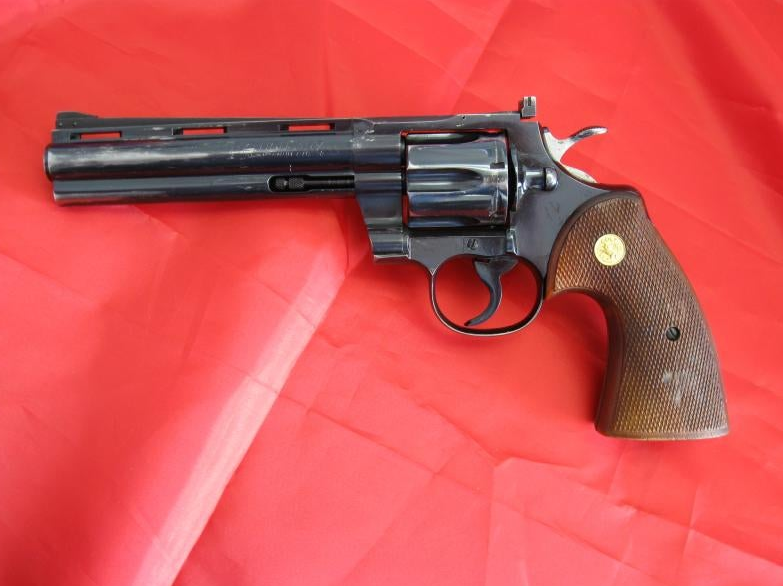
Timing issues plague many older Pythons, especially guns that saw heavy use. Python actions are complex and require skilled gunsmith work when problems develop. A Python with timing issues might be repairable, but factor repair costs into your evaluation. Some timing problems indicate wear that can't be economically corrected.
Import marked Pythons occasionally appear on the market. These guns were typically exported and later reimported, requiring import markings that affect collectible value. The markings themselves don't indicate quality problems, but they do impact what collectors will pay.
Realistic market values by condition
Current Python values reflect both collector demand and the gun's reputation among shooters. Unfired examples in original boxes with papers typically bring $4,000-$5,500 depending on barrel length and specific variant. The 6-inch barrel commands the highest prices, with 4-inch models close behind. Unusual barrel lengths like 2.5-inch or 8-inch can bring premiums if the right collector is looking.
Excellent condition Pythons without boxes typically sell for $3,200-$4,200. These guns show minimal wear and retain most of their collector appeal while being more affordable than unfired examples. They represent good entry points for collectors who want Python quality without paying for perfect condition.
Very good condition examples run $2,800-$3,500. These guns show honest wear but remain mechanically sound and visually appealing. They often represent the best value for buyers who plan to shoot the gun occasionally while maintaining most of its collector value.
Good condition Pythons typically sell for $2,200-$2,800. These guns may show significant finish wear or require minor mechanical attention, but they provide Python performance at more accessible prices. They're often the best choice for shooters who want the Python experience without collector premiums.
Shooter-grade Pythons with mechanical issues or significant wear can be found for $1,800-$2,500. These guns require careful evaluation since repair costs can quickly exceed the savings. However, a Python with minor timing issues might be worth buying if you have access to a competent revolver gunsmith.
How the Python compares to alternatives
The Smith & Wesson 686 represents the Python's most direct modern competitor. The 686 offers similar .357 Magnum performance with arguably better durability and lower maintenance requirements. However, the 686's action lacks the Python's smoothness, and the finish doesn't match the Python's visual appeal. A new 686 costs around $800-$900, making it practical where a Python is precious.
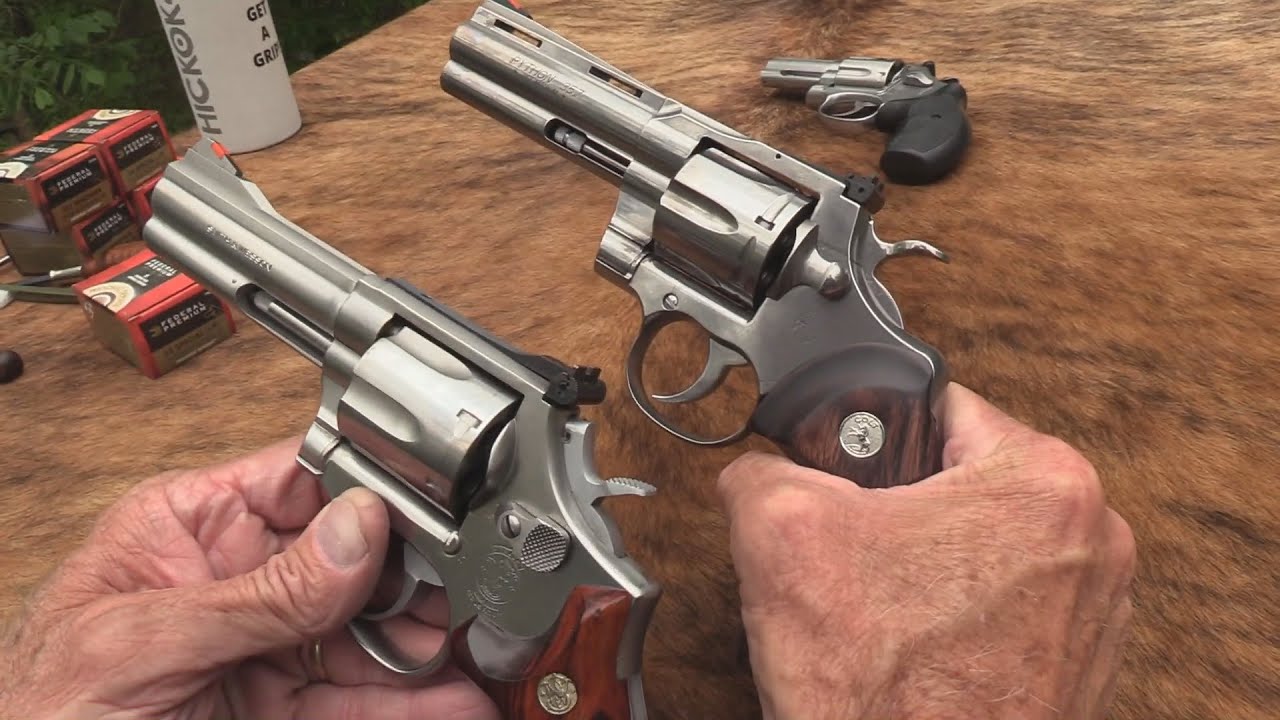
Vintage Smith & Wesson revolvers like the Model 27 or 28 offer comparable performance with their own collector following. The Model 27 features similar hand-fitting and attention to detail as the Python. However, Smith & Wesson's post-war revolvers typically sell for less than equivalent Pythons, making them attractive alternatives for shooters seeking vintage quality.
The Korth revolver represents the extreme high end of modern revolver manufacturing. These German-made guns feature precision that arguably exceeds the Python's, but they cost $4,000-$6,000 new. For shooters seeking ultimate accuracy and refinement, the Korth might justify its price. For collectors, it lacks the Python's historical significance and American manufacturing heritage.
Dan Wesson revolvers offer another alternative with interchangeable barrels and excellent accuracy potential. Vintage Dan Wessons can be found for $800-$1,500 depending on configuration. They lack the Python's prestige but often outshoot more expensive revolvers. For practical shooting applications, they represent excellent value.
Modern Ruger GP100s provide reliable .357 Magnum performance at reasonable prices. While they lack the Python's refinement, they're virtually indestructible and cost under $700 new. For shooters who prioritize function over form, the GP100 delivers Python-level performance without the anxiety of shooting an expensive collectible.
The box and papers premium
Original Python boxes and documentation add significant value, especially for unfired or excellent condition guns. A complete package with the original box, papers, and tools can add $500-$1,000 to the gun's value. The box should show the correct model number, serial number, and Colt markings for the gun's production period.
Python documentation includes the owner's manual, warranty card, and test target. The test target should show the gun's serial number and acceptable accuracy results. Some Pythons included special tools or cleaning accessories that should be present for full collector value.
Reproduction boxes and papers exist, so verify authenticity carefully. Original boxes show specific printing details, paper types, and wear patterns that are difficult to replicate perfectly. The serial number should match the gun, and the box style should be appropriate for the gun's production period.
Missing boxes and papers don't disqualify a Python from collector interest, but they do limit maximum value. A genuinely rare Python variant might command full collector prices even without original packaging. Common configurations typically require original boxes to achieve top prices.

Smith & Wesson 686 .357 Magnum Deals
Prices may change. May contain affiliate links.
Before you buy
Research the specific Python you're considering. Verify the serial number falls within known production ranges for the claimed production year. Check that all markings are correct for the period and configuration. Unusual features or markings should be verified against known Python variations.
Bring a knowledgeable friend or hire a qualified gunsmith for inspection if you're not confident in your evaluation skills. Python values justify professional inspection fees, especially for high-dollar purchases. A competent gunsmith can identify timing issues, wear patterns, and authenticity concerns that might not be obvious to casual inspection.
Consider your intended use. If you plan to shoot the gun regularly, a very good condition example might provide better value than an unfired collector piece. If you're buying for investment or collection purposes, condition and originality become paramount.
Factor in potential repair costs. Python gunsmiths are becoming scarce as the guns age and the craftsmen who understand them retire. Budget for potential timing work, refinishing, or parts replacement when evaluating shooter-grade examples.
The Python market remains strong because these revolvers genuinely represent something special in American manufacturing. They're not just expensive because of hype; they're expensive because Colt built them to standards that are difficult and costly to replicate today. Whether that justifies current prices depends on what you value in a revolver and how you plan to use it.

A Python won't make you a better shooter than a quality modern revolver, but it will provide a connection to an era when American manufacturers competed on craftsmanship rather than just price. That's worth something, though exactly how much depends on your priorities and budget.