You're tired of missing shots on hogs because they disappear into the brush the second they hear your truck door close. Thermal changes that completely. The question isn't whether you need thermal for serious hog hunting; it's which one won't break your budget while actually holding up to recoil and weather.
I've mounted thermal scopes that cost more than my rifle and others that barely lasted a season. The sweet spot for hog hunting sits right around $2000-3000, where you get real performance without the premium tax of military contracts. Here's what actually works when you're dealing with 200-pound hogs at 150 yards in South Texas heat.
Why thermal beats night vision for hogs
Look, I've tried both extensively. Night vision amplifies existing light, which means you're still dealing with shadows, vegetation, and the fact that hogs are smart enough to use cover. Thermal sees heat signatures through light brush and picks up animals that would be invisible to your naked eye or traditional night vision.
The real advantage shows up when hogs are bedded down in thick cover during the day or moving through dense brush at night. That 98.6-degree signature cuts through everything except solid objects. You'll spot hogs you never knew were there.
Here's the thing: thermal technology has dropped in price dramatically over the past five years. What cost $8000 in 2015 performs about the same as a $2500 unit today. The military-grade stuff still costs more, but for hog hunting, you don't need bomb-proof construction, you need reliable detection and clear enough resolution to make ethical shots.
What actually matters in a hog hunting thermal
Detection range vs identification range
Every thermal scope lists a detection range that sounds impressive until you realize detection just means "there's something warm over there." For hog hunting, you need identification range; the distance where you can tell a hog from a cow or confirm it's a shooter.
Most scopes in this price range detect large game at 800-1000 yards but only identify at 300-400 yards. That's perfect for hog hunting where most shots happen inside 200 yards anyway.
Refresh rate
This is where cheaper thermals fall apart. A 30Hz refresh rate looks smooth when panning across a field. 9Hz refresh rate looks like a slideshow and makes tracking moving hogs nearly impossible. Don't compromise here, 30Hz minimum for hunting applications.
Base magnification
Most thermal scopes start at 2x or 2.5x base magnification. That's actually ideal for hog hunting where you need situational awareness to track multiple animals and quick target acquisition. Higher base magnification sounds better but limits your field of view when scanning.
Range notes: what thermal actually looks like
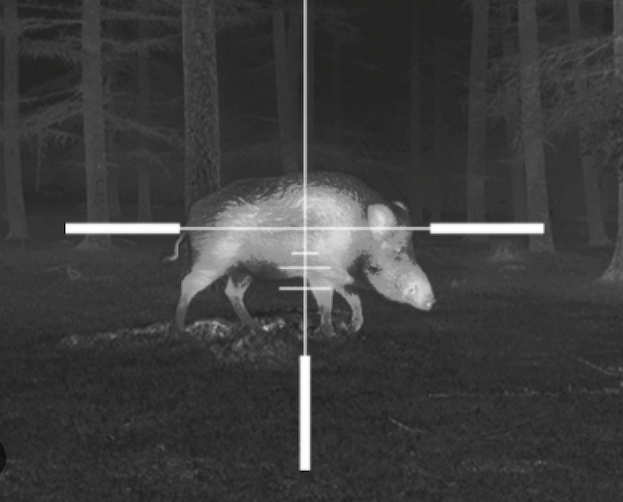
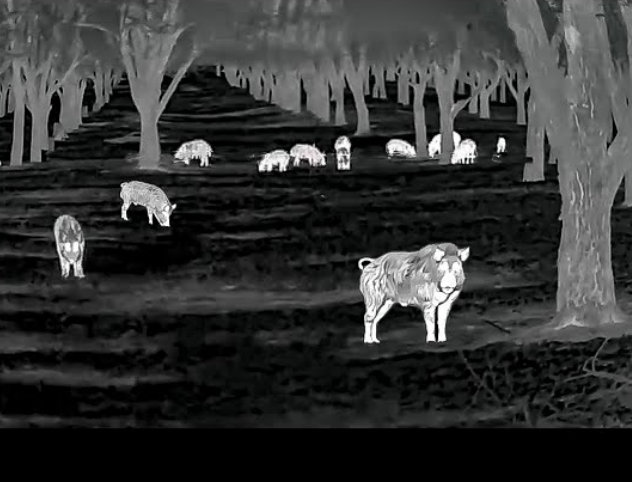
The first time you look through quality thermal, you'll be surprised how different it is from what you see in movies. Good thermal doesn't look like predator vision, it looks more like black and white video with heat sources showing up as white or colored objects depending on your palette setting.
Hogs show up as bright white blobs against cooler backgrounds. You can usually make out basic body shape and movement patterns at identification range. What you can't see: fine details like exact shot placement or whether that hog has good tusks. You're shooting center mass on body heat, not picking specific aiming points.
The image quality changes dramatically with ambient temperature. In 90-degree Texas heat, everything's warm and contrast drops. Early morning when the ground is cool but animals are warm gives you the best contrast and longest identification ranges.
Top thermal scopes for hog hunting under $3000
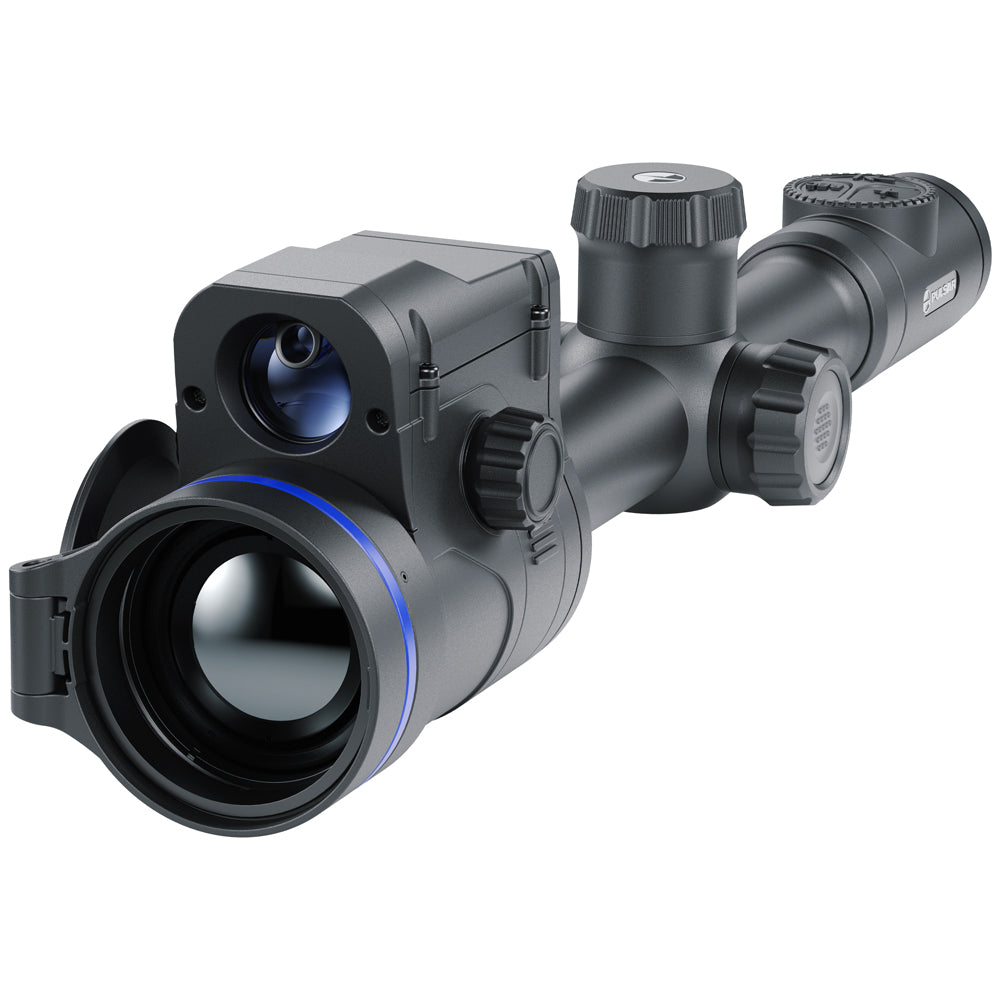
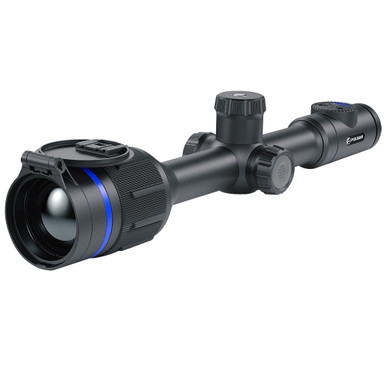
Pulsar Thermion 2 XP50
The XP50 hits the sweet spot for hog hunting thermal. 2.5-20x magnification gives you enough range for longer shots while maintaining good field of view for scanning. The 50mm objective provides solid detection range, I've identified hogs at 350 yards consistently.
What sets this apart: the recording capability actually works reliably, and the smartphone app integration lets you stream video to spot for other hunters. The reticle selection is extensive with several good options for hog hunting. Battery life runs about 4-5 hours of continuous use.
The XP50 handles recoil well. I've had mine on a .308 and .300 Blackout without issues. The menu system takes some learning but becomes intuitive after a few range sessions.
Pulsar Thermion 2 XP50 Deals
Prices may change. May contain affiliate links.
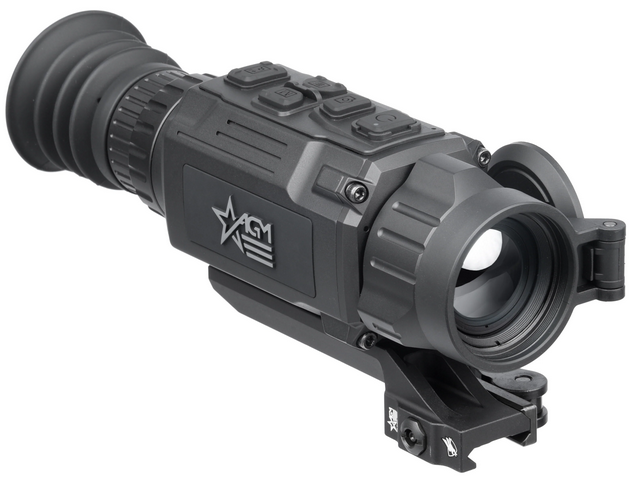
AGM Rattler TS35-384
This is the value pick that surprised me. The Rattler costs significantly less than the Pulsar but delivers 90% of the performance for hog hunting. 2.75-22x magnification range works well, and the 384x288 sensor provides good image quality for the price point.
Where it excels: simple menu system that doesn't require an engineering degree to navigate. The reticle options are basic but effective. Battery life is slightly better than the Pulsar at 5-6 hours.
The trade-offs: image quality isn't quite as sharp as higher-end units, and the detection range drops off faster. For most hog hunting inside 250 yards, you won't notice the difference.

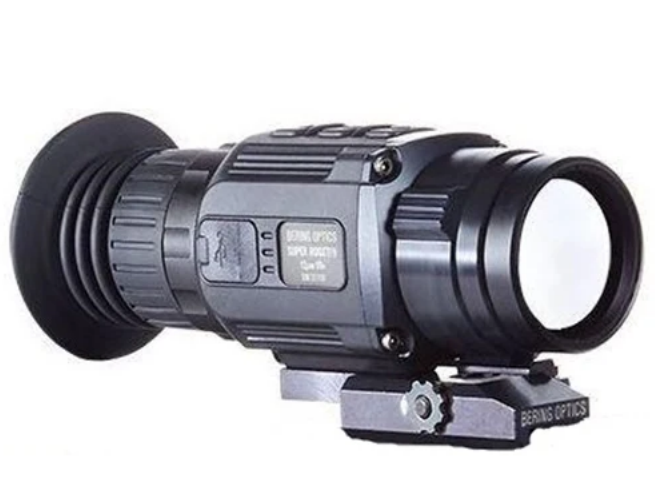
Bering Optics Super Hogster R 35mm
Don't let the name fool you, this is serious thermal. 2.1-8.4x magnification keeps things simple while providing enough range for most hog hunting situations. The 35mm objective balances size and performance well.
What makes this interesting: it's designed specifically for hunting rather than adapted from military applications. The reticle options focus on hunting scenarios, and the controls are laid out for quick adjustments in low light.
The image quality is solid for the price point, and it handles weather better than some competitors. Battery life runs about 4 hours, which is adequate for most hunting sessions.
Thermal scopes in the $3000 - $5000 range if you want a step up
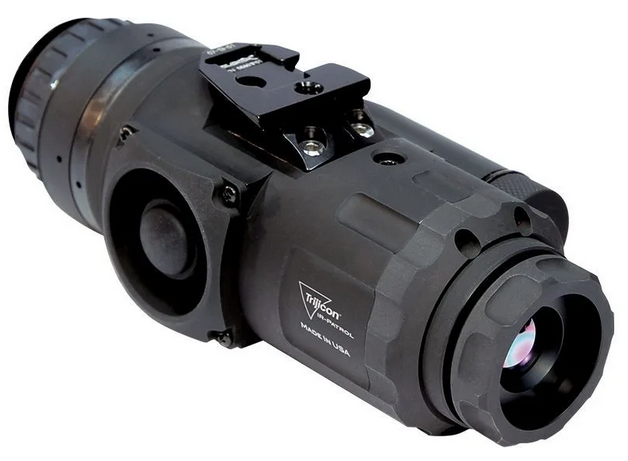
Trijicon IR-Patrol M300W
This represents the premium end of the $3000+ range. 2-16x magnification provides excellent versatility, and the image quality is noticeably better than budget options. The 35mm objective delivers good performance in a compact package.
The IR-Patrol excels in image processing. Fine details are clearer, and the contrast remains good even in challenging thermal conditions. The build quality is excellent, this feels like it could handle serious abuse.
Trade-offs include higher price and more complex operation. The advanced features require more time to learn, and battery life is average at 4 hours. For serious hog hunters who want the best image quality under $3000, it's worth the premium.
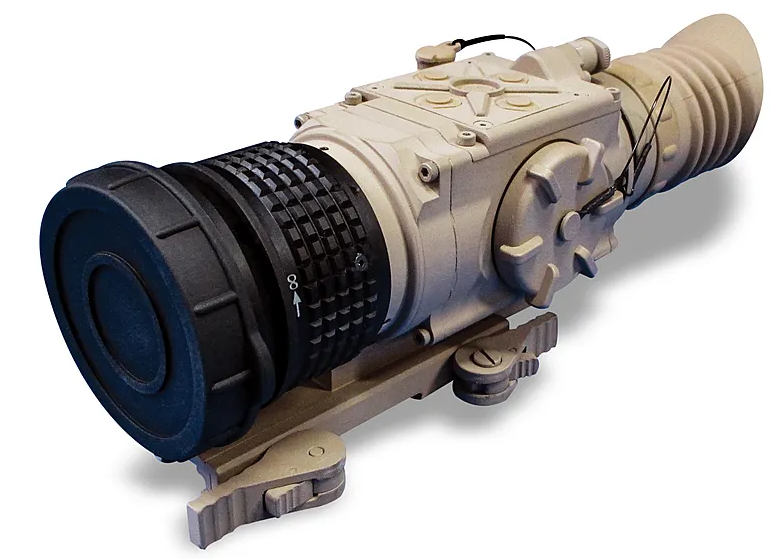
Armasight Zeus Pro 336 3-12x42
The Zeus Pro bridges the gap between budget and premium thermal. 3-12x magnification is perfect for hog hunting where you need quick target acquisition more than long-range precision. The 42mm objective keeps the overall size manageable.
This scope excels in build quality. It feels more robust than similarly priced competitors and the controls have a solid, military-spec feel. Image quality is consistently good across the magnification range without the edge distortion you get with some cheaper thermals.
The downside: limited recording options compared to newer designs, and the battery life is shorter at 3-4 hours. The menu system is functional but not as intuitive as newer scopes.
Common thermal scope mistakes that'll cost you shots
Mounting too high
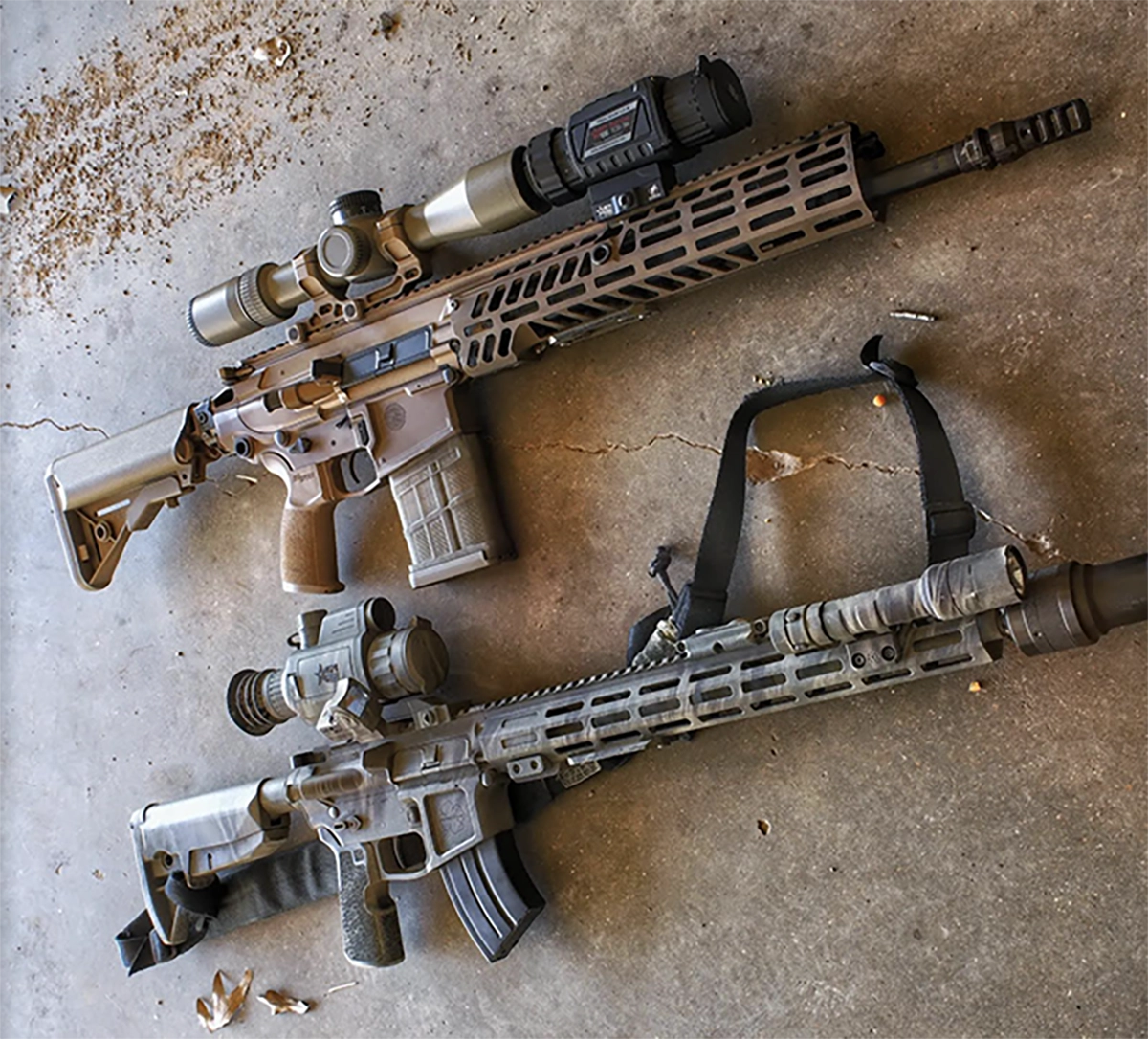
Thermal scopes are typically larger and heavier than traditional scopes. Many hunters mount them too high to clear the objective lens, which creates an awkward cheek weld and inconsistent shooting position. Get the scope as low as possible while maintaining proper eye relief.
Wrong reticle choice
Complex reticles with multiple aiming points look cool but become cluttered in thermal imaging. Simple crosshairs or basic duplex reticles work best. You're shooting at heat signatures, not precision targets.
Ignoring zero shift with temperature
Thermal scopes can shift zero as internal components heat up during use. This is normal but needs to be accounted for. Always verify zero after the scope has been running for 10-15 minutes, not immediately after turning it on.
Poor battery management
Thermal scopes drain batteries fast. Carry spares and know how to change them quickly in the dark. Some scopes lose zero when power is cycled, so understand your specific model's behavior.
Forgetting about heat mirage
In hot climates, heat mirage affects thermal imaging just like traditional optics. Early morning and late evening provide the best thermal contrast and least mirage interference.
Glass notes: what you'll actually see through thermal
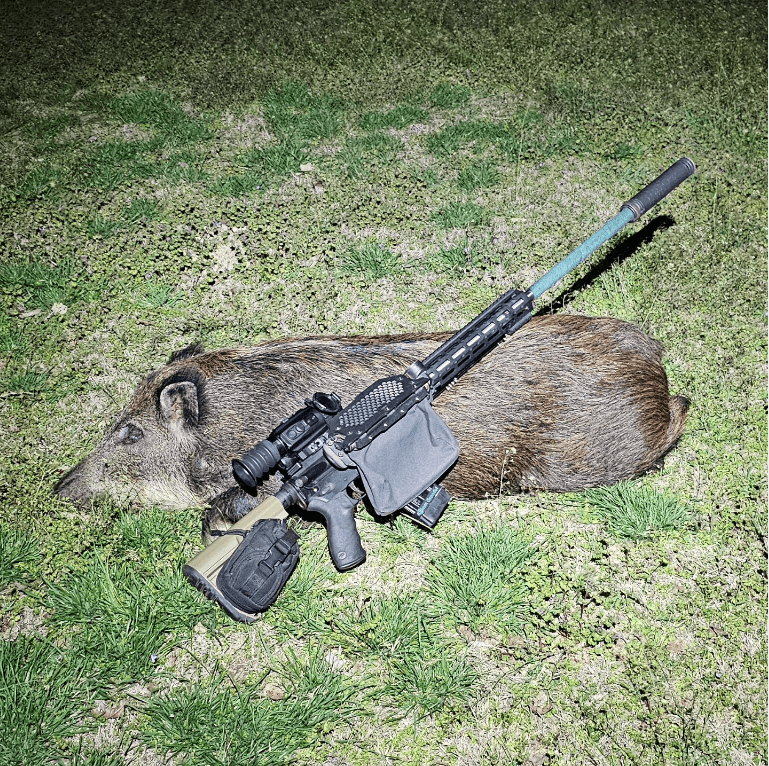
The learning curve with thermal is steeper than traditional optics. Your first few hunts will involve a lot of "is that a hog or a stump?" moments. Hogs typically appear as bright white oval shapes when broadside, with legs visible as separate heat sources when they're moving.
Body language becomes more important than fine details. A feeding hog moves differently than a bedded cow. Moving hogs show heat buildup in leg muscles that makes them easier to identify. Stationary animals require more careful observation of body shape and size relative to surroundings.
Weather affects thermal imaging more than most hunters expect. Rain cools everything down and reduces contrast. High humidity can scatter thermal radiation and reduce effective range. Wind helps by cooling vegetation and improving animal contrast.
The best thermal conditions happen when air temperature is 20-30 degrees cooler than animal body temperature. That's why early morning hunts often produce the clearest thermal images and longest identification ranges.
Mounting and zeroing thermal scopes
Thermal scopes require more careful mounting than traditional optics due to their weight and electronic components. Use quality rings rated for the scope's weight, and apply proper torque specs. Most thermal scopes weigh 2-3 pounds, which is significantly more than a traditional hunting scope.
Eye relief is critical with thermal scopes. Most require 2-3 inches of eye relief, and the exit pupil is smaller than traditional scopes. This means less forgiveness in head position and more critical mounting height.
Zeroing process differs from traditional scopes. Turn the thermal on and let it run for 15 minutes before starting the zeroing process. This allows internal components to stabilize at operating temperature. Some scopes require recalibration after temperature changes, so understand your specific model's requirements.
Start zeroing at 50 yards, then confirm at your maximum intended shooting distance. Thermal scopes often have different point of impact at various magnification levels, so zero at the magnification you'll use most often for hunting.
Power management and accessories
Battery life is the limiting factor for thermal hunting. Most scopes in this price range run 4-6 hours on internal batteries. Carry at least two spare battery sets per hunting session, and know how to change them quickly in complete darkness.
External battery packs extend hunting time but add weight and complexity. Some hunters prefer this for all-night hunts, but for most hog hunting sessions, spare internal batteries are simpler and more reliable.
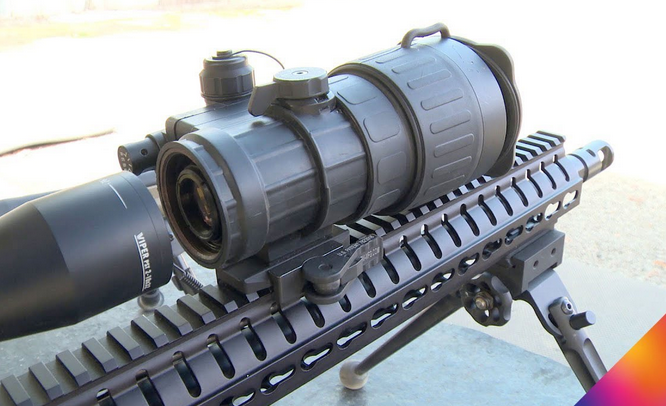
Consider a quality bipod for thermal shooting. The added weight of thermal scopes makes offhand shooting more challenging, and the electronic nature means you can't use the scope as a spotting device without draining batteries.
When thermal isn't the answer
Thermal scopes excel at detection and identification but have limitations for precision shooting. If you're taking shots beyond 300 yards or need precise shot placement for trophy hunting, traditional optics with supplemental thermal spotting devices might work better.
Legal restrictions vary by state and hunting area. Some jurisdictions prohibit thermal optics for hunting, while others allow them only for specific species or seasons. Check local regulations before investing in thermal equipment.
Cost of ownership extends beyond the initial purchase. Thermal scopes require more maintenance than traditional optics, and repair costs are typically higher. Factor this into your decision if you're hunting in harsh conditions or high-volume situations.
Making the call
For most hog hunters, the Pulsar Thermion 2 XP50 offers the best balance of performance and features under $3000. The image quality is excellent, the feature set is comprehensive, and the reliability has proven solid over multiple seasons.
If budget is the primary concern, the AGM Rattler TS35-384 delivers surprising performance for the money. You'll give up some image quality and features, but it's perfectly adequate for most hog hunting situations.
For hunters who prioritize build quality and simplicity, the Armasight Zeus Pro 336 provides military-grade construction with straightforward operation. It's not the most feature-rich option, but it's built to last.
The key is matching the scope to your specific hunting situation. Long-range hog hunting in open country benefits from higher magnification and longer detection range. Close-range hunting in thick brush prioritizes wide field of view and quick target acquisition.
Test the scope's ergonomics before committing. Controls need to be accessible and intuitive when you're dealing with multiple hogs in low light conditions. The best thermal scope is the one you can operate effectively under pressure.
Your thermal scope will change how you hunt hogs. The ability to see animals that are invisible to traditional optics opens up hunting opportunities that didn't exist before. Choose wisely, practice extensively, and prepare for a completely different hunting experience.