Comparing 6.5 PRC vs .300 Win Mag for long-range hunting scenarios
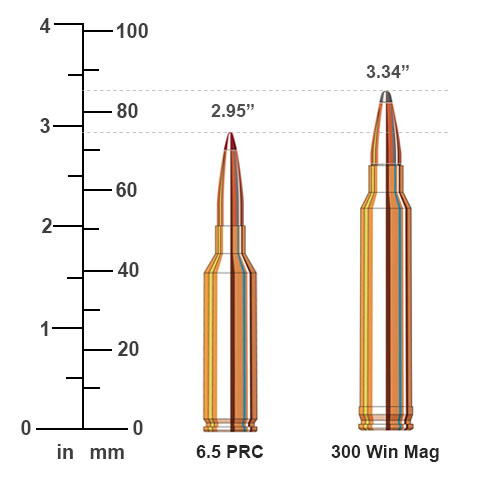
When it comes to long-range hunting, the choice of cartridge can significantly impact your success and experience in the field. In this article, we will focus on two popular options: the 6.5 PRC and the .300 Win Mag. Both cartridges have their strengths and weaknesses, making them suitable for different hunting scenarios. We will explore their ballistic characteristics, effective ranges, recoil management, and overall performance to help you make an informed decision for your next hunt.
Ballistic overview
6.5 PRC
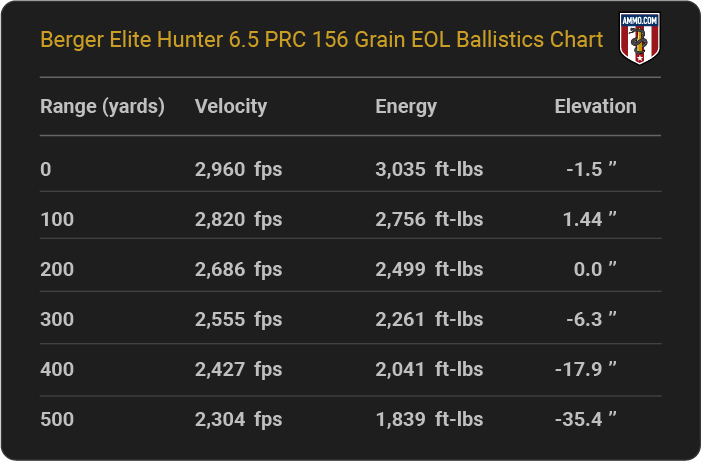
The 6.5 Precision Rifle Cartridge (PRC) has gained significant traction among hunters and long-range shooters alike due to its efficient design and excellent ballistic coefficients (BC). A typical load for the 6.5 PRC might feature a 140-grain bullet with a BC of around 0.612, providing a flatter trajectory and reduced wind drift compared to many larger cartridges.
Ballistics example: At a muzzle velocity (MV) of about 2,900 fps, a 140-grain bullet from the 6.5 PRC drops approximately 10.5 inches at 600 yards under standard atmospheric conditions, assuming no wind. This drop can vary based on temperature, density altitude (DA), and other factors.
.300 Win Mag
On the other hand, the .300 Win Mag is known for its versatility and power. It typically fires heavier bullets ranging from 150 to 200 grains. A common choice is a 180-grain bullet with a BC of about 0.500, offering substantial energy retention at longer distances.
Ballistics example: With a muzzle velocity of around 3,000 fps, a 180-grain bullet from the .300 Win Mag drops approximately 9 inches at 600 yards under similar conditions. While this is slightly less than the 6.5 PRC, the added mass of the bullet can translate into better terminal performance on larger game.
Effective range
Determining effective range is critical when choosing between these two cartridges for hunting.
6.5 PRC
The effective range of the 6.5 PRC is often cited as being around 800 yards or more, depending on the shooter's skill level and environmental conditions. Its flatter trajectory allows for easier holdovers and adjustments when engaging targets at extended distances.
.300 Win Mag
In contrast, the .300 Win Mag excels at longer distances due to its heavier bullets and higher energy retention. Many experienced hunters consider its effective range to be up to 1,000 yards or beyond, especially with well-constructed bullets designed for deep penetration.
When comparing effective ranges, consider your specific hunting scenarios and the types of game you plan to pursue.
Recoil management
Recoil is a critical factor that influences shooter comfort and accuracy. Both cartridges exhibit different recoil characteristics that can affect your shooting experience.
6.5 PRC
The 6.5 PRC typically produces less recoil than the .300 Win Mag due to its lighter bullets and moderate powder charge. Recoil values can vary based on rifle weight and design, but you can expect about 15–20 ft-lbs of recoil energy when shooting a standard-weight rifle chambered in 6.5 PRC. This lower recoil allows for quicker follow-up shots and enhanced shooter control, especially during extended shooting sessions.
.300 Win Mag
Conversely, the .300 Win Mag generates more recoil due to its heavier bullets and higher velocities. Recoil energy can reach upwards of 25–30 ft-lbs, depending on the rifle's configuration. While many hunters appreciate the power behind the .300 Win Mag, it requires good shooting technique and proper rifle fit to manage effectively.
Practical implications
For long-range hunting situations where quick follow-up shots may be necessary, such as tracking wounded game, the lower recoil of the 6.5 PRC can be an advantage. However, if you're confident in your ability to manage recoil and prioritize stopping power on larger animals, the .300 Win Mag might be your preferred choice.
Wind drift considerations
Wind drift is an essential factor in long-range shooting that can impact accuracy significantly. Understanding how each cartridge behaves in windy conditions will help you make better shooting decisions in the field.
Wind drift with 6.5 PRC
A typical wind speed of about 10 mph full-value wind can push a 140-grain bullet from the 6.5 PRC approximately 4–5 inches at 600 yards. Given its high BC, this cartridge tends to resist wind effects better than many other options in its class.
Wind drift with .300 Win Mag
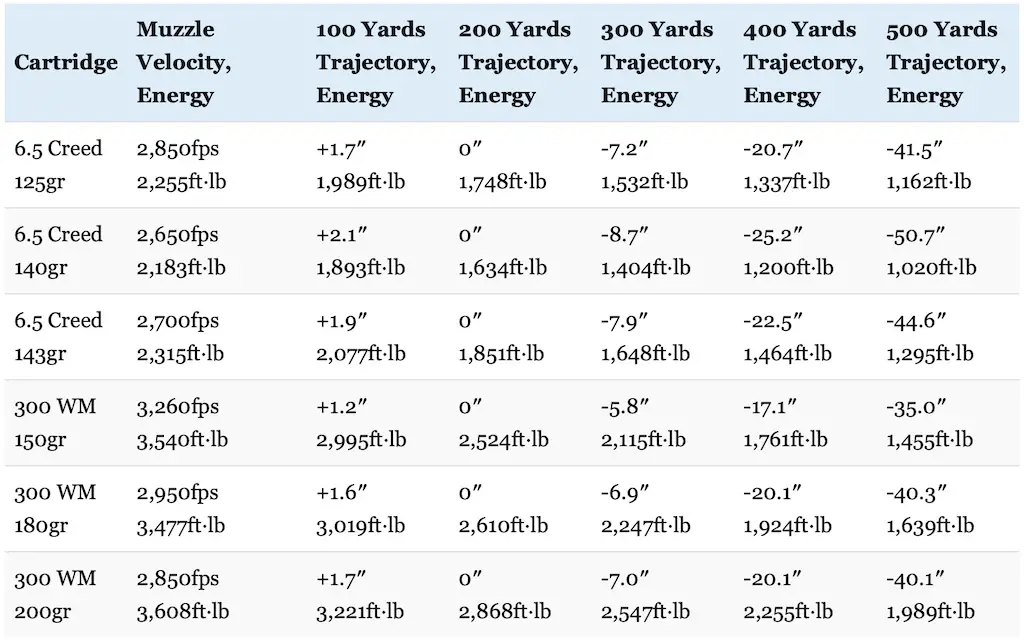
In comparison, a 180-grain bullet from the .300 Win Mag will experience around 5–6 inches of drift under similar wind conditions at the same distance. Although this difference may seem minor, it can be significant when precision is paramount.
Understanding how wind affects each cartridge will allow you to make smarter adjustments in real-time during your hunts.
Terminal performance
Ultimately, terminal performance should guide your cartridge selection when hunting game animals. The ability of a bullet to expand and penetrate effectively can determine success or failure in the field.
Terminal performance of the 6.5 PRC
The 6.5 PRC shines with premium bullets designed for expansion at various velocities. For instance, a high-quality partition or bonded bullet can provide excellent terminal performance on deer-sized game out to reasonable distances. The combination of velocity and sectional density ensures effective penetration while minimizing meat damage.
Terminal performance of the .300 Win Mag
The .300 Win Mag excels with heavier bullets that maintain energy over longer distances, making it suitable for larger game like elk or moose. Bullets in this category are often constructed to withstand high-velocity impacts while ensuring deep penetration and reliable expansion.
When selecting bullets for either cartridge, pay attention to construction specifics based on your intended game type.
Cost considerations
When evaluating cartridges for long-range hunting, cost is an important factor that often influences decisions.
Cost of 6.5 PRC ammunition
The availability of factory-loaded ammunition in 6.5 PRC has improved significantly over recent years; however, it may still be slightly more expensive than more traditional options like .308 Winchester or .30-06 Springfield. Expect to pay around $30–50 per box for quality ammunition tailored for long-range applications.
Cost of .300 Win Mag ammunition
The .300 Win Mag is widely regarded as one of the most popular magnum cartridges on the market today; therefore, factory-loaded ammunition is readily available in numerous configurations. Prices typically range from $25–45 per box depending on bullet type and manufacturer.
While cost should not be the only factor in your decision-making process, it's worth considering how much you're willing to invest in ammunition based on your shooting frequency.
Rifle platform selection
The choice of rifle platform can also impact your long-range hunting success with either cartridge.
Rifles chambered in 6.5 PRC
Rifles designed specifically for the 6.5 PRC are becoming increasingly popular among hunters and competitive shooters alike. They tend to have features tailored for optimal performance at long ranges, such as lightweight chassis systems and precision barrels.
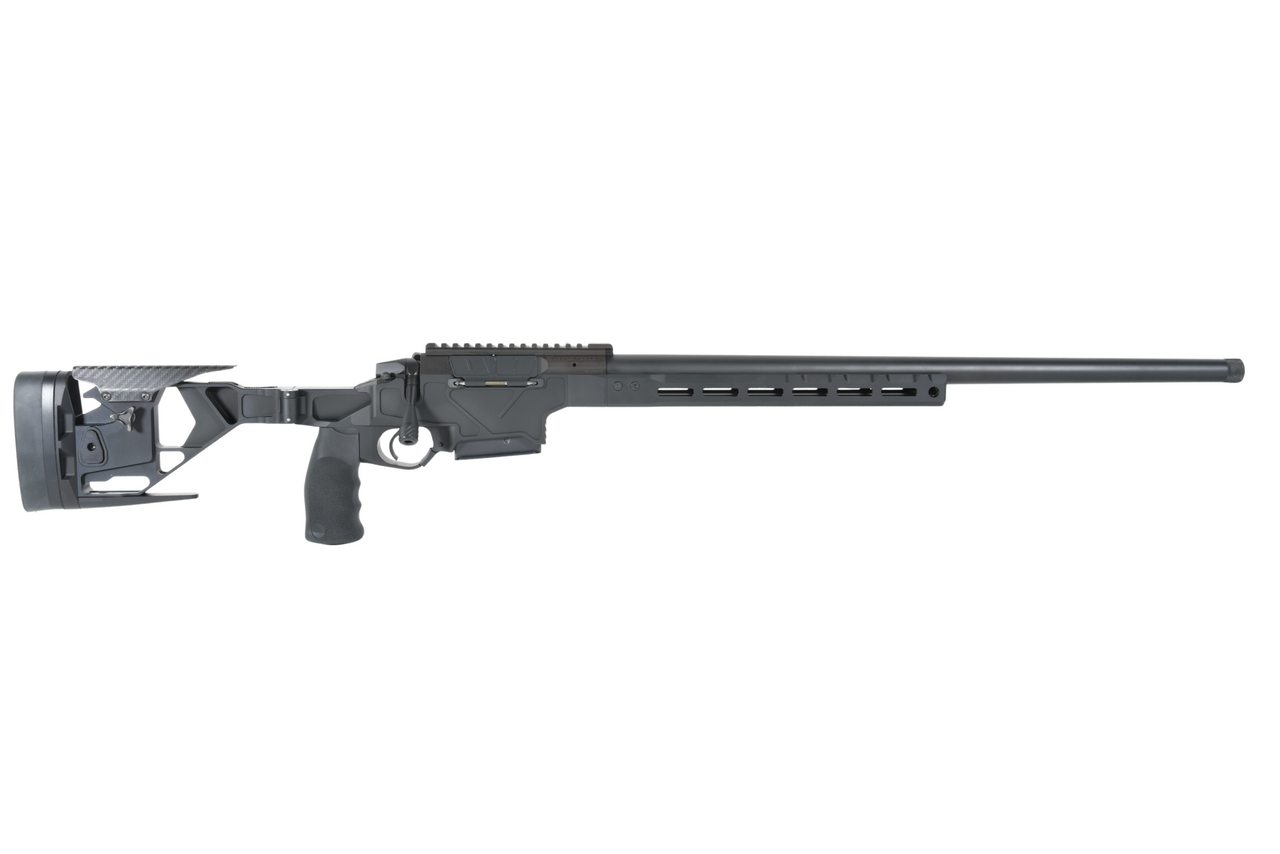
When selecting a rifle chambered in 6.5 PRC, look for models that offer adjustable stocks and free-floating barrels to enhance accuracy further.
Rifles chambered in .300 Win Mag
The .300 Win Mag has been around for decades and is available in various platforms ranging from lightweight mountain rifles to heavy-barreled tactical models. This versatility allows you to choose a rifle that suits your specific needs, whether that's weight savings for backcountry hunts or stability for long-range precision shooting.
When evaluating rifles in this caliber, consider factors such as weight distribution, stock design, and overall ergonomics for comfort during extended sessions.
Common mistakes when choosing between cartridges
As you weigh your options between the 6.5 PRC and .300 Win Mag for long-range hunting scenarios, it's essential to recognize some common pitfalls that shooters encounter:
Ignoring personal comfort: Always prioritize how well you can manage recoil and maintain accuracy during extended shooting sessions.
Overlooking intended game: Ensure that the cartridge you choose is appropriate for the size and type of game you plan to hunt.
Neglecting load development: Many hunters assume factory ammunition will provide perfect accuracy; however, it's crucial to test different loads to find what works best with your specific rifle.
Failing to practice: Long-range hunting demands proficiency; dedicate time to practice shooting under varying conditions to build confidence before hitting the field.
Being unprepared for environmental changes: Wind conditions can vary widely; understanding how they affect your chosen cartridge is vital for making accurate shots.
Stage strategy
Planning your approach for a successful hunt involves several key considerations:
Know your effective range: Familiarize yourself with both cartridges' capabilities to avoid taking shots beyond your skill level.
Practice reading wind: Develop skills to assess wind conditions accurately, as this will influence adjustments needed for both cartridges.
Select appropriate ammunition: Test different bullet types against game animals similar to those you'll pursue.
Create a dope card: Compile data on drop and wind drift for both cartridges across various distances to streamline decision-making during hunts.
Stay calm under pressure: Practice staying composed while making adjustments based on field observations; this will enhance shot execution.
Dope-card mini checklist
To ensure you're prepared for long-range hunting with either cartridge, consider creating a dope card that includes:
Effective ranges (600–1,000 yards)
Drop data at key distances (e.g., 100, 400, 600 yards)
Wind drift calculations (at various speeds)
Bullet types/weights used
DA/temperature notes affecting performance
Confirmation shots recorded
Notes on environmental factors observed during practice sessions
Conclusion
Choosing between the 6.5 PRC and .300 Win Mag ultimately depends on your individual preferences as a hunter and the specific scenarios you'll encounter in the field. Each cartridge offers unique advantages that cater to different styles of hunting while presenting trade-offs that warrant careful consideration.
By understanding their ballistic characteristics, effective ranges, recoil profiles, wind drift behaviors, terminal performance capabilities, cost implications, and suitable rifle platforms, alongside avoiding common mistakes, you'll be well-equipped to make an informed choice that aligns with your hunting goals.
Let the conditions set the pace.