Testing new hunting loads for .308 Winchester
The .308 Winchester is a versatile cartridge that has been a staple in hunting circles for decades. Whether you're pursuing whitetail deer in the thick forests of Georgia or tackling wild hogs in the swamps of Florida, the .308 can deliver reliable performance. As new factory loads continue to emerge, it’s essential to assess their real-world performance characteristics.
This article will focus on evaluating new hunting loads for the .308 Winchester, specifically examining how different loads perform in terms of velocity, drop, drift, and terminal behavior. You’ll gain insights into how these loads behave across a range of typical hunting scenarios, along with practical advice for selecting the right load for your needs.
Load selection criteria
When choosing a load for hunting with the .308 Winchester, several factors come into play:
Bullet type: Options include soft points, hollow points, and monolithic designs. Each has its strengths and weaknesses regarding expansion and penetration.
Weight: Common bullet weights for the .308 range from 150 to 180 grains. Heavier bullets typically provide better penetration and energy retention at distance but may sacrifice some velocity.
Velocity: A higher velocity often translates to flatter trajectories and less bullet drop over distance, which is crucial for long-range shots.
Terminal performance: The ability of a bullet to expand and penetrate effectively at various distances is vital for ethical kills.
Environmental conditions: Humidity, temperature, and vegetation density can all affect bullet performance and trajectory.
With these factors in mind, let’s explore some of the latest factory loads designed specifically for hunting with the .308 Winchester.
Factory load comparison
Here’s a look at several factory loads currently available for the .308 Winchester, including their bullet type, weight, and intended use.
Load descriptions
Federal Fusion 150-grain .308 Win: This load features a bonded soft point bullet designed for controlled expansion and deep penetration. It performs well in a variety of game animals, making it an excellent choice for deer hunting.
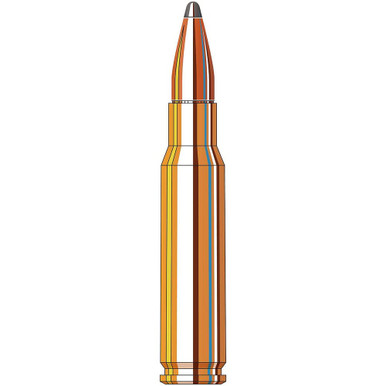
Hornady American Whitetail 150-grain .308 Win: A traditional cup-and-core design that offers reliable expansion and accuracy. This load is tailored for whitetail deer and similar-sized game.
Nosler Partition 165-grain .308 Win: Known for its dual-core construction, the Nosler Partition provides excellent weight retention and expansion. This load is suitable for larger game species like elk or bear.
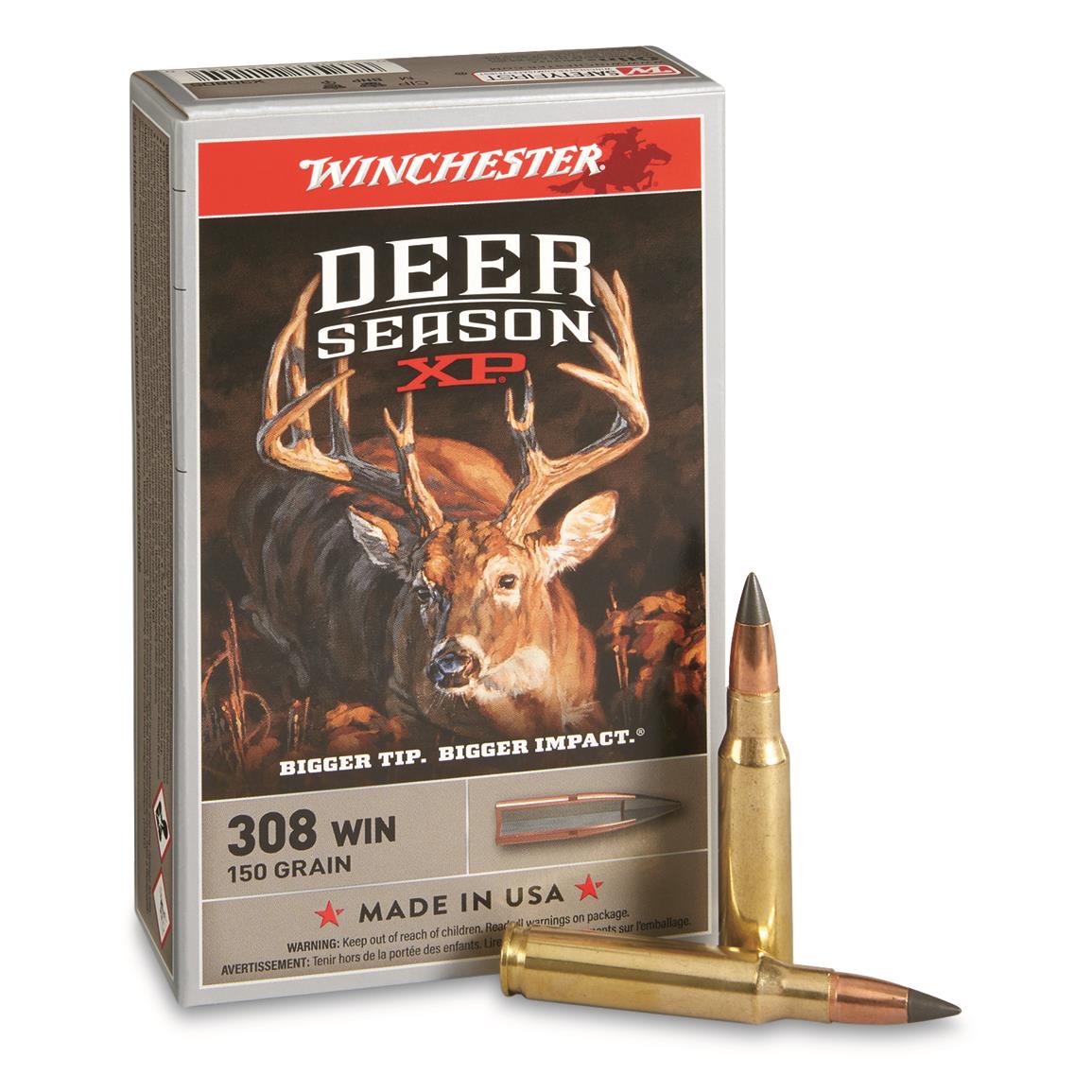
Winchester Deer Season XP 150-grain .308 Win: Featuring a polymer tip for improved ballistic performance, this load is designed to deliver rapid expansion upon impact, making it effective for quick kills on deer-sized game.
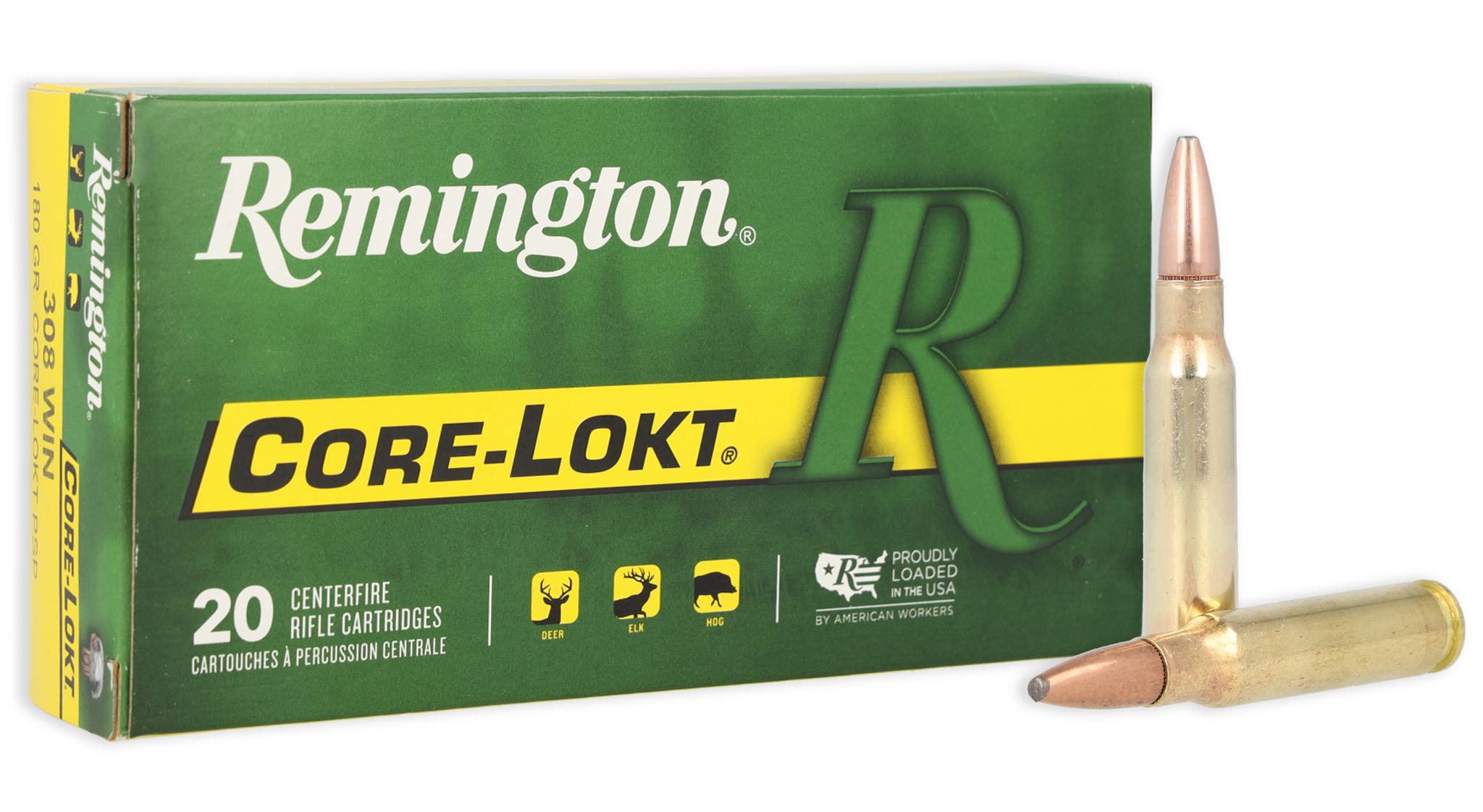
Remington Core-Lokt 180-grain .308 Win: This classic hunting round features a lead core and copper jacket designed for maximum energy transfer. It’s favored by many hunters for its proven track record.
Performance metrics
To understand how these loads stack up against each other, we’ve compiled a comparison of their key performance metrics based on common barrel lengths (22 inches) and typical conditions.
| Load | Bullet Type | Bullet Weight | Muzzle Velocity (fps) | Energy (ft-lbs) | Effective Range (yards) |
|---|---|---|---|---|---|
| Federal Fusion | Bonded Soft Point | 150 | 2,820 | 2,820 | 300 |
| Hornady American Whitetail | Cup-and-Core JHP | 150 | 2,800 | 2,800 | 300 |
| Nosler Partition | Dual-Core | 165 | 2,750 | 2,665 | 300 |
| Winchester Deer Season XP | Polymer Tip | 150 | 2,900 | 2,878 | 300 |
| Remington Core-Lokt | Lead Core | 180 | 2,600 | 2,794 | 300 |
Analyzing performance
From the table above, you can see that muzzle velocities range from approximately 2,600 to 2,900 fps, with energy levels also reflecting that variance. Typically, lighter bullets (150 grains) provide higher velocities, while heavier options (180 grains) offer increased energy but at reduced speeds.
For instance, the Winchester Deer Season XP load stands out with its impressive muzzle velocity of 2,900 fps while still delivering a solid energy output of nearly 2,900 ft-lbs. In contrast, the Remington Core-Lokt at 180 grains delivers substantial energy as well but does so at a lower velocity.
As you evaluate these loads based on your hunting scenarios—whether you're shooting through dense foliage or taking longer shots across open fields—consider how these performance metrics translate into real-world effectiveness.
Inside the gun: pressure and consistency
Understanding how each load behaves inside your firearm is critical to ensuring consistent performance. Variations in chamber pressure can directly affect your rifle's reliability and accuracy.
Pressure considerations
Most .308 Winchester factory loads are designed to operate within SAAMI specifications of approximately 62,000 psi maximum average pressure. Higher pressures can lead to increased recoil and potential safety issues if not properly managed.
Chamber pressure: Some loads may produce slightly higher pressures than others based on bullet design and powder type. It’s advisable to chronograph your ammunition to ensure consistent performance across different lots.
Recoil management: Lighter bullets typically generate less recoil than heavier options. However, this can vary by load due to differences in powder burn rates and charge weights.
Consistency testing: When testing new loads, track your velocity spread (standard deviation) across multiple shots. Ideally, you want a low SD to ensure tight grouping on target.
Hornady American Whitetail 150-grain .308 Win Deals
Prices may change. May contain affiliate links.
In flight: trajectory and wind behavior
Once fired, the trajectory of the bullet becomes crucial to hitting your target accurately. Understanding how different loads behave in flight will help you make necessary adjustments during your hunt.
Velocity drop and drift
Using a ballistic calculator or data from reliable resources can assist you in predicting bullet drop over various distances:
At 100 yards, most .308 loads will have minimal drop—typically within a few inches.
At 200 yards, expect around 5–8 inches of drop depending on the specific load.
By 300 yards, that drop can increase to about 10–12 inches or more.
Wind drift can also significantly affect your shot placement at longer distances. A light crosswind can push a bullet off-target by several inches at ranges beyond 200 yards:
- For example, a wind speed of 10 mph could drift your bullet approximately 6–8 inches at 300 yards depending on its ballistic coefficient (BC).
The BC plays an important role in maintaining velocity over distance; higher BC values translate to better resistance against wind drift and a flatter trajectory.
On target: terminal behavior
Ultimately, all these factors converge when the bullet strikes your target. Terminal behavior is crucial for ethical hunting practices as it determines how effectively a bullet will incapacitate game.
Expansion and penetration
Different bullet designs yield varied results regarding expansion and penetration depth:
Bonded bullets, like those found in Federal Fusion loads, tend to expand reliably while retaining mass—ideal for larger game.
Hollow points generally expand rapidly but may not penetrate as deeply as soft points or bonded designs.
Monolithic bullets, such as those from Barnes or similar manufacturers, provide consistent expansion while maintaining high weight retention—suitable for tough-skinned animals.
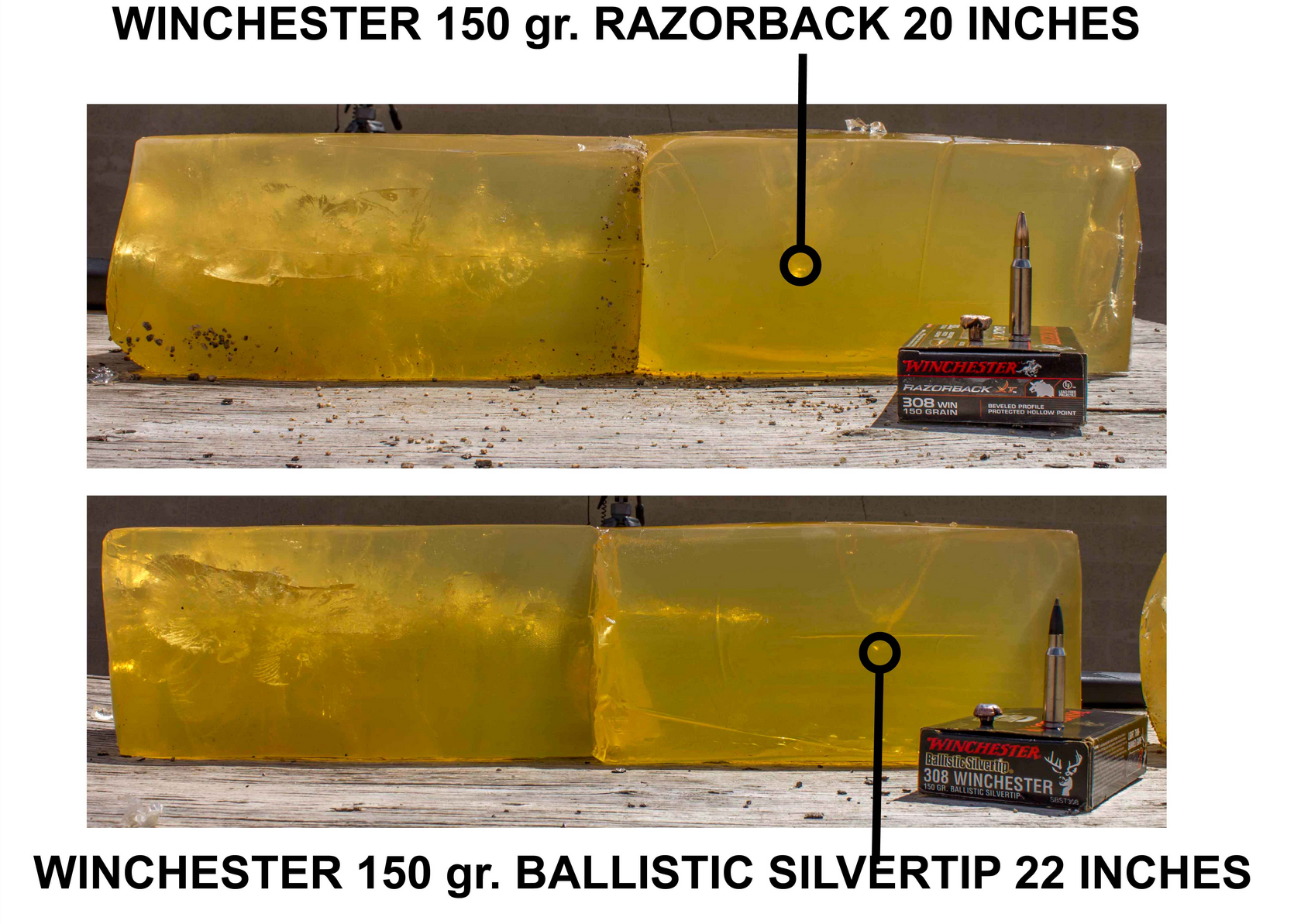
Gel testing insights
Conducting gel tests can provide additional insights into terminal performance:
A bonded bullet may penetrate approximately 12–16 inches in ballistic gel while expanding to twice its original diameter.
A hollow point might expand well but only achieve penetration of around 10–12 inches before stopping.
Selecting the right load based on game type
For whitetail deer hunting:
150-grain bonded soft points are often optimal due to their balance of expansion and penetration.
For larger game like elk or bear, consider moving up to 165-grain or heavier bullets that emphasize deeper penetration.
Spec Check
When selecting your hunting load for the .308 Winchester, consider these key specs:
Muzzle velocity typically ranges from 2,600 to 2,900 fps, affecting trajectory and energy transfer.
Expected drop at 200 yards can be around 5–8 inches, while 300 yards may see drops of about 10–12 inches.
Penetration depths in gel tests often fall between 10–16 inches, dependent on bullet design.
By keeping these numbers in mind during your selection process, you’ll be better equipped to make informed choices about which load will suit your specific hunting needs.
Common mistakes
Avoid these pitfalls when selecting or testing new hunting loads:
Overlooking velocity variations: Always chronograph your ammunition; lot-to-lot differences can affect performance.
Ignoring environmental factors: Humidity and temperature can impact ballistic performance; account for these in your shooting calculations.
Neglecting proper zeroing: Ensure your rifle is zeroed with your chosen load before heading out; otherwise, you risk poor shot placement.
Choosing solely based on marketing claims: Look beyond catchy slogans—test how each load performs under real conditions.
Not tracking your data: Maintain detailed logs of your testing results; this will help identify trends in performance over time.
Conclusion
The .308 Winchester remains one of the most versatile cartridges for hunting across varied terrains and game types. By understanding the nuances of new factory loads—from velocity and drop characteristics to terminal behavior—you can make informed decisions about which ammunition best suits your needs.
As you prepare for your next hunt, remember that testing new loads through chronographs and gel tests will give you essential data on how they perform. Keep track of your findings so that you can refine your choices over time and ensure every shot counts when it matters most. Whether you're targeting deer or larger game species, selecting the right .308 Winchester load can significantly enhance your success afield.