
Diagnosing shotgun patterns: What to adjust for improved accuracy
Understanding shotgun patterns is crucial for optimizing performance, whether you're participating in competitive shooting, hunting, or tactical training. This article will focus on diagnosing shotgun patterns and making necessary adjustments to enhance your accuracy. We'll cover the essential elements of patterning a shotgun, how to analyze the results, and what adjustments can be made based on those findings.
The importance of patterning
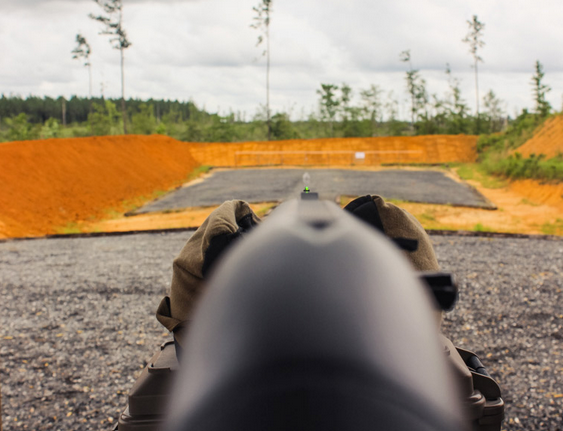
Patterning a shotgun is about understanding how your chosen load and choke work together. Each shotgun behaves differently with various ammunition types, and understanding these dynamics is key to hitting your target effectively. A well-patterned shotgun gives you the confidence to make ethical shots, especially in hunting scenarios where precision matters.
Where this training happens
You can conduct patterning sessions at an outdoor range or a suitable location that allows for safe shooting. Ensure you have a clear backstop and adequate space to assess your patterns effectively. You can also practice in controlled environments, such as on a range designed specifically for shotguns.
Success looks like
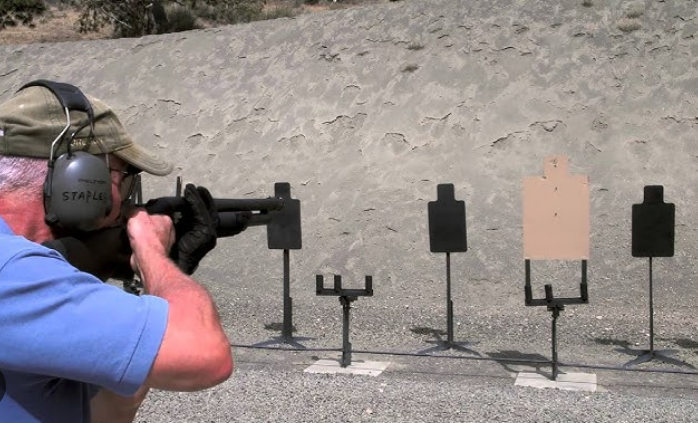
Success in shotgun patterning means consistently achieving desired shot placements within specific zones. For example, you should aim for five clean hits in a 12-inch circle at 25 yards with your chosen load. This will give you a solid baseline for performance analysis.
Setting up for patterning
Before you start shooting, ensure your shotgun is in good working order. Check the following components:
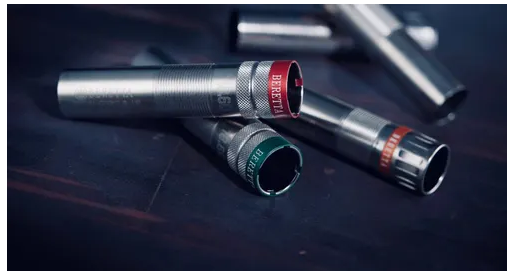
Choke selection: Choose the appropriate choke for your intended purpose: cylinder bore, improved cylinder, modified, or full choke.
Ammunition: Select the specific load you plan to pattern. Consider shot size, payload weight, and velocity.
Target setup: Use a large sheet of paper or cardboard as your target. Mark a central point for reference. You may also want to use smaller targets or stickers to denote specific areas of interest.
Drill checklist
Distance: Set up at 25 yards for initial testing.
Target size: Use a 36-inch square target or larger.
Round count: Fire three shots for each choke/load combination.
Par time: No specific time limit; focus on proper technique and consistency.
Goal: Achieve five clean hits within a 12-inch circle.
Analyzing your patterns
Once you've fired your rounds, it's time to analyze the resulting patterns. Look for distribution, density, and any anomalies that may affect your accuracy.
Pattern density
The density of your shot pattern refers to how closely packed the shot is within a given area. A dense pattern means most of the pellets are concentrated around the center, while a sparse pattern indicates that some pellets are straying far from the target.
Tight patterns: If your shots cluster tightly together but miss the target area, you may need to adjust your aim or consider changing your choke.
Loose patterns: If your shots are spread too widely, you might want to experiment with different chokes or loads that offer tighter groupings.
Shot placement
Evaluate where most of your pellets landed relative to your point of aim. If you're consistently missing high, low, left, or right, this could indicate an issue with your stance or aiming technique.
High misses: This can often be caused by lifting your head off the stock during the shot. Focus on maintaining a solid cheek weld.
Low misses: Check your trigger control; jerking the trigger can cause the muzzle to dip.
Left/right misses: This may indicate improper sight alignment or stance issues.
Common mistakes
Not using a consistent stance: Ensure you adopt a stable shooting position each time you fire.
Inconsistent cheek weld: Maintain contact between your cheek and the stock for better alignment.
Poor follow-through: Focus on keeping your eyes on the target after the shot breaks.
Fixes for common mistakes
Establish a consistent pre-shot routine to help maintain focus and stability.
Practice dry-firing to reinforce proper cheek weld and sight alignment without recoil distractions.
Record your shots' placement to identify trends over time and adjust accordingly.
Adjusting for improved accuracy
After analyzing your patterns, it's time to make adjustments based on what you've learned. Here are several key areas you can modify:
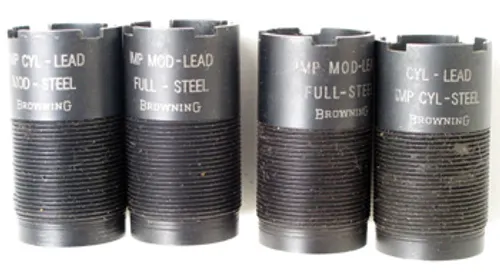
Choke selection
Changing your choke can significantly impact your pattern density and spread. Consider the following:
Full choke: Best for long-range shooting where tight patterns are essential.
Modified choke: Offers a balance between spread and density; suitable for medium-range shots.
Improved cylinder: Provides wider spread; useful for close-range situations.
Experiment with different chokes during practice sessions to see which one yields the best results for your specific load and shooting style.
Ammunition choice
Different loads behave differently in terms of velocity, recoil, and shot spread. When evaluating ammunition:
Shot size: Larger shot sizes (like BBs) tend to have tighter patterns than smaller shot sizes (like 8s). Match your shot size with the intended target.
Payload weight: Heavier loads may produce less recoil but can affect follow-up shots if you're not accustomed to them.
Velocity: Higher velocity loads may lead to tighter patterns but can also increase recoil; find a balance that works for you.
Shooting technique
Your shooting technique plays a significant role in accuracy. Focus on these critical aspects:
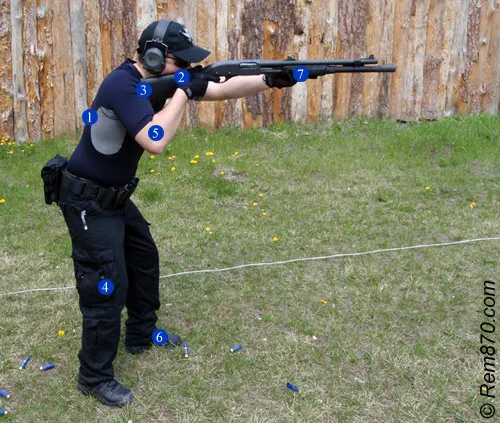
Stance: Adopt a stable shooting stance with feet shoulder-width apart and weight distributed evenly.
Grip: Maintain a firm grip on the shotgun without excessive tension.
Trigger control: Apply smooth pressure on the trigger without jerking it, allowing for a clean break.
Follow-through
After pulling the trigger, maintain focus on the target and keep the shotgun steady until you see where the shot lands. This helps prevent flinching and encourages better follow-through.
Incorporating movement
In real-world scenarios, you'll often need to shoot while moving or transitioning between targets. Practice incorporating movement into your drills by:
Setting up multiple targets at various distances.
Practicing footwork while maintaining accuracy on each target.
Practical drills for improving accuracy
Integrate these drills into your training regimen to reinforce what you've learned about patterning and adjustments:
Drill 1: Patterning run
Distance: 25 yards
Targets: 3 large sheets of paper (36 inches)
Rounds: Fire three shots per target
Goal: Identify which choke/load combination provides the best pattern density.
Drill 2: Moving target practice
Distance: Vary between 10–30 yards
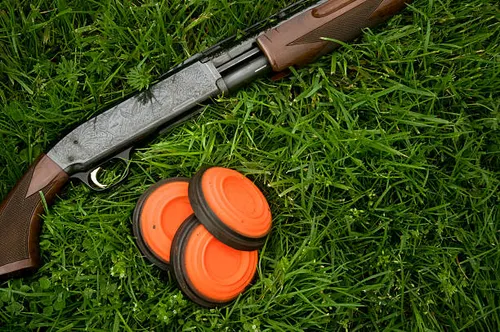
Targets: Use clay pigeons or reactive targets
Rounds: 10 rounds total
Goal: Practice shooting while moving towards or away from targets.
Drill 3: Transition drills
Distance: Set up targets at varying distances (10–30 yards)
Rounds: Fire two rounds at each target
Goal: Work on transitioning smoothly between targets while maintaining accuracy.
From the Bench
Consistently log your patterns after each session. Note any changes in chokes, ammunition, and conditions (weather, stance) that might affect outcomes. This record will help identify trends and inform future adjustments.
Maintaining progress over time
As with any skill, continuous practice is crucial for improving accuracy with shotguns. Schedule regular sessions dedicated to patterning and refining your technique. Aim for at least once a month to assess progress and make further adjustments based on your findings.
Incorporate feedback from peers or instructors who can provide insight into areas needing improvement. Their observations can highlight issues you may not notice yourself.
Conclusion
Diagnosing shotgun patterns and making necessary adjustments is an ongoing process that requires patience and dedication. By understanding how different factors affect performance, such as choke selection, ammunition choice, shooting techniques, and follow-through, you can significantly enhance your accuracy over time.
Commit to regular practice sessions focused on patterning while keeping detailed records of your progress. This approach will allow you to identify trends and make informed decisions about adjustments needed for optimal performance.