Building a lightweight precision rifle for PRS competitions
Creating a lightweight precision rifle tailored for Precision Rifle Series (PRS) competitions requires a thoughtful approach to component selection and overall build strategy. Competitors must balance the demands of accuracy, weight, ergonomics, and versatility in the field. This article will guide you through the key subsystems that make up a precision rifle, providing options, trade-offs, and performance expectations that will help you build a competitive setup.
Defining the use-case: PRS competitions
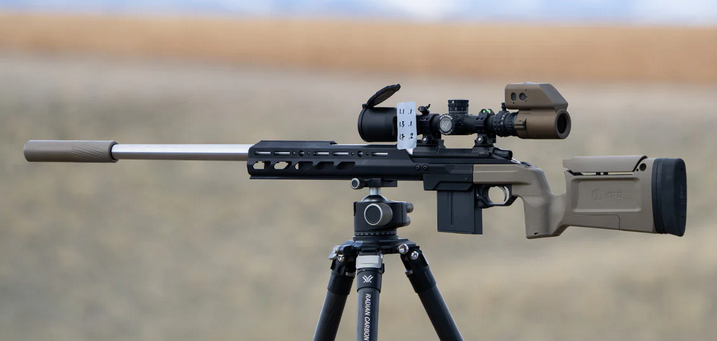
PRS competitions require rifles that can deliver consistent accuracy over varying distances while being lightweight enough to carry during stages that often involve positional shooting. Typical distances can range from 100 to 1,000 yards, and competitors face diverse environmental conditions, such as wind and elevation changes. Therefore, understanding the requirements of your specific competition and tailoring your build to excel in those conditions is paramount.
Barrel
The barrel is the heart of any precision rifle. For PRS, you'll want a barrel that balances weight and rigidity while providing excellent accuracy. Here are some considerations:
Barrel length
20 inches: Provides a good balance between velocity and weight. Ideal for shorter stages.
22 inches: Offers slightly better velocity and accuracy at longer ranges but adds weight.
24 inches: Maximizes velocity but can be cumbersome for positional shooting.
Barrel profile
Lightweight profile: Reduces overall weight but may sacrifice some rigidity. Ideal for carrying over long distances.
Heavy profile: Offers superior accuracy due to reduced heat distortion but adds significant weight.
Twist rate
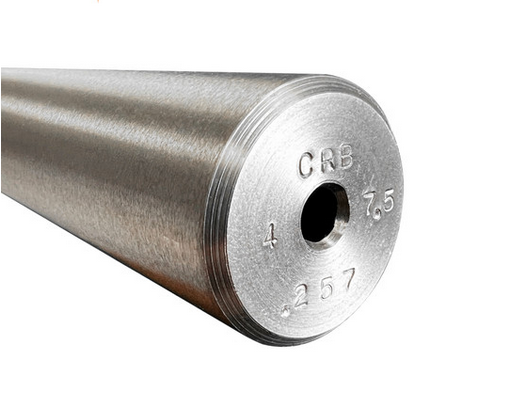
Twist rate affects stabilization of the bullet. For PRS, a common twist rate is 1:7.5 or 1:8, which stabilizes heavier bullets (e.g., 6.5mm Creedmoor 140gr or .308 Win 175gr) well.
Selected Options
Criterion Barrels:
Length: 22 inches
Profile: Light Palma
Twist rate: 1:8
Weight: Approximately 3.5 lbs
Expected accuracy: 0.5 MOA at 100 yards
Proof Research:
Length: 24 inches
Profile: Carbon-wrapped
Twist rate: 1:7.5
Weight: Approximately 2.5 lbs
Expected accuracy: 0.4 MOA at 100 yards
Shilen Barrels:
Length: 20 inches
Profile: Heavy
Twist rate: 1:10
Weight: Approximately 4 lbs
Expected accuracy: 0.75 MOA at 100 yards
Spec Comparison
| Feature | Criterion | Proof Research | Shilen |
|---|---|---|---|
| Length | 22 inches | 24 inches | 20 inches |
| Profile | Light Palma | Carbon-wrapped | Heavy |
| Twist Rate | 1:8 | 1:7.5 | 1:10 |
| Weight | ~3.5 lbs | ~2.5 lbs | ~4 lbs |
| Expected Accuracy | 0.5 MOA | 0.4 MOA | 0.75 MOA |
Optics
Selecting the right optic is crucial for achieving precision at distance while keeping the system lightweight.
Magnification range
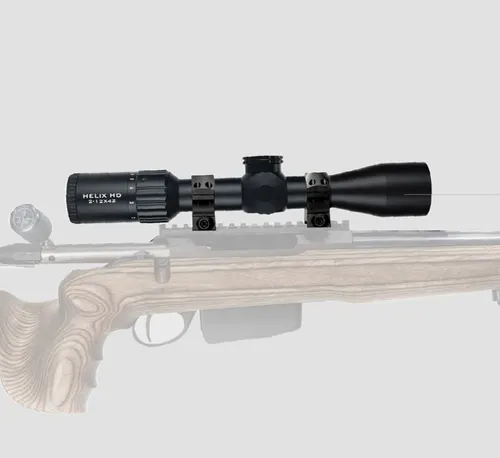
For PRS competitions, a magnification range of 5-25x is common, allowing for adequate target acquisition at varying distances.
Reticle type
Consider choosing an illuminated reticle with subtensions for windage and elevation holds.
Options
Vortex Viper PST Gen II:
Magnification: 5-25x
Weight: ~30 oz
Reticle: EBR-2C (MOA)
Price Range: $999-$1,200
Leupold VX-3i LRP:
Magnification: 6.5-20x
Weight: ~24 oz
Reticle: TMR (MOA)
Price Range: $800-$1,000
Nightforce ATACR:
Magnification: 5-25x
Weight: ~34 oz
Reticle: FC-MOA
Price Range: $2,500+
Spec Comparison
| Feature | Vortex PST Gen II | Leupold VX-3i LRP | Nightforce ATACR |
|---|---|---|---|
| Magnification | 5-25x | 6.5-20x | 5-25x |
| Weight | ~30 oz | ~24 oz | ~34 oz |
| Reticle | EBR-2C (MOA) | TMR (MOA) | FC-MOA |
| Price Range | $999-$1,200 | $800-$1,000 | $2,500+ |
Trigger system
A quality trigger enhances your ability to shoot accurately under pressure. Look for a trigger that provides a crisp feel with minimal take-up.
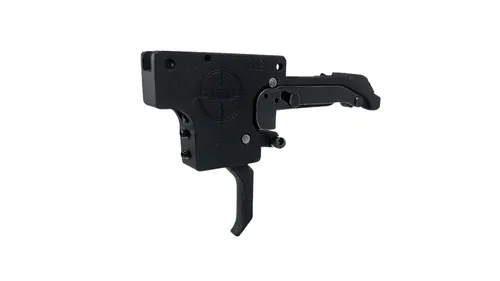
Options
Timney Calvin Elite:
Pull weight: Adjustable from 1 to 2 lbs
Type: Single-stage
Weight: ~2 oz
Features: Lightweight design with adjustable pull length
Geissele Super Dynamic:
Pull weight: Approximately 3 lbs
Type: Two-stage
Weight: ~3 oz
Features: Smooth pull with short reset
CMC Triggers:
Pull weight: Adjustable from 3.5 to 4 lbs
Type: Single-stage
Weight: ~2 oz
Features: Drop-in design for easy installation
Spec Comparison
| Feature | Timney Calvin Elite | Geissele Super Dynamic | CMC Triggers |
|---|---|---|---|
| Pull Weight | Adjustable (1-2 lbs) | ~3 lbs | Adjustable (3.5-4 lbs) |
| Trigger Type | Single-stage | Two-stage | Single-stage |
| Weight | ~2 oz | ~3 oz | ~2 oz |
Stock and chassis
The stock or chassis of your rifle impacts both comfort and stability during shooting.
Considerations
Weight: Lightweight materials like carbon fiber or aluminum can save significant weight.
Adjustability: Look for stocks or chassis that offer adjustable comb height and length of pull.
Compatibility: Ensure that your chosen stock or chassis fits your action type (e.g., AR-15 vs bolt action).
Options
KRG Bravo Chassis:
Material: Aluminum
Weight: ~3 lbs
Features: Adjustable length of pull and comb height
Magpul PRS Lite Stock:
Material: Polymer
Weight: ~1 lb
Features: Adjustable length of pull, lightweight design
Manners Composite Stocks:
Material: Carbon fiber
Weight: ~1.5 lbs
Features: Customizable options for fit and finish
Spec Comparison
| Feature | KRG Bravo | Magpul PRS Lite | Manners Composite |
|---|---|---|---|
| Material | Aluminum | Polymer | Carbon fiber |
| Weight | ~3 lbs | ~1 lb | ~1.5 lbs |
| Adjustability | Yes | Yes | Yes |
Support gear
Support gear is essential in PRS competitions for stability and quick adjustments during stages.
Bipods
Invest in a lightweight bipod that offers quick adjustments for height and cant.
Harris S-BRM Bipod:
Weight: ~13 oz
Features: Adjustable legs with swivel mount
Atlas BT10 Bipod:
Weight: ~15 oz
Features: Quick-adjust height with pan and tilt
Accu-Tac SR-5 Bipod:
Weight: ~12 oz
Features: Lightweight design with rapid deployment
Spec Comparison
| Feature | Harris S-BRM | Atlas BT10 | Accu-Tac SR-5 |
|---|---|---|---|
| Weight | ~13 oz | ~15 oz | ~12 oz |
| Adjustability | Yes | Yes | Yes |
Common mistakes when building a lightweight precision rifle
When embarking on building your lightweight precision rifle, avoid these common pitfalls:
Overemphasis on weight: While minimizing weight is important, compromising on critical components can affect performance.
Ignoring balance: A rifle that's too front-heavy or back-heavy can lead to poor accuracy; ensure even weight distribution.
Neglecting ergonomics: Select components that suit your body size and shooting style to enhance comfort during long stages.
Field note
During a recent PRS competition in varied terrain, competitors faced challenges requiring quick positional changes and adaptability to changing wind conditions. One shooter equipped with a lightweight Criterion barrel combined with the KRG Bravo chassis found that their overall setup allowed for faster transitions between prone, kneeling, and standing positions while maintaining accuracy within sub-MOA groups at distances up to 800 yards.
Conclusion
Building a lightweight precision rifle tailored for PRS competitions involves careful consideration of each subsystem: from the barrel to the chassis to support gear. By selecting high-quality components that align with your specific competition needs, you can create a setup that balances performance and weight effectively.
Your final configuration should reflect your shooting style, comfort preferences, and competitive environment. Always remember that while lightweight components are beneficial, they should not come at the expense of reliability or performance.