Comparing the Glock 48 vs. Smith & Wesson M&P Shield Plus for EDC
When it comes to everyday carry (EDC), the choice of handgun can significantly impact your comfort and confidence. Two popular options that have garnered attention among seasoned shooters are the Glock 48 and the Smith & Wesson M&P Shield Plus. Both pistols offer a compact design, making them suitable for concealed carry, but they come with different features and benefits that can influence your decision.

Smith & Wesson M&P Shield Plus Deals
Prices may change. May contain affiliate links.
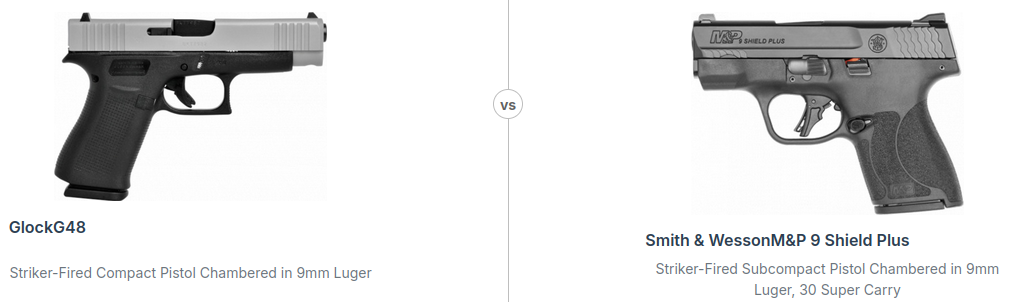
In this comparison, we'll dive deep into the specifics of each handgun, focusing on their roles in everyday life, how they fit in your hands, their recoil behavior, sights, and overall usability. By the end, you'll have a clearer understanding of which pistol may serve you better in your daily routines.
Role, constraints, and environment
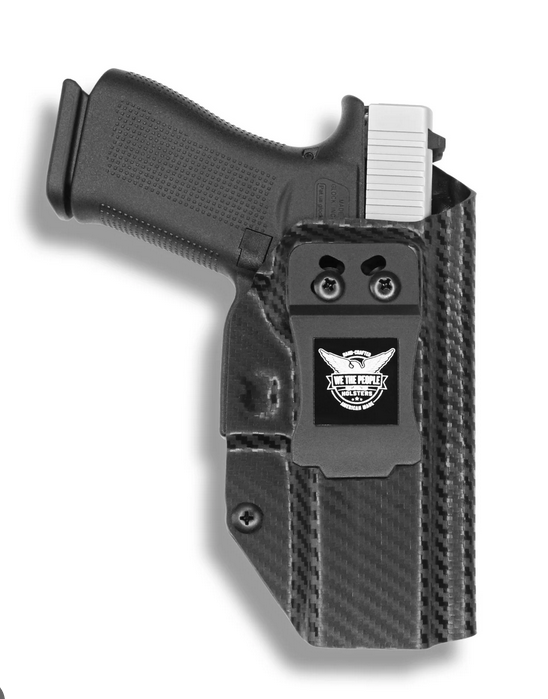
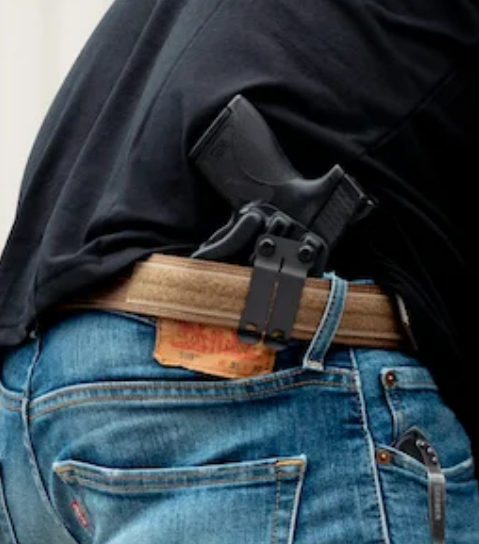
You should know how you plan to use your handgun. The Glock 48 and M&P Shield Plus shine in concealed carry scenarios. They both offer slim profiles, allowing for easy concealment under a T-shirt or within an inside-the-waistband (IWB) holster. However, their distinct characteristics may affect your choice based on your lifestyle and specific needs.
Everyday carry considerations
The Glock 48 is slightly larger than the M&P Shield Plus, with a longer slide and grip. This can provide a more comfortable shooting experience for some shooters but may make concealment a bit trickier depending on your clothing choices. On the other hand, the Shield Plus is designed to be ultra-concealable, making it an excellent option for those who prioritize discretion over everything else.
Think about your typical attire. If you often wear fitted clothing or prefer not to print at all, the Shield Plus might be more accommodating. If you're okay with a slightly larger footprint and want more capacity without much compromise on concealability, the Glock 48 could be your pick.
Constraints on access and practice
Consider also how often you'll be able to practice with your chosen firearm. Both pistols have relatively manageable recoil; however, if you're planning to shoot regularly at the range or during training sessions, you may find the Glock 48's slightly heavier weight beneficial for extended shooting sessions. A heavier gun can help mitigate fatigue while providing a stable platform for follow-up shots.
Budget is another factor to consider. Both models are competitively priced within the market, but additional costs can arise from accessories like holsters or sights. Be sure to factor these into your overall decision-making process.
Fit, controls, and how the gun sits in your hands
The ergonomics of a handgun can make a significant difference in handling and shooting performance. Let's explore how each pistol fits in your hands and what that means for effective use.
Grip size and shape
The Glock 48 features a slim grip design that measures about 1.10 inches wide. It has a slightly longer grip than the Shield Plus, which may feel more comfortable for shooters with larger hands. The texture on the Glock's grip provides sufficient traction without being overly aggressive.
In contrast, the M&P Shield Plus has a grip width of approximately 0.95 inches. This narrower profile makes it easier to conceal but might feel small for those with larger hands. Both pistols come with interchangeable backstraps; however, the Shield Plus generally offers a more customizable fit right out of the box.
When gripping either pistol, ensure that your fingers comfortably reach the trigger without shifting your grip. If you find yourself adjusting your hold just to reach the trigger on either model, it might indicate that the grip size isn't ideal for you.
Control layout and accessibility
Both models feature easily accessible controls. The Glock 48 has a standard Glock trigger safety mechanism and a slide stop that's easy to manipulate. It also has an ambidextrous magazine release, which is helpful for left-handed shooters.
The M&P Shield Plus employs a similar design philosophy with its controls. However, some users might find the magazine release on the Shield Plus slightly stiffer than on the Glock, especially right out of the box. Over time, this may loosen up, but it's something to consider if you plan on conducting quick mag changes during practice or self-defense scenarios.
Recoil, timing, and shot-to-shot control
Understanding how each handgun behaves under recoil will help you make an informed decision about which one suits your shooting style.
Recoil management
The Glock 48 weighs about 20 ounces unloaded, while the M&P Shield Plus is around 18.5 ounces unloaded. The added weight of the Glock can help absorb recoil better than the Shield Plus, potentially leading to quicker follow-up shots. This can be particularly beneficial when practicing at distances beyond seven yards where accuracy becomes increasingly important.
Both pistols have similar bore axes; where the barrel sits in relation to your hand; which helps reduce muzzle flip during shooting. However, since the Glock is heavier, it may feel more stable during rapid fire or extended strings of shots.
Timing and split times
In practical shooting drills, split times; the time between shots; are crucial metrics for assessing performance under pressure. Many shooters report achieving split times around 0.2 to 0.3 seconds with both models when properly set up.
For example, if you're practicing drawing from concealment at seven yards and aiming for two shots on target, you might find yourself hitting those splits consistently with either pistol once you're comfortable with its controls and recoil management.
Group sizes will vary based on shooter experience and practice frequency; however, many report achieving groups within 3–4 inches at distances up to 15 yards with both handguns when using quality ammunition and proper technique.
Sights, optics, and what you actually see
Sights play a critical role in aiming accurately and quickly. Let's break down how the sighting systems differ between these two pistols.
Iron sights
The Glock 48 typically comes equipped with standard Glock polymer sights which are functional but may not offer enough visibility in low-light conditions. Some shooters opt to upgrade to night sights for enhanced aiming capability in darker environments.
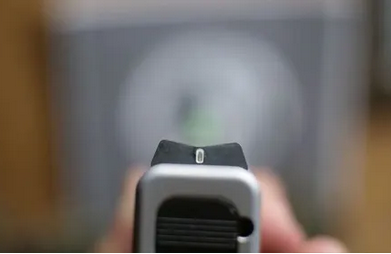
The M&P Shield Plus features white dot sights as standard but also offers models equipped with upgraded sights or optics-ready configurations. If you plan on using optics like red dots for quicker target acquisition, keep this in mind as it could influence your choice.
Dot optics readiness
If you're considering adding an optic to your EDC setup, the M&P Shield Plus has several variants designed specifically for this purpose. This could allow for faster target acquisition compared to traditional iron sights since red dots provide a single focal point that can be quicker to align.
While there are aftermarket options available for mounting optics on the Glock 48, they typically require additional modifications or specific mounting plates that might not come standard.
Carry or staging setup and support gear
How you choose to carry your handgun significantly impacts accessibility and comfort throughout your day.
Holster options
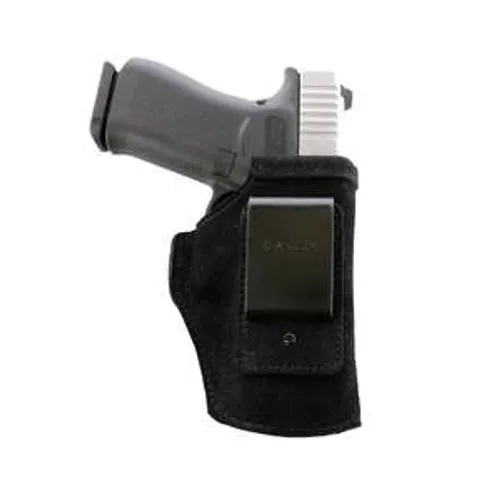
For both the Glock 48 and M&P Shield Plus, various holster types exist; from IWB designs that sit close to your body to OWB options that allow for quicker access but may print more under clothing.
When selecting a holster for either model, consider factors such as ride height (how high or low it sits on your waist), cant (the angle of the holster), and material (Kydex vs leather). A well-fitted holster can enhance comfort during long days of carry while ensuring you can draw efficiently when needed.
Support gear considerations
Accessories such as belts also play an important role in carrying comfortably. A sturdy belt designed for concealed carry can support a loaded handgun's weight without sagging or shifting throughout the day. Look for options that feature reinforced stitching or additional width to provide adequate support.
Additionally, consider magazine carriers for spare ammunition. While both pistols have respectable capacities; 10+1 for the Shield Plus and 10+1 for the Glock 48; you may want to carry extra magazines depending on your comfort level and environment.
Maintenance, reliability checks, and when to switch lanes
Keeping your handgun in top condition is essential for reliability and performance.
Cleaning routines
Both pistols require routine cleaning to maintain optimal function. A simple cleaning regimen should include disassembling the firearm according to manufacturer guidelines and using appropriate cleaning supplies; like brushes and solvent; to keep components free from debris.
After cleaning, always inspect key areas such as the barrel, slide rails, and recoil spring for wear or damage. Regular maintenance not only extends the lifespan of your firearm but also helps ensure reliable performance when it matters most.
Reliability testing
When considering reliability for defensive use versus range-only applications, keep in mind that both pistols have established reputations for dependability. However, it's wise to run several hundred rounds through whichever model you choose before relying on it for EDC.
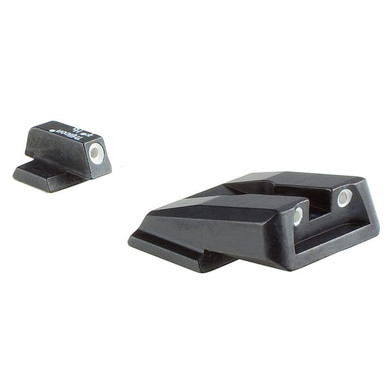
Smith & wesson M&P Shield Plus white dot sights Deals
Prices may change. May contain affiliate links.
Test various ammunition types during these sessions to determine what feeds smoothly through your chosen firearm. Some guns may prefer certain brands over others due to minor variances in chamber dimensions or feeding mechanisms.
When to change guns or roles
If you find that either pistol isn't meeting your needs; whether due to comfort issues or performance concerns; it may be time to reassess your choice. Perhaps you've transitioned from casual carry to more frequent use; in that case, exploring full-size options or different calibers might be worthwhile.
Conversely, if you're looking at switching from EDC to something solely intended for home defense or competition shooting, different features will matter more than those prioritized in everyday carry scenarios.
Conclusion
Ultimately, both the Glock 48 and Smith & Wesson M&P Shield Plus are solid choices for everyday carry. Your decision should hinge on personal preferences regarding grip fit, recoil management, sighting systems, and how well each handgun aligns with your lifestyle demands.
As you move forward with practice sessions:
Focus on mastering draw techniques specific to your chosen pistol.
Experiment with various ammunition types to discover what performs best.
Run drills aimed at improving split times and accuracy at varying distances.
Understanding how these elements come together will enhance your proficiency with either pistol over time.